
Robinhood Clone App for Licensed Brokerages
Build the trading platform your licensed brokerage actually needs. Our Robinhood clone pairs live market data, a full order management system, fractional investing, and KYC onboarding with the disclosure, audit, and surveillance layers a regulated broker is examined on. We build the technology, you bring the license and the clearing, and the revenue model is designed around the market you are authorized in.
What is Robinhood Clone?
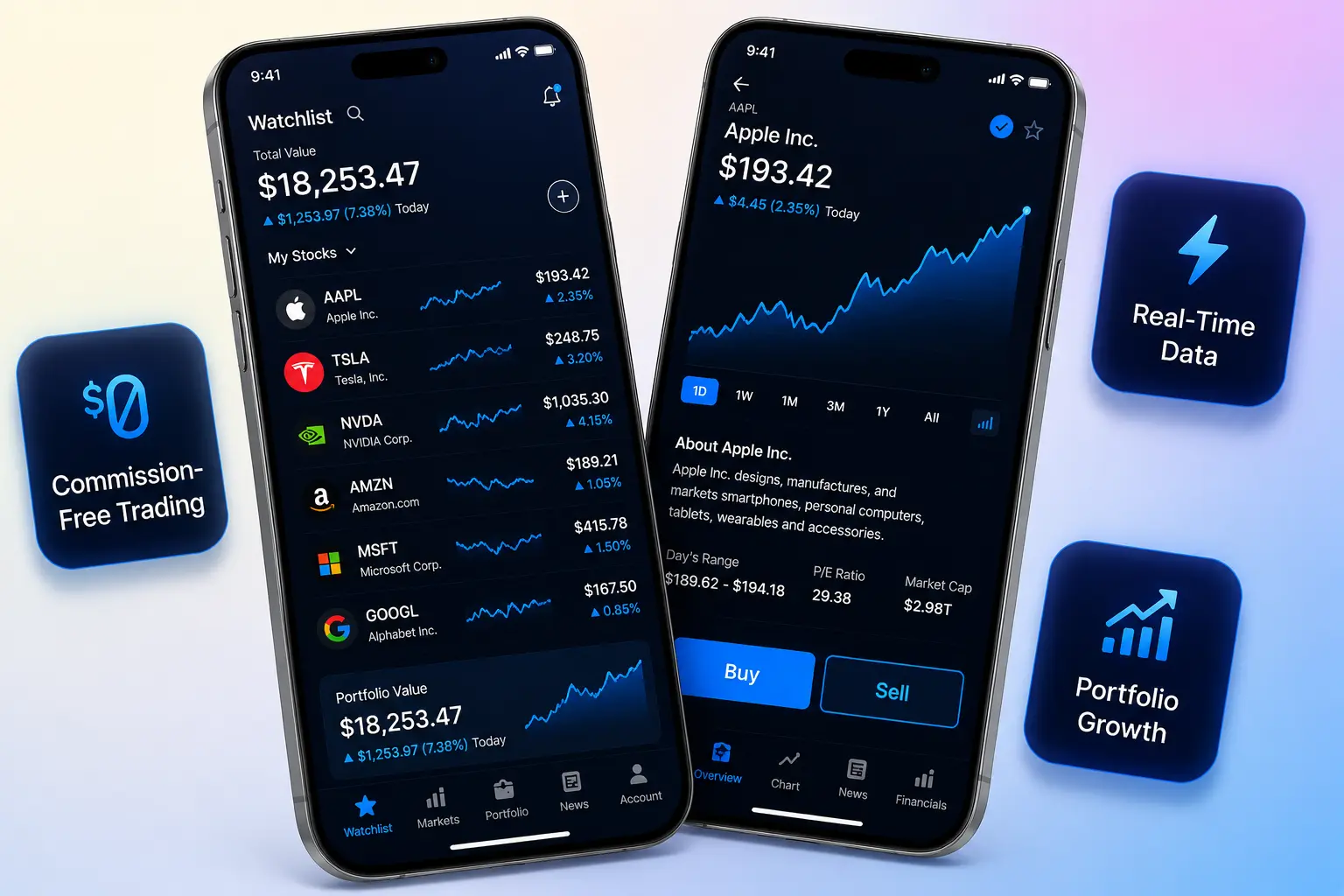
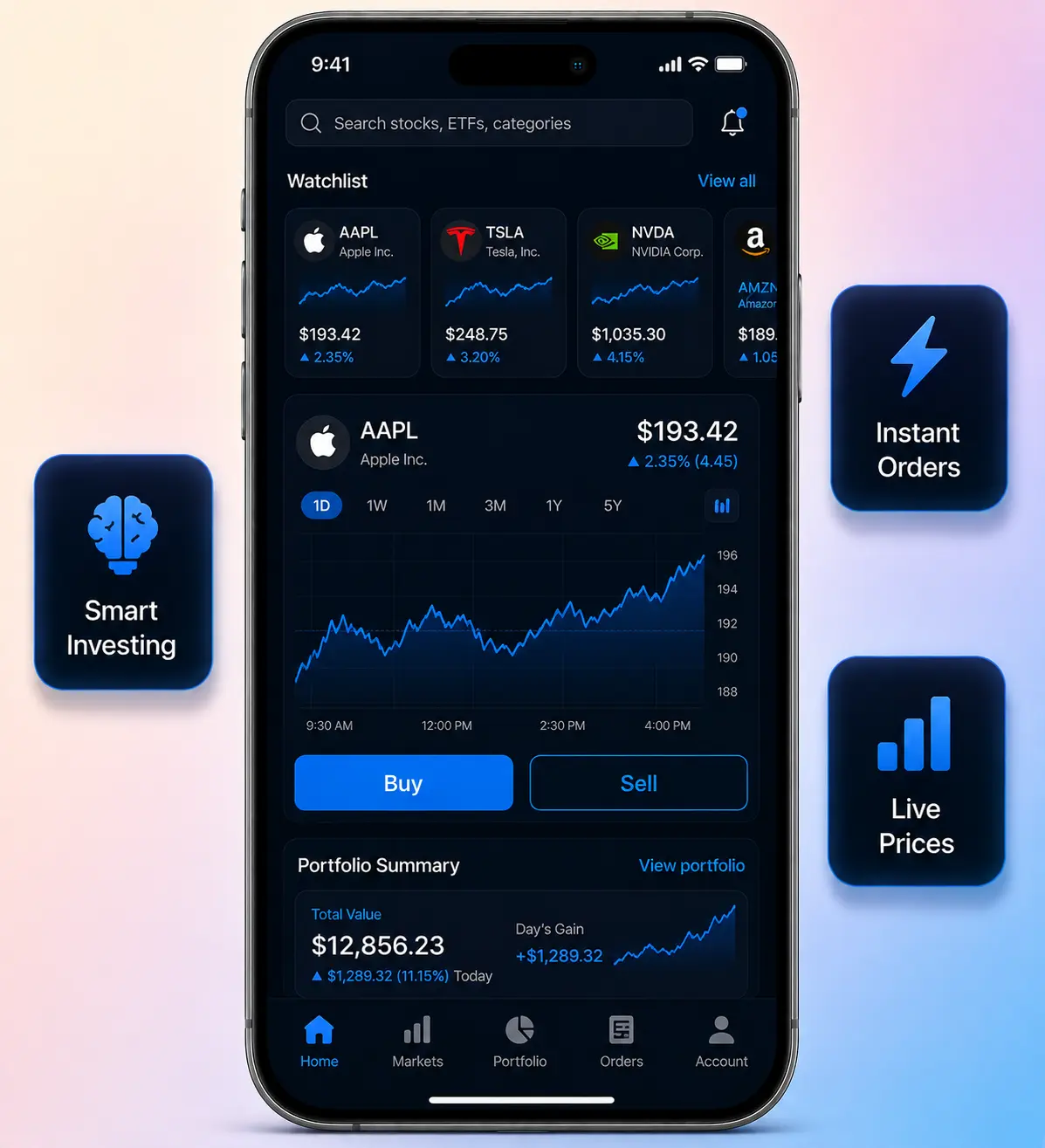
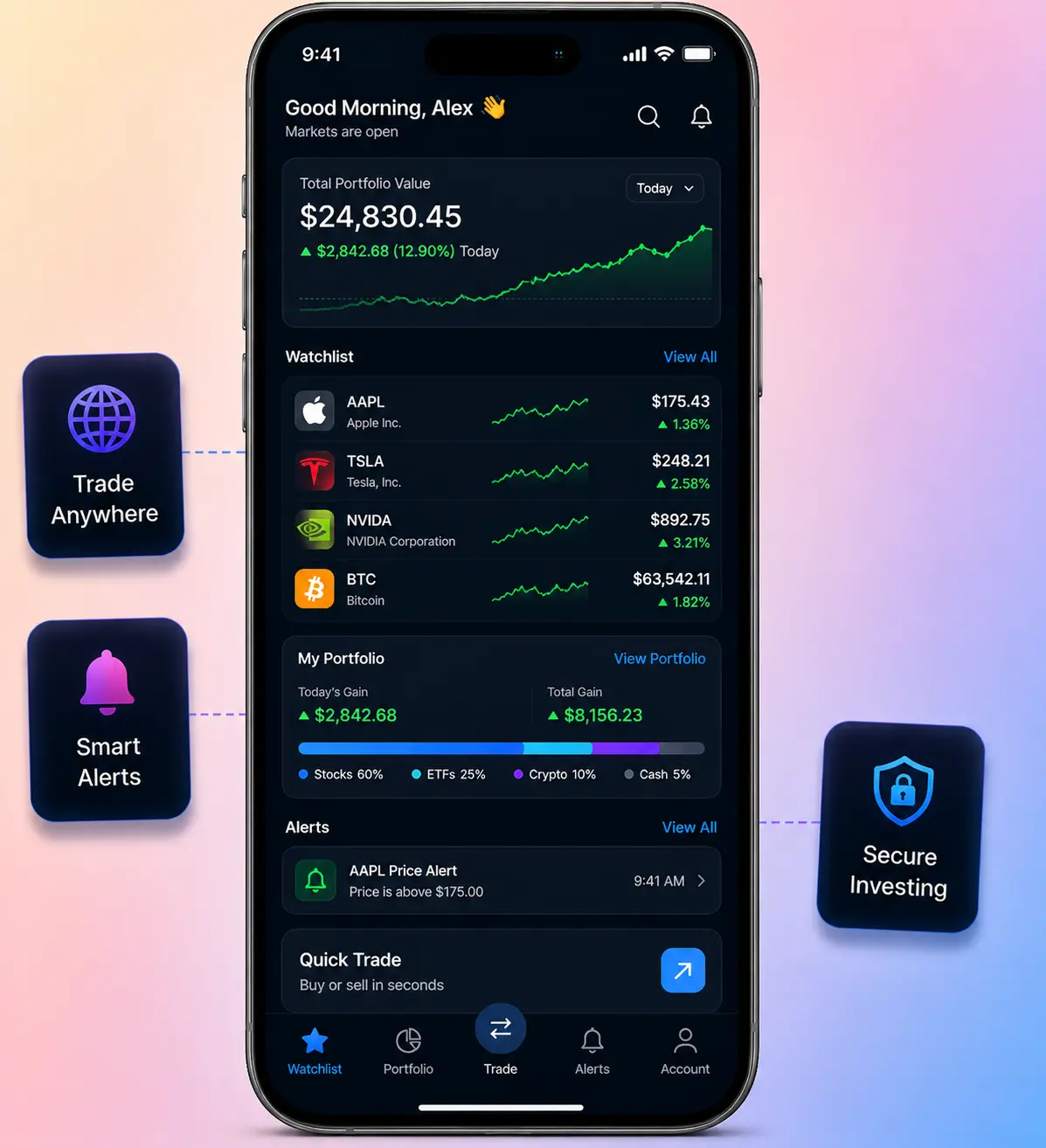
A Robinhood clone is the client-facing platform of a retail brokerage: watchlists, live quotes, an order ticket, a portfolio, funding, and statements. What it is not, and cannot be, is a way to start trading securities for the public without permission to do so. The app is the surface. The business underneath it is a licensed broker-dealer.
That distinction decides who this page is for. Robinhood is registered with the SEC, is a FINRA member, and carries SIPC coverage. Every screen in the product exists inside those obligations. Order handling, disclosure, record-keeping, and best execution are not features someone bolted on. They are the conditions of being allowed to operate at all.
So we build the technology, and you bring the permission. If you hold a broker-dealer license, an FCA authorization, a SEBI registration, or an equivalent, this is a platform built to your regulator's expectations. If you are working through an application, this is the platform you are building toward.
What it is not is a crypto exchange with a stock ticker on it, which is what most pages ranking for this term are actually selling. Trading listed securities and trading crypto are different regulated activities, with different licenses, different custody, and different market plumbing.
Why a Stock Trading App Needs a Broker-Dealer License
Most Robinhood-clone vendors sell a trading app the way they sell a taxi app: features, screens, and seven-day launch promises. Almost none mention the thing that actually determines whether you can operate. Some even suggest that KYC makes trading regulation-free. It does not. KYC is one compliance requirement inside a much larger securities framework.
Here is what a vendor should tell you before taking your money:
- Offering brokerage services to the public requires the right regulatory structure. That may mean SEC and FINRA registration in the US, FCA authorisation in the UK, SEBI registration in India, or operating through a licensed brokerage partner
- Client cash and securities are normally held through a regulated clearing firm, carrying broker, or custodian. Safeguarding, segregation, reconciliation, and reporting obligations still apply
- Best execution is a legal duty, not a feature. Robinhood Financial paid a $65 million SEC settlement in a case that included failures relating to execution quality
- Market data is licensed by exchange, market, user type, and method of distribution. It comes with contracts, entitlements, reporting requirements, and real fees
- Many vendors ranking for this term are crypto-exchange developers. A crypto script with stock symbols added to it is not brokerage infrastructure
None of this makes the opportunity worse. It makes it narrower, and serious buyers benefit from narrow markets. A user interface can be built quickly. A compliant brokerage operation cannot. That is why we work with licensed entities, firms pursuing authorisation, and businesses launching through established brokerage partners rather than anyone with a business plan and a deposit.
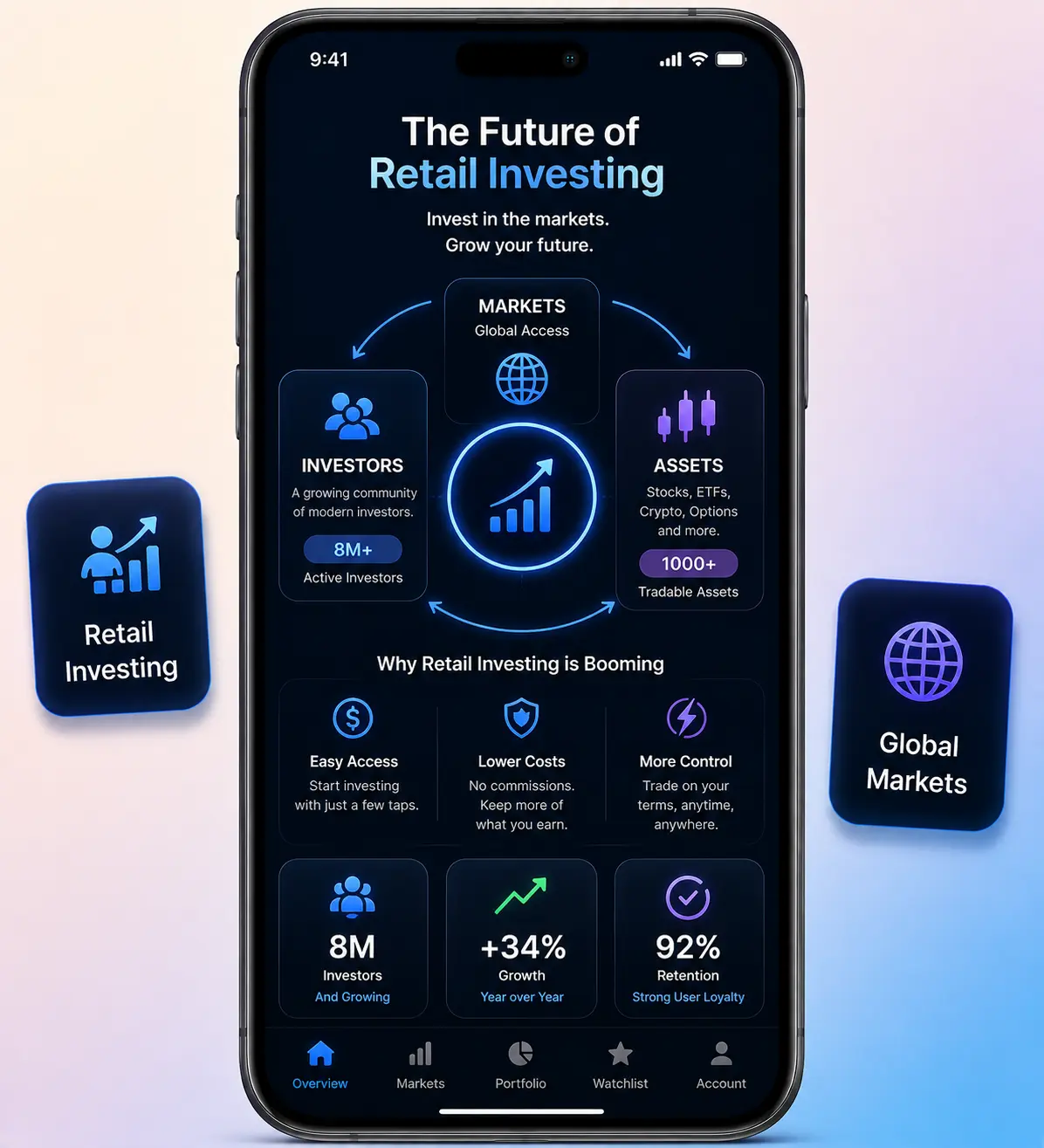
Stock Trading App Features, From Watchlist to Fill
Every feature below ships in the standard build. Not add-ons, not upsells, not a stripped tier. It is the platform your clients and your compliance team both live with from day one.
Live Market Data
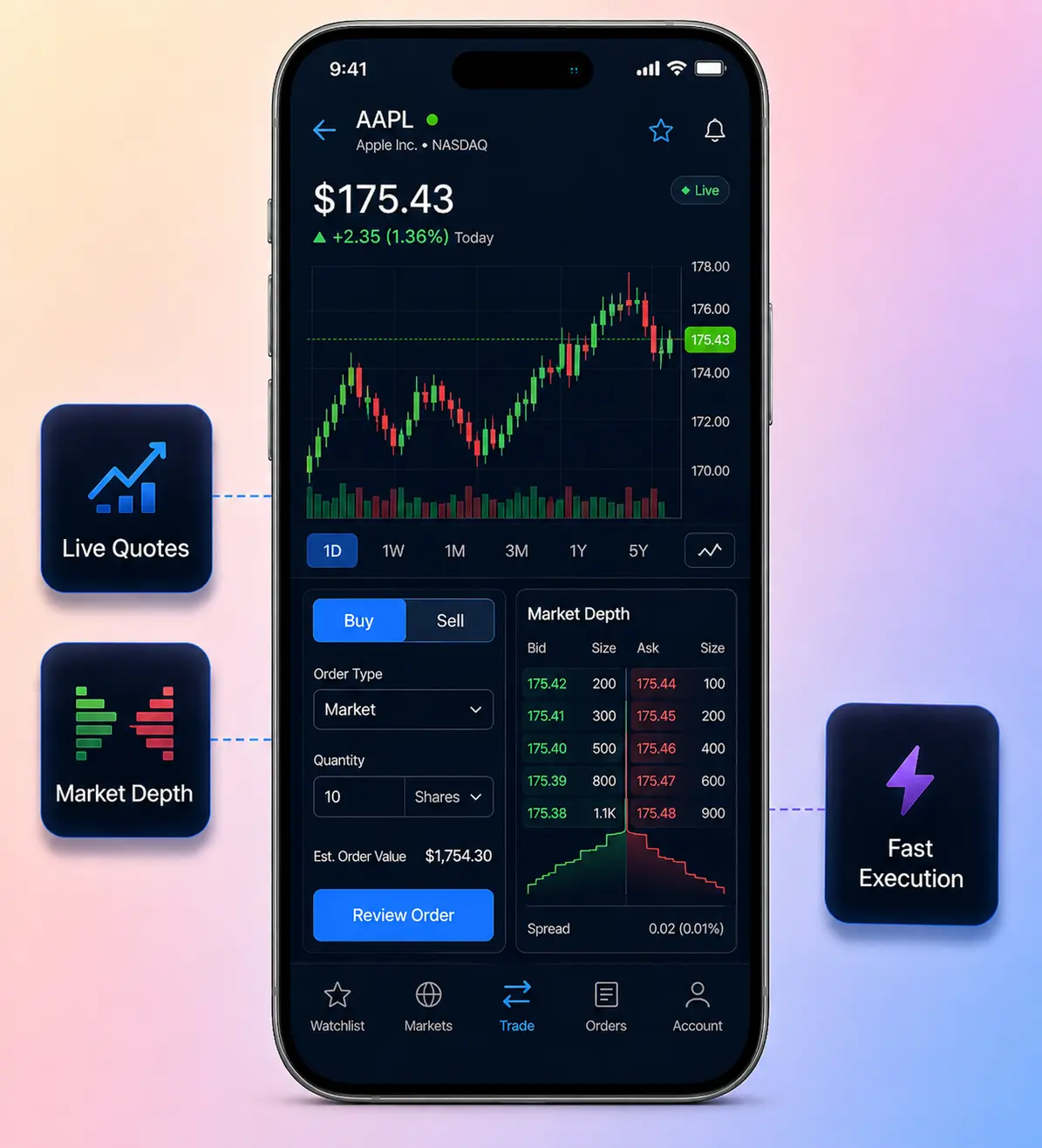
Streaming quotes, depth, and last traded prices on a low-latency feed users see instantly. Exchange data is licensed, not scraped, so the platform consumes only feeds your entity may carry.
Order Ticket and Types
Market, limit, stop, and stop-limit orders with pre-trade validation, buying-power checks, and clear confirmations. The order ticket is where a mis-built app becomes a complaint, so it is built carefully.
Order Management System
An OMS records every instruction, amendment, cancel, and fill with timestamps, then routes to your venue. The order lifecycle is your regulatory record, so it is built to be auditable end to end.
Fractional Investing
Users buy slices of high-priced shares, which is what made this category reachable for beginners. Fractional handling touches allocation and rounding, so the accounting is built to reconcile exactly.
Portfolio and Positions
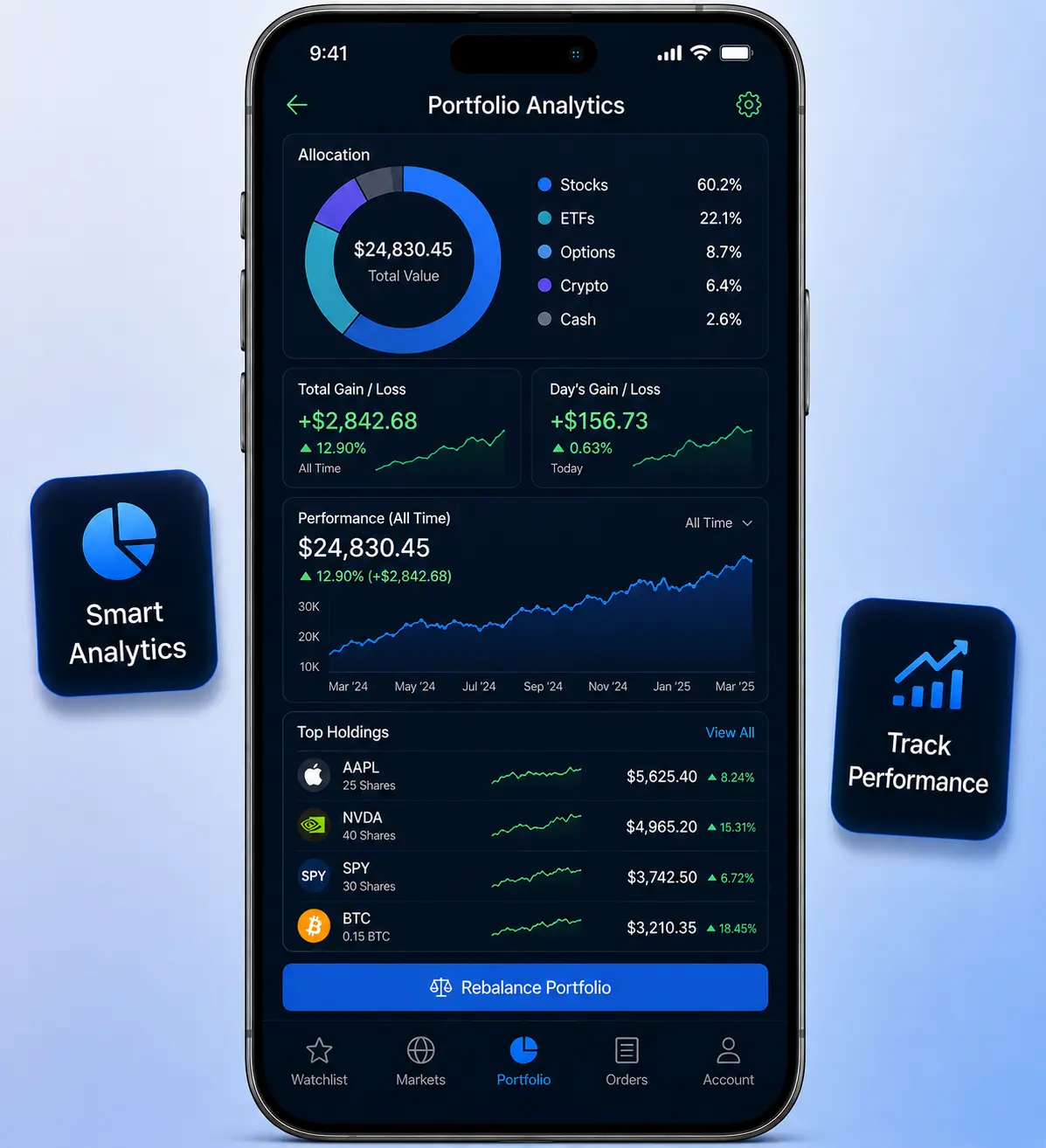
Holdings, cost basis, realized and unrealized performance, and cash balances, plain enough for a beginner. Clear positions cut support load and the misunderstandings that turn into formal complaints.
Watchlists and Alerts
Users track instruments and get price, volume, and news alerts that bring them back without nagging them. Alerts drive repeat visits that make an investing app a habit rather than an errand.
Charting and Research
Interactive charts, indicators, fundamentals, and news on a licensed charting library rather than a copy. Research depth keeps a user from opening a second app the moment they want more than a price.
KYC, AML, and Onboarding
Identity verification, document capture, sanctions and PEP screening, and risk scoring, wired to your providers. Onboarding is a regulatory gate before it is a funnel, so it satisfies compliance first.
Funding and Withdrawals
Bank transfers, UPI and local rails, instant-deposit rules, and withdrawal holds set to your risk policy. Money movement into and out of a brokerage is where fraud concentrates, so the controls are yours.
Disclosures and Reporting
Order-routing disclosures, execution-quality reporting, confirmations, and statements generated automatically. The exact filings differ by regulator, and this is precisely where the incumbent was fined.
Audit Trail and Records
Immutable, timestamped records of quotes shown, orders placed, and messages sent, kept to your retention policy. Books-and-records duties are not a feature. They are why your license survives an exam.
Admin and Surveillance
Account administration, trading halts, position limits, and surveillance flags in one panel. You run the platform and evidence your oversight without a developer in the loop for routine controls.
Who Can Legally Launch a Stock Trading Platform
This is not a page for someone who wants to start a brokerage this quarter. It is for the people who already hold a license, operate under one, or are working through an application.
Licensed Brokers
You already hold the license and the clearing relationships, and your app is a decade behind what your clients now expect.
Regulated Fintechs
You operate through an introducing-broker or broker-as-a-service partner and need your own front end on top of it.
Regional Brokerages
You serve a market the global apps ignore, and you need a modern mobile experience without a global engineering budget.
Neobanks and Wallets
You already hold customer balances and want investing as a regulated module beside the accounts you run today.
Wealth and Advisory Firms
You manage client money and want a branded self-directed channel that reports back into the systems you already run.
Licensing Applicants
Your registration is in progress and you want the platform built and tested to be ready the day approval lands.
Stock Trading Platform Development in Six Stages
Our build process is structured and transparent, and it is shaped around your regulatory reality rather than around a demo date. Six stages take the platform from scope to launch.
Discovery and Regulatory Scope
We start with your license status, your regulator, your clearing and custody arrangement, and your launch market, and produce a written scope you approve before any work begins. The regulatory shape of your entity drives the build.
Planning and Architecture
Our team designs the order management system, market data pipeline, and audit and reporting layers around your clearing partner's interfaces and your regulator's expectations, with a milestone timeline mapped before development starts.
UI/UX Design
Custom interface design applied to your brand. The order ticket, portfolio, funding flows, disclosures, and the admin console are designed and approved before development starts.
Development and Integration
We build the platform and integrate market data, order routing, KYC and AML onboarding, funding rails, custody or clearing APIs, statements, and surveillance hooks. You have staging access throughout.
Testing and Quality Assurance
Comprehensive testing across order lifecycle, buying-power and risk checks, corporate actions, funding, and reporting, plus load, failover, and security testing before anything goes live.
Deployment and Handoff
Deployment to your infrastructure, an admin walkthrough, and six months of free post-launch support from handoff. Your compliance team gets the documentation they will be asked for.
How Commission-Free Brokers Actually Make Money
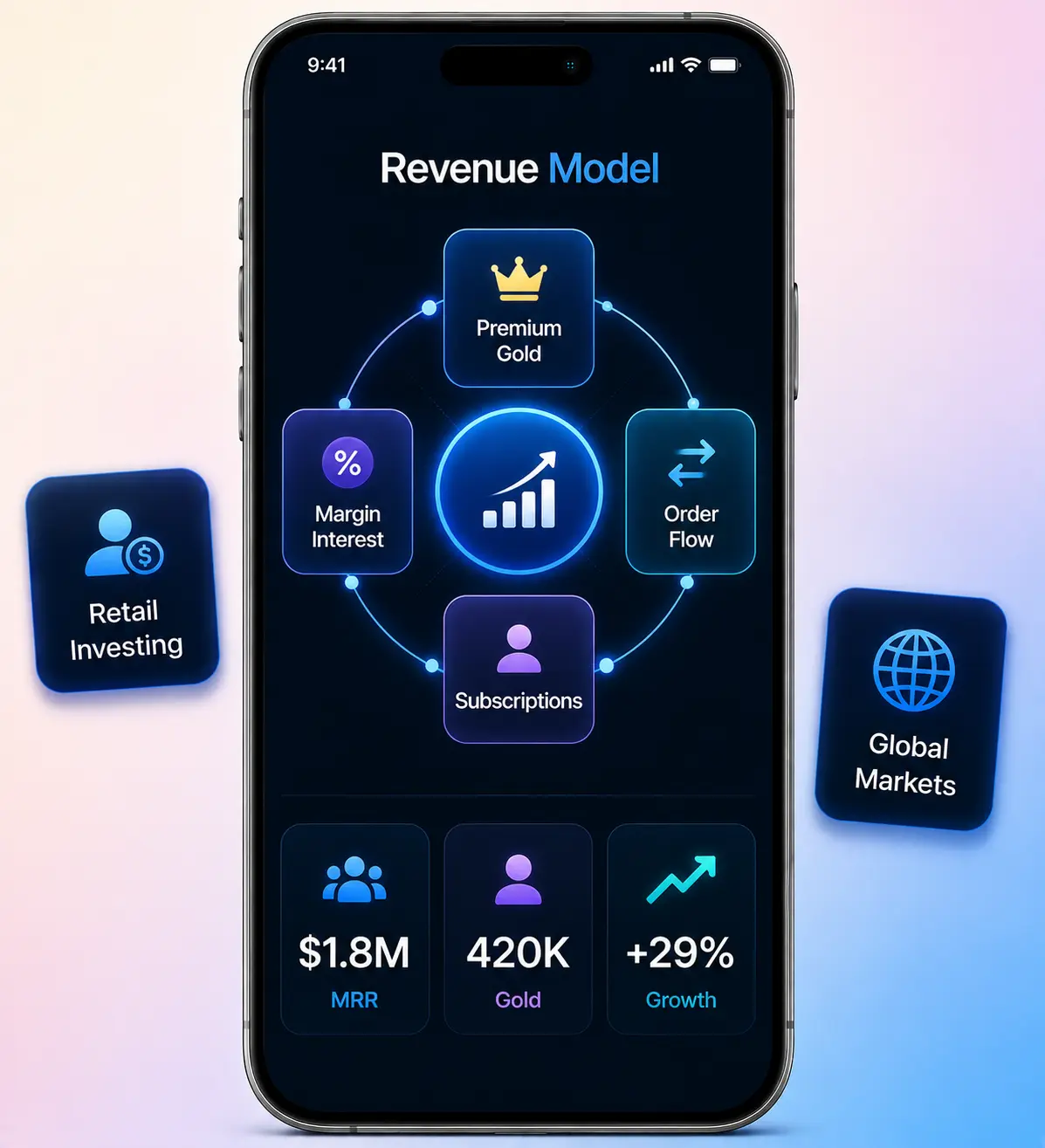
Free trades still have to be paid for by something. Here is where a modern broker's revenue actually comes from, ordered by how much of the leader's income each line now carries.
Net Interest Revenue
Interest on margin lending and on uninvested cash swept to partner banks is the leader's largest line today. It scales with client balances rather than trading volume, making it the steadiest line.
Premium Subscriptions
A paid tier bundling margin rates, research, bigger instant deposits, and better interest, billed monthly. Subscription revenue is predictable, is not routing-dependent, and is legal in every market.
Securities Lending
Lending fully paid shares to counterparties and sharing proceeds with clients under a disclosed program. It monetizes assets already in custody without asking the client to trade even once more.
Per-Order Commissions
A flat or tiered fee per executed order, the model that works wherever order-flow payments are banned. Discount brokers in several large markets are built entirely on this and are extremely profitable.
Spreads and FX
A disclosed spread on foreign exchange and on instruments you make a market in, priced transparently. Cross-border investing generates currency conversion on every trade, and that flow is monetizable.
Order-Flow Payments
Rebates from market makers for routed orders. Legal in the United States under strict disclosure and best-execution duties, and prohibited in the EU and UK. Read the section above before counting it.
Market Data, FIX Connectivity, and the Tech Stack
We build on standard, well-documented technologies. Any developer can read the code, extend it, and maintain it without a proprietary framework learning curve.
React.js
Node.js
PostgreSQL
HLS streaming
Redis
FFmpeg
React Native
Stripe
ElasticSearch
NestJS
AWS S3
Google in-app billing
Is a Robinhood Clone Profitable to Run?
Yes, and the honest version is narrower than the pitch above this page. Retail brokerage is a real business with real margins, but its economics are a balance-sheet business more than a trading business, and its barriers are regulatory rather than technical.
Three things drive whether your platform works:
- Balances, not trades: The leader's biggest revenue line is interest on margin and idle cash. Your economics improve when clients keep money with you, not when they churn orders. Design for funded accounts and retention.
- Your license and your market: The revenue mix available to you is set by your regulator, not by your product roadmap. A model that works in the US may be illegal in the EU, and planning otherwise is how launches die.
- Cost of trust: Market data, clearing, custody, compliance, and surveillance are ongoing costs from day one, before your first client funds an account. Model them honestly.
A professionally built platform removes the technical failure points. The rest is execution on licensing, balances, and cost discipline.
Client Funding, Custody, and Trade Settlement
Money movement in a brokerage is not a checkout. It is funding, settlement, segregation, and custody, each with rules your regulator enforces.
Client Funding
Clients fund accounts through the rails your market uses, from ACH and bank transfer to UPI and cards where permitted, with limits and holds you configure.
Segregation and Custody
Client cash and securities sit with your clearing firm or custodian and are segregated per your regulator's client-money rules. The platform integrates with your arrangement rather than assuming one.
Settlement and Corporate Actions
Trade settlement, dividends, splits, and other corporate actions flow through from your clearing partner and are reflected in positions and statements automatically.
Statements and Audit Trail
Confirmations, periodic statements, tax reporting, and an immutable audit trail are produced as standard, because your examiner will ask for them, not because they are a nice feature.
Complete Feature Set for Clients
The client app is where your regulated obligations meet a retail user's expectations. Here is the full feature set for clients on your platform.
Open an Account
Users complete identity checks, document capture, and risk profiling inside the app, without any branch or paperwork.
Fund in Minutes
Users link a bank account and deposit through the local rails your market uses, with your instant-deposit rules applied.
Search Any Instrument
Users find equities, funds, and other listed instruments your entity supports, with prices streaming live to the screen.
Place an Order
Users submit market, limit, and stop orders with buying power checked and the cost shown clearly before they confirm.
Buy Fractionally
Users invest a chosen amount rather than whole shares, which is what brings first-time investors into the market at all.
Watch and Get Alerted
Users build watchlists and receive price, volume, and news alerts on the instruments they are actually thinking about.
Study the Charts
Users read interactive charts with indicators, fundamentals, and news through a properly licensed charting component.
Track the Portfolio
Users see holdings, cost basis, and performance in plain language, so a beginner understands what they actually own.
Get Their Documents
Users download contract notes, statements, and tax documents on demand, which cuts a large share of support tickets.
Withdraw Their Money
Users move funds back to their bank under the holds and limits your risk policy defines, with the status always visible.
Complete Feature Set for Operations and Compliance
Your operations and compliance teams live in these screens every day, and your examiner will look at them. Here is the full feature set for that side of the house.
Route to Your Venue
The OMS routes orders to the execution venues and brokers your entity has relationships with, per your routing policy.
Reconcile Every Fill
Fills, allocations, and fractional rounding all reconcile against your clearing partner's records every trading day.
Evidence Best Execution
Routing decisions and execution quality are logged and reportable, because this is exactly where regulators look first.
Publish Disclosures
Order-routing and execution-quality disclosures generate on your schedule in the format your regulator requires of you.
Hold the Audit Trail
Every quote shown, order placed, and message sent is timestamped and retained under the retention policy you configure.
Run Surveillance
Unusual trading, wash-trade patterns, and account takeover signals surface in a queue your compliance team works daily.
Halt and Limit
Apply trading halts, position limits, and instrument restrictions instantly when a venue or your risk policy demands it.
Manage Margin
Margin eligibility, maintenance levels, and call workflows run to the rules your risk and compliance functions have set.
Segregate Client Funds
Client money and firm money stay separated in line with your rules, with reporting that evidences it to an examiner.
Report to the Board
Trading volumes, complaint themes, incidents, and execution quality summarized for the people who answer for the license.
Complete Feature Set for Admin
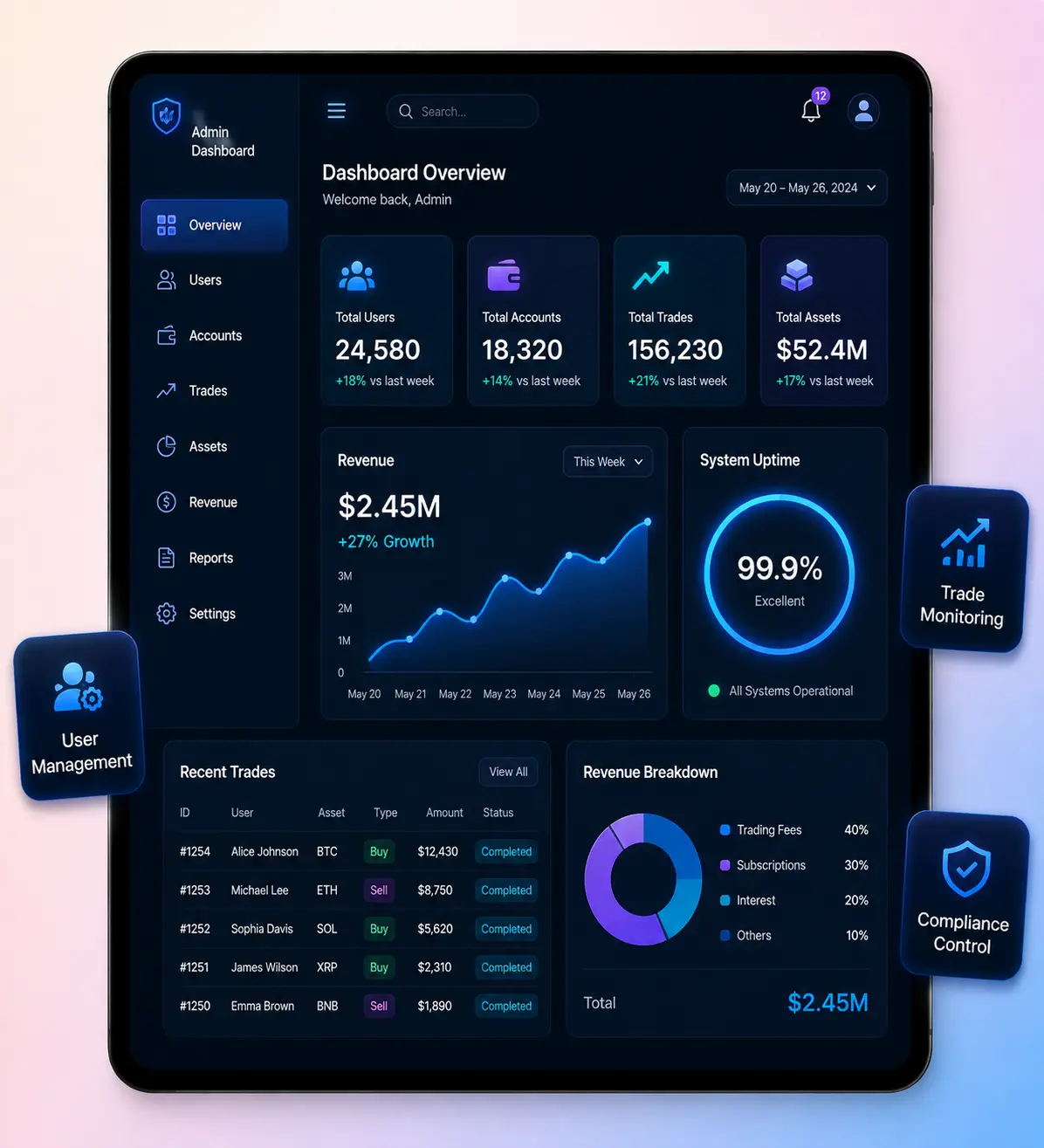
The admin console is how you run the platform without developer involvement, from products and fees to entitlements and reporting.
Account Administration
Open, restrict, and close accounts, and manage entitlements and permissions across your whole client base from one panel.
Instrument Management
Control which instruments and asset classes are listed, and restrict anything your entity is not permitted to offer clients.
Fee Configuration
Configure commissions, subscription tiers, spreads, and interest rules per market, without ever touching a line of code.
KYC Case Review
Work identity, sanctions, and PEP alerts through a review queue with the full evidence trail attached to each decision.
Funding Controls
Set deposit limits, instant-deposit exposure, and withdrawal holds to match the fraud and credit risk you are willing to run.
Statement Generation
Produce contract notes, periodic statements, and tax documents automatically on the cycle your jurisdiction requires.
Incident Management
Log outages, mis-trades, and client complaints with the workflow an examiner will expect you to be able to demonstrate.
Analytics Dashboard
Track funded accounts, balances, order volume, revenue, and churn in real time from one consolidated dashboard view.
Access and Roles
Grant granular staff permissions with maker-checker on sensitive actions, so privileged changes are never unilateral.
Content and Pages
Edit landing pages, help content, and disclosures from the admin panel, with full versioning on anything client-facing.
Add AI Once Your Brokerage Is Live
These AI capabilities are optional add-ons, not part of the standard MVP build. In a regulated brokerage they also carry supervisory implications, so we scope them deliberately and only after your core platform is live.
AI Onboarding Checks
Speeds document verification and identity matching during KYC, with every decision logged and a human reviewer retained for anything the model flags.
AI Transaction Monitoring
Surfaces AML and market-abuse patterns for your compliance team to review. It supports supervision rather than replacing it, which is the only defensible framing here.
AI Client Support
Answers account, funding, and platform questions around the clock, with a hard boundary: it does not answer questions that would constitute investment advice.
AI Document Summaries
Condenses filings, earnings reports, and corporate actions into plain summaries clients can read, clearly labeled as information rather than a recommendation.
AI Churn and Balance Signals
Flags accounts whose balances are drifting away, which matters because interest on balances is the leader's largest revenue line.
AI Fraud Detection
Detects account takeover, mule patterns, and funding fraud before losses land, using behavior rather than static rules.
What This Robinhood Clone
Build Includes
Here is what separates our trading platform build from the scripts ranking for this term.
We Ask About Your License First
Our scoping call starts with your regulator, your clearing partner, and your permissions. Vendors who do not ask are the ones who will hand you a crypto script with a stock ticker on it.
Regulation-Aware Revenue Design
We build the revenue model your market permits, not the one that ranks. If you are launching in the EU or UK, we will tell you the order-flow model is unavailable before you plan around it.
Audit-Ready by Default
Statements, confirmations, immutable logs, and reporting exports ship as standard, because a broker gets examined and a demo does not.
The Codebase Is Yours
You receive the complete source at handoff. That matters more here than on any consumer app: when an examiner asks how your order handling works, you need to answer without calling a vendor first.
Scoped Against Your Clearing Partner
The build is shaped around the interfaces your clearing firm and market data vendor actually expose, not around a template that assumes someone else's stack.
