
BlaBlaCar Clone App Development
Launch your own long-distance carpooling marketplace built to your exact vision. Our BlaBlaCar clone pairs corridor route matching, seat booking, and two-way trust with the mechanic every other script leaves out: a cost-share price ceiling that keeps your drivers legal. You set the corridors, the ceiling, and the service fee. You own the source code and every revenue stream from launch.
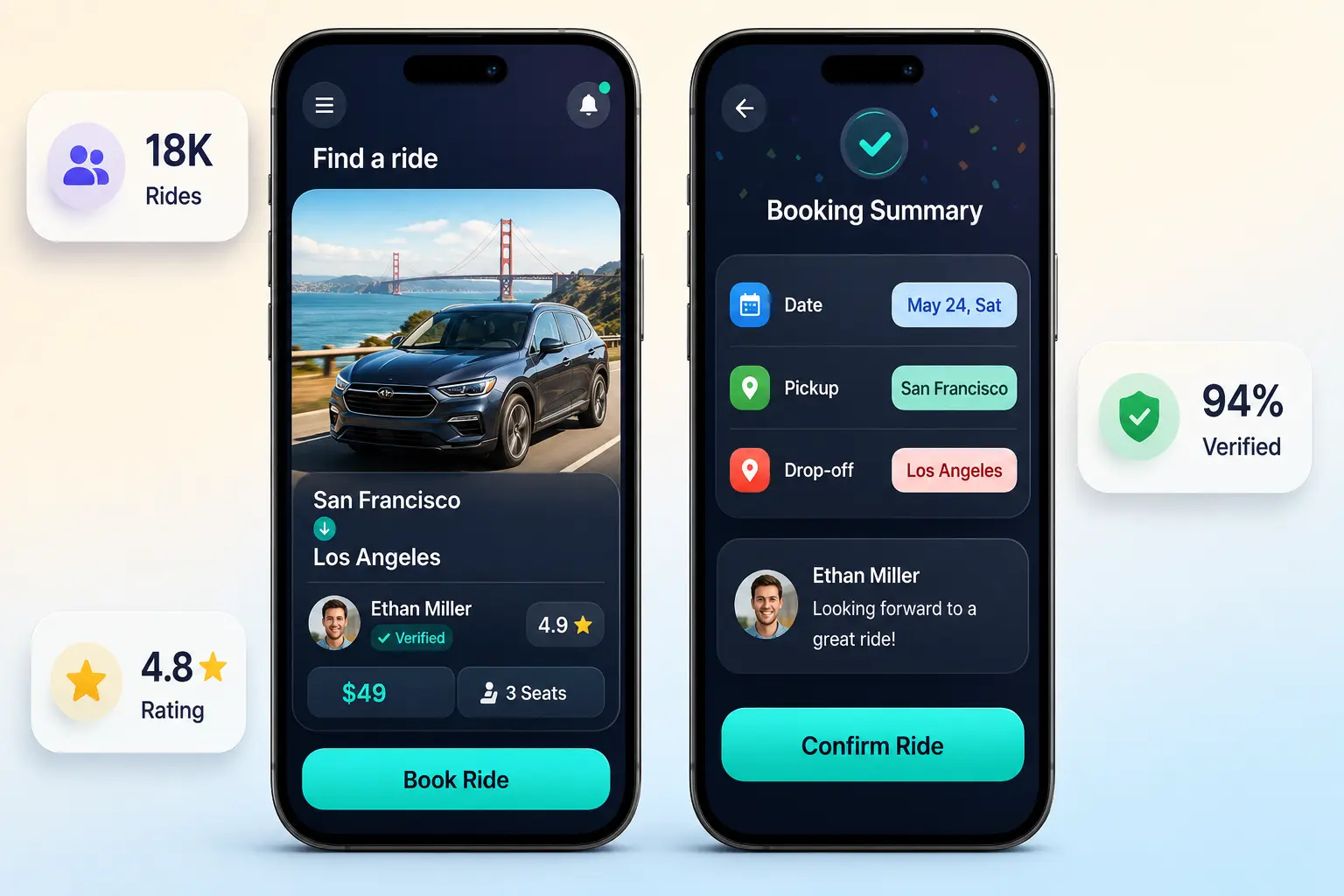
The Marketplace Built on Empty Seats
A BlaBlaCar clone is a long-distance carpooling marketplace. Drivers who are already making a journey publish their spare seats, passengers heading the same direction book one, and they share the cost of fuel and tolls. You are not dispatching anyone. You are matching a trip that was going to happen regardless with people who want to be on it, and taking a service fee for making that possible.
The supply is what makes this model unusual. Your inventory already exists, on roads, right now, being driven by people who are paying for the whole tank alone. You do not recruit it, subsidize it, or own it. Every empty seat on a motorway is unsold capacity, and the marketplace's only job is to find it, price it inside the legal ceiling, and make two strangers trust each other enough to share it.
Your clone recreates that on code you own outright. The difference between a clone script and a white-label rental is ownership. Most providers charge recurring fees while keeping control of your software, your corridors, and your pricing rules.
With xpertz.io, you receive the complete source code, with full ownership, independent hosting, and the freedom to set the corridors, the price ceiling, and the service fee on your own terms.
Why a Carpool Is Not a Taxi Service
This is the most important section on this page, and almost no vendor selling a carpooling script will tell you any of it. Several rank right now describing a BlaBlaCar clone as a taxi app script, and at least one advises founders to take a commission of five to forty percent of the total ride cost. Follow that advice and you will not have built a carpooling marketplace. You will have built an unlicensed taxi network.
Here is the distinction that everything rests on:
- The category leader states in its own terms that it does not provide transport services and does not act as a carrier, only an intermediary
- It caps what a driver may charge, explicitly to guarantee the activity remains non-professional, non-commercial cost-sharing
- Because drivers recover costs rather than earn income, they are not commercial carriers, so taxi licensing and commercial insurance rules do not bite
- Let a driver profit and that protection disappears: commercial transport rules can apply, and a personal motor policy may not cover the trip at all
- The price ceiling is therefore not a limitation on your revenue. It is the structural reason your platform is legal at all
Your revenue is the service fee the passenger pays on top of the driver's cost contribution. It sits outside the cost-share entirely, which is exactly why it does not break the model. A vendor who tells you to take a percentage of the fare like a taxi app has misunderstood the business they are selling you, and their misunderstanding becomes your regulatory problem.
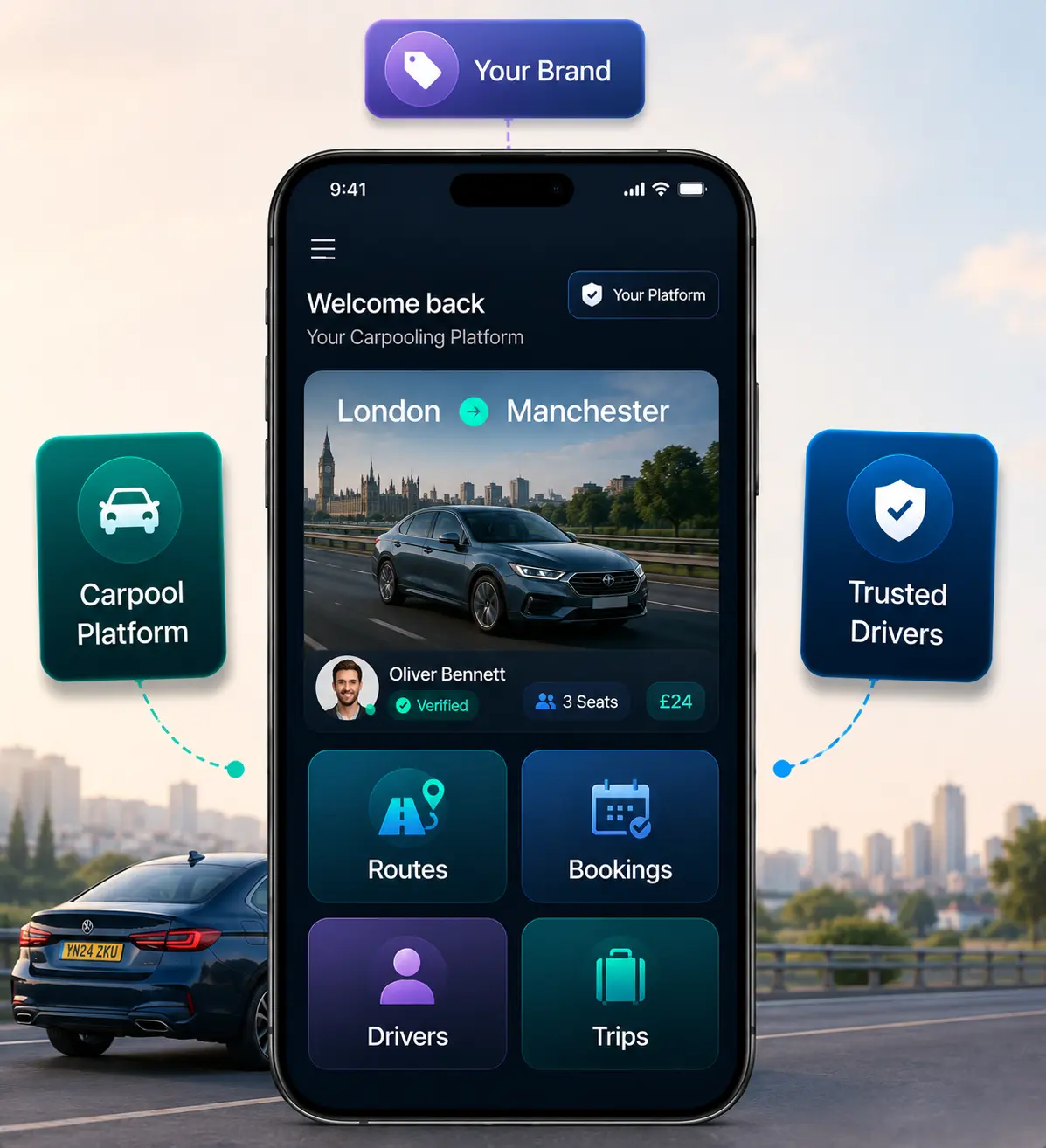
Core Features of Our BlaBlaCar Clone App
Every feature below ships in the standard build. Not add-ons, not upsells, not a stripped tier. The base platform your drivers and passengers get on day one, price ceiling included.
Ride Publishing
Drivers post a trip they are already making, with route, date, seats, and stopovers, in under a minute. Supply here is a journey happening anyway, so publishing must be faster than deciding not to bother.
Corridor Route Matching
Search matches passengers to any driver whose route passes near them, not only exact origin and destination pairs. Matching along a corridor rather than point to point makes a thin early network usable.
Cost-Share Price Ceiling
The pricing engine caps what a driver can ask per seat per kilometre, so a trip stays cost recovery, not income. This ceiling is not a limitation to work around. It is the legal foundation of the model.
Seat Booking and Instant Book
Passengers reserve individual seats and pay upfront, with instant booking or driver approval per your rules. Prepaid seats are what convert a casual listing into a trip that both sides actually show up for.
Identity Verification
Government ID, phone, and email verification build the trust two strangers need before sharing a car for six hours. Verification carries more weight here than on almost any other marketplace you build.
Two-Way Ratings
Drivers and passengers rate each other after every completed trip, and the history is public on both profiles. Mutual accountability is what lets strangers agree to sit together for hundreds of kilometres.
On-Platform Messaging
Passengers and drivers coordinate pickup in app, with contact details withheld until a booking confirms. Keeping conversation on platform protects users from scams and your service fee from leaking away.
Ladies-Only Trips
Women can publish and book trips where every occupant is female, enforced by the platform rather than by request. For much of your addressable market, this option decides whether they book at all.
Stopovers and Detours
Drivers add intermediate stops, so one long trip sells several shorter seats and matches more passengers. Stopovers multiply bookable inventory inside a single journey without adding any driver supply.
Cancellation and No-Show Rules
Configurable cancellation windows, refunds, and no-show penalties protect both sides when plans change. Late driver cancellation is this category's most common complaint, so the rules are yours to set.
Trip Wallet and Payouts
Passengers pay into the platform, funds are held until the trip completes, then the driver is paid out. Holding funds through the trip kills no-show fraud and keeps money from moving off your platform.
Admin and Moderation
A full admin panel handles users, verification, disputes, the price ceiling, and the moderation queue. You set the rules, review the edge cases, and run the marketplace without touching the code.
Who Should Build on the Carpooling Model
Carpooling is not one business. The same marketplace serves intercity founders, emerging-market operators, campus and employer commuting, and travel brands adding a shared layer.
Intercity Mobility Founders
You want to connect cities that trains and buses serve badly, using cars that are already making the trip anyway.
Emerging-Market Founders
You target a country where car ownership is rising, intercity transport is poor, and cost-sharing is a daily necessity.
Corporate Commute Operators
You want to run employee or campus carpooling, where the same people travel the same route five mornings a week.
Bus and Travel Operators
You already sell intercity travel and want carpooling as a complementary layer under one multimodal booking app.
Community Platforms
You serve a university, employer, or region whose members already share journeys informally and need a safer system.
Investors
You want a launch-ready marketplace in an asset-light, proven, and profitable model rather than a build from zero.
From Scope to Your First Shared Ride
Our build process is structured and transparent. Six clear stages take your carpooling platform from scope to launch, tested, documented, and delivered on the schedule we agree.
Discovery and Requirements
We start with a detailed conversation about your launch corridors, the cost-share ceiling for your market, service fee model, verification standards, and timeline, and produce a written scope you approve before any work begins.
Planning and Architecture
Our team designs the corridor matching engine, the pricing ceiling, and the trip and payout systems, sized for the routes you are launching on, with a milestone timeline mapped before development starts.
UI/UX Design
Custom interface design applied to your brand. Trip publishing, corridor search, the booking flow, and the admin panel are designed and approved before development starts.
Development and Integration
We build the platform and integrate route matching, seat booking, the price ceiling, ID verification, messaging, held payments, and driver payouts. You have staging access throughout to review progress.
Testing and Quality Assurance
Comprehensive testing across corridor matching, booking, the price ceiling, payments, cancellations, and payouts on web and mobile, plus load and security checks before anything goes live.
Deployment and Handoff
Full source code delivery, app store submission, deployment to your server, an admin panel walkthrough, and six months of free post-launch support starting from handoff.
Where the Platform Earns Without Owning a Car
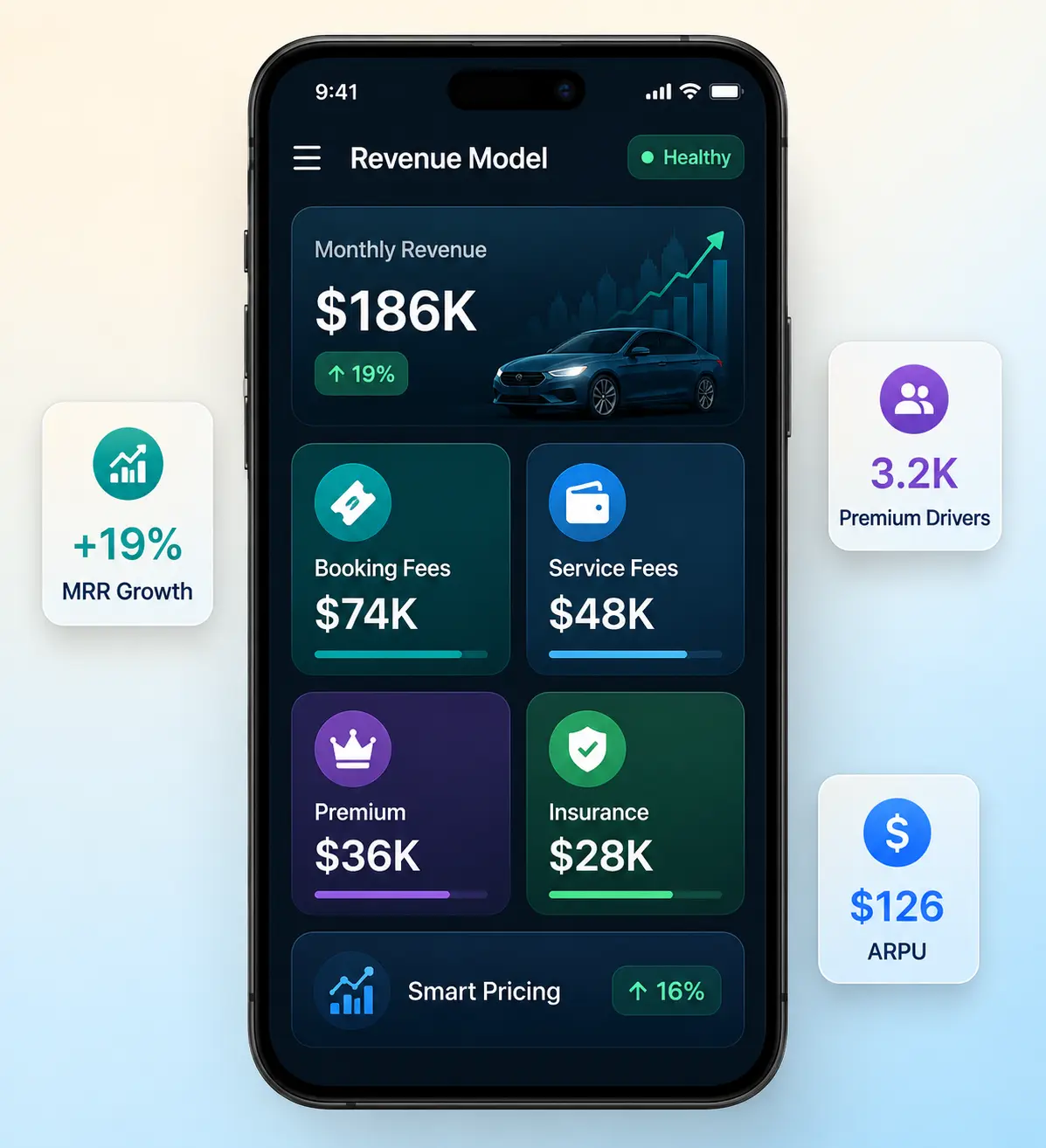
Your driver cannot profit, so your revenue cannot come from their margin. Here is where a carpooling marketplace actually earns, all configured from your own admin panel.
Passenger Service Fee
You charge the passenger a service fee on top of the driver's cost contribution, and that fee is your core revenue. It sits outside the driver's cost-share, which is why the model stays legally clean.
Bus and Train Ticketing
Sell bus and rail tickets from partner operators alongside carpool seats, earning a margin on each booking. Multimodal booking is how the leader turned a carpool app into a whole travel platform.
Corporate Commute Plans
License a commuting version to employers and campuses, billed per seat or per site rather than per trip. Daily commuting is repeat demand on fixed routes, the steadiest revenue this model produces.
Optional Trip Insurance
Partner with an insurer to offer optional trip cover at booking and earn commission on each policy. It monetizes reassurance passengers already want without touching the driver's cost contribution.
Featured Route Placement
Let operators and partners promote routes or destinations in search, keyed to the corridor rather than the person. A clean product that never requires profiling an individual traveller's movements.
Contextual Advertising
Sell placements to travel brands, fuel networks, and service stops relevant to the route travelled. Contextual, route-level ads add revenue without collecting or selling anything about the individual.
The Stack Behind Route Matching at Scale
We build on standard, well-documented technologies. Any developer can read the code, extend it, and maintain it without a proprietary framework learning curve.
React.js
Node.js
PostgreSQL
Google Maps Routing API
Redis
Socket.io
React Native
Stripe Billing
ElasticSearch
NestJS
AWS S3
Twilio SMS API
Can You Profit When Drivers Cannot?
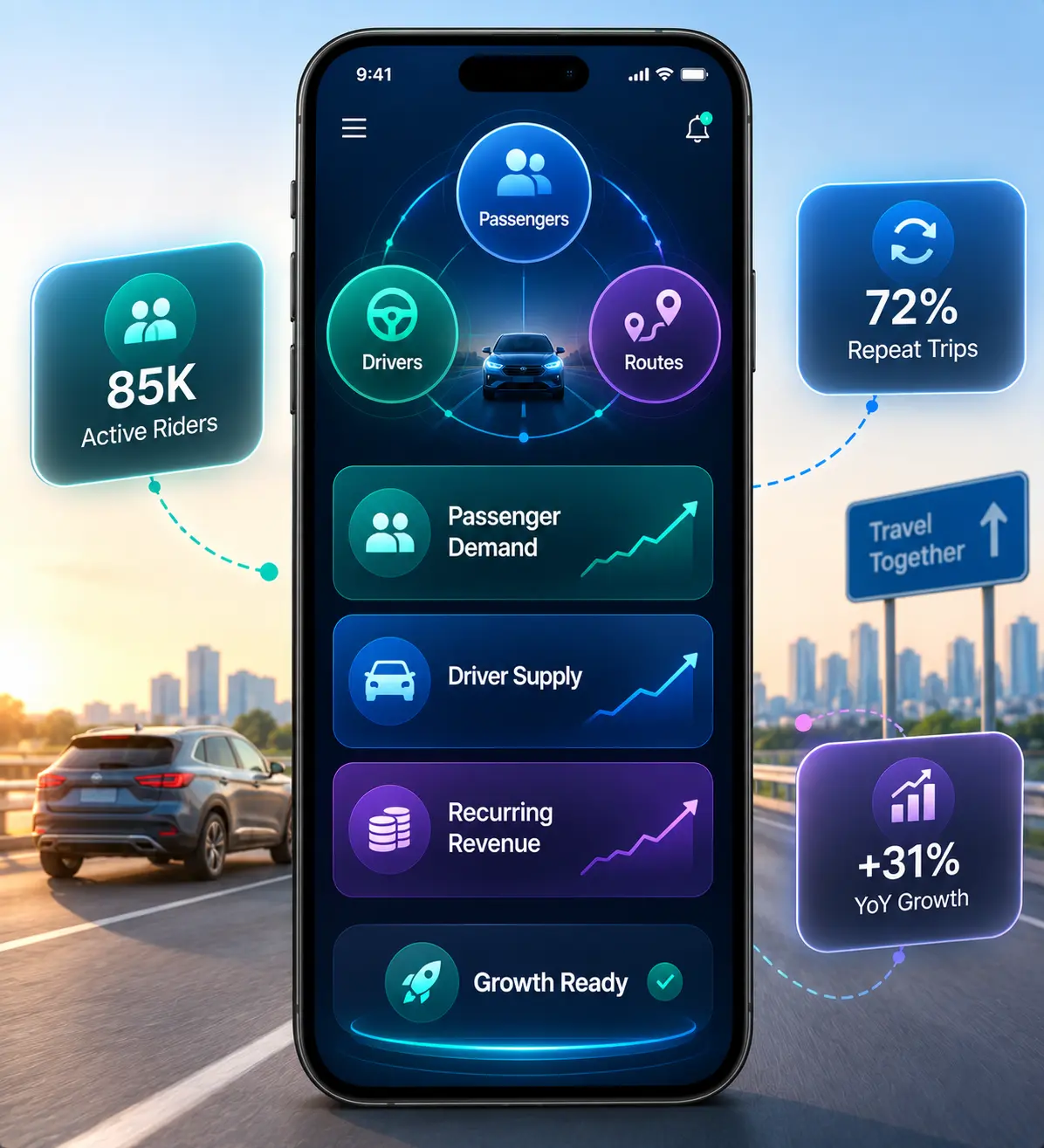
Yes, and the answer is structural rather than clever. Your driver is capped at cost recovery, so your margin was never going to come from their earnings. It comes from the service fee the passenger pays on top, which is why the leader reached net profitability without owning a vehicle or employing a driver.
Three things drive whether your platform works:
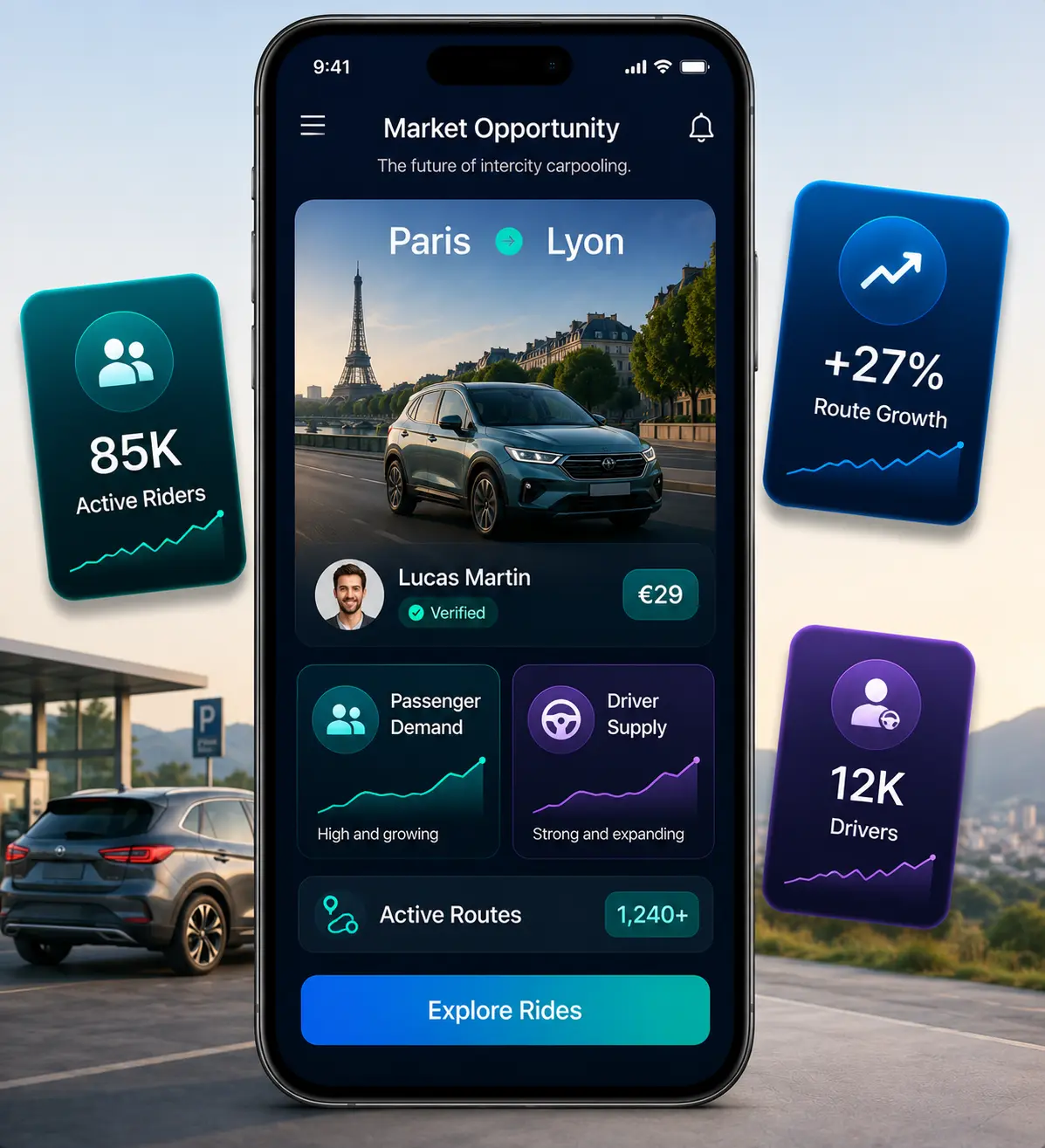
- Corridor density, not user count: A carpool marketplace lives or dies per route. Ten thousand users spread nationwide is an empty search; two thousand on one busy corridor is a working business. Launch route by route and prove fill rate before widening.
- Fee restraint: Your service fee is your entire revenue, and it is also the thing that pushes people to arrange the trip privately. Price it where staying on the platform is obviously worth it, and design against the leak rather than relying on goodwill.
- Trust density: Two strangers share an enclosed space for hours. Verification, two-way ratings, ladies-only options, and held payments are not features here, they are the preconditions for anyone booking at all.
A professionally built platform removes the technical failure points. The rest is execution on corridors, fees, and trust.
Seat Payments, Cost Caps, and Driver Payouts
Money moves differently here than on any other marketplace, because the platform must hold funds through the trip and enforce a ceiling on what the driver receives.
Passenger Pays Upfront
Passengers pay the cost contribution plus your service fee at booking, through cards, wallets, and the local methods your markets actually use, including UPI.
Funds Held Until Arrival
The platform holds the driver's share until the trip completes and is confirmed, which is what makes no-show fraud unprofitable for both sides.
Ceiling Enforced in the Engine
The pricing engine enforces the per-kilometre cost-share ceiling for each market before a trip can even be published, so compliance is automatic rather than manual.
Driver Payouts
Drivers are paid out on the settlement cycle you configure, with statements per trip, while your service fee is retained automatically at the point of booking.
Complete Feature Set for Passengers
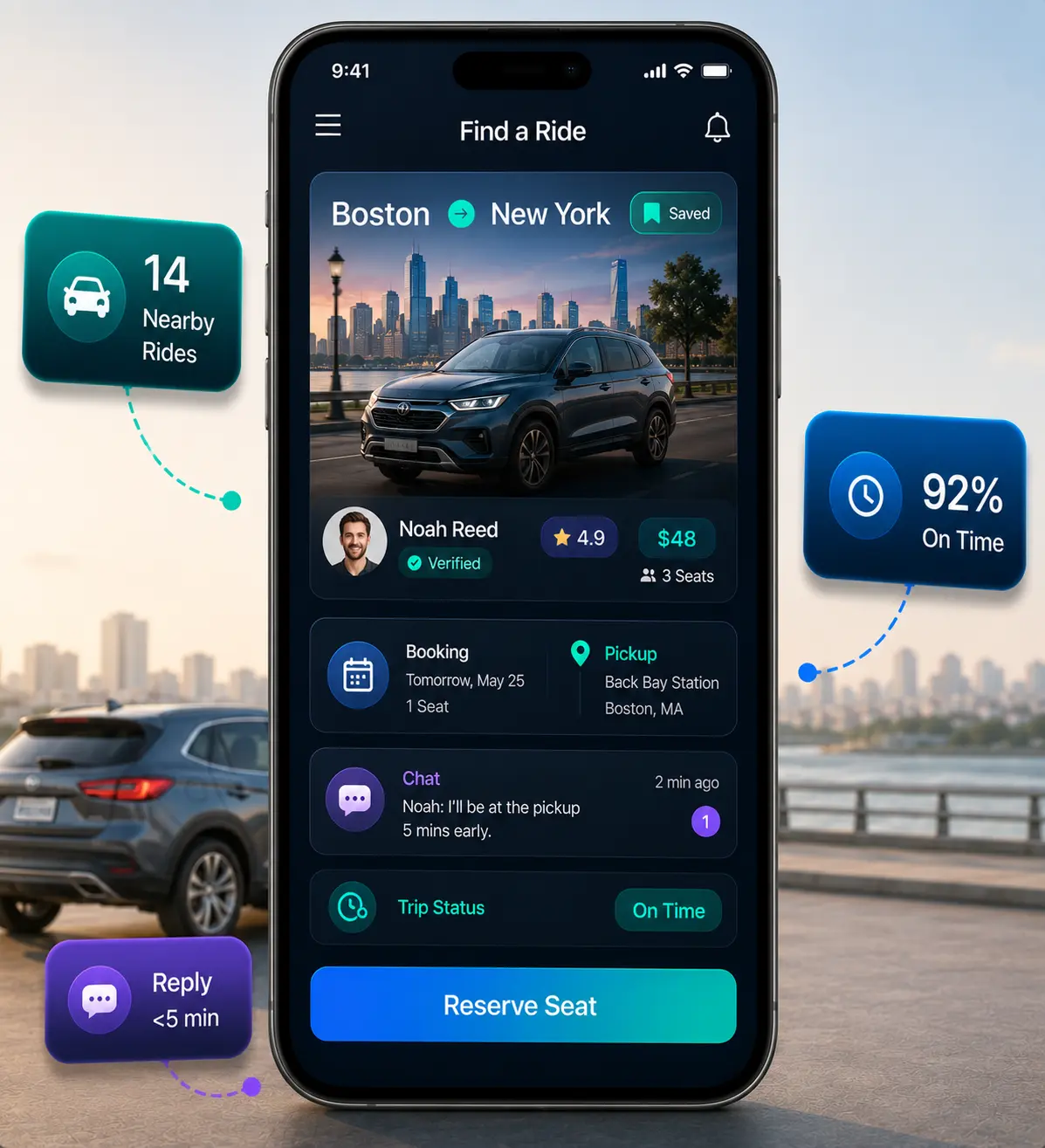
Passengers decide whether a corridor is liquid enough to be worth searching twice. Here is the full feature set for passengers on your BlaBlaCar clone.
Search Along a Route
Passengers find drivers whose journey passes near them, not only those with the exact same start and end points listed.
Book a Seat
Passengers reserve a specific seat and pay upfront, with instant booking or driver approval depending on your rules.
See Who They Ride With
Passengers view verified profiles, ratings, and the full trip history before committing to hours in a stranger's car.
Choose Ladies-Only
Women can filter for trips where every occupant is female, enforced by the platform rather than left to a polite request.
Message Before the Trip
Passengers coordinate pickup details in the app, with contact details shared only once a booking is properly confirmed.
Pick a Stopover
Passengers board or alight at intermediate stops along a driver's route, opening far more trips than end to end travel.
Pay Securely
Passengers pay into the platform and the driver is paid only once the trip completes, which protects both sides fully.
Cancel Under Clear Rules
Passengers cancel inside a defined window with clear refund rules published upfront rather than decided after the fact.
Rate the Driver
Passengers rate and review after every trip, feeding the reputation system that the next passenger relies on to book.
Track Their Trips
Passengers see upcoming and past trips, receipts, and refunds in one place, without ever needing to contact support.
Complete Feature Set for Drivers
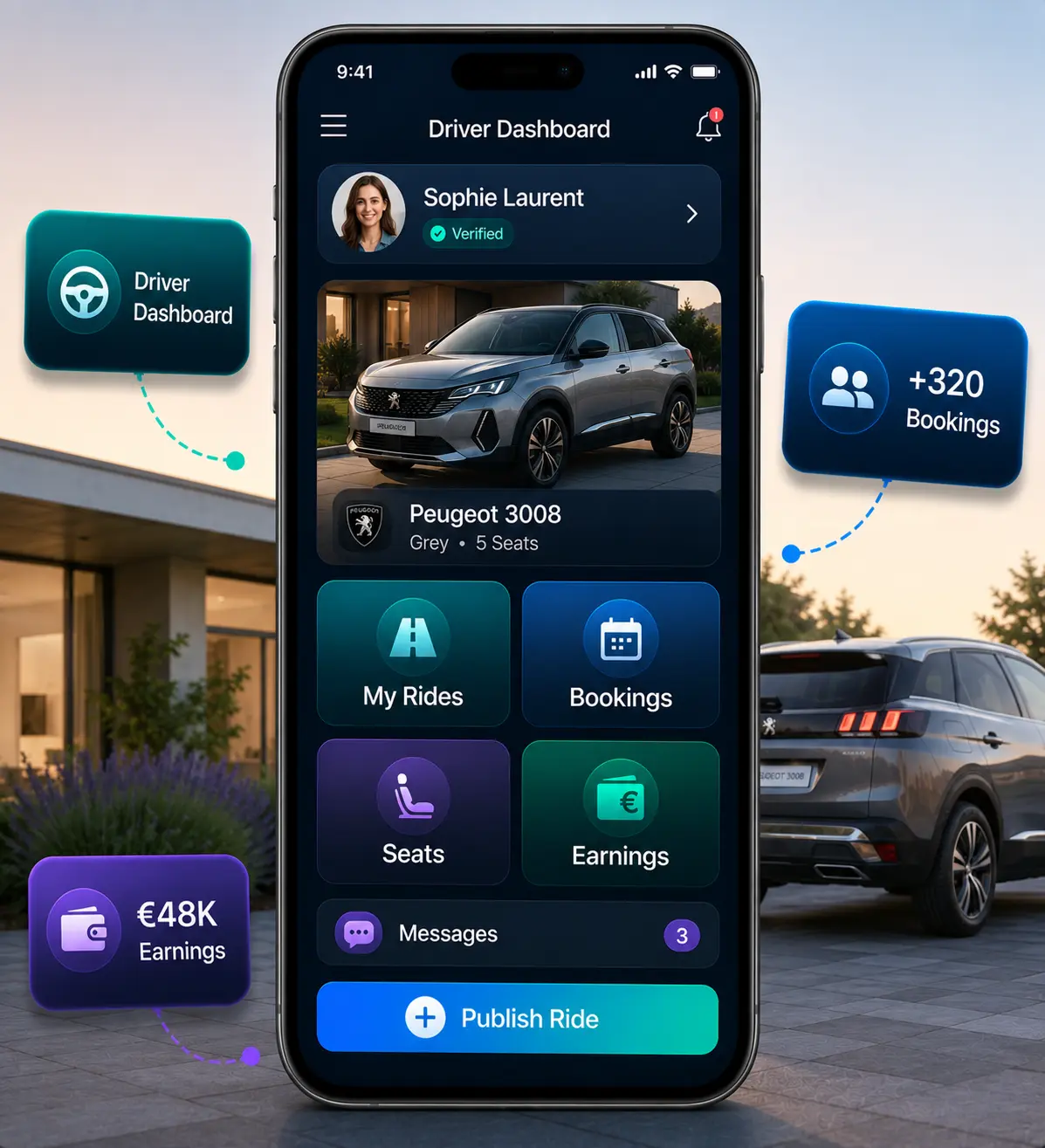
Drivers supply seats they were never going to sell, so the tooling has to be nearly effortless. Here is the full feature set for drivers.
Publish a Trip
Drivers post a journey they are already making, with route, time, seats, and stopovers, in well under a single minute.
Set a Fair Contribution
Drivers set a per-seat contribution inside the platform ceiling, with a suggested figure based on fuel and toll costs.
Approve Passengers
Drivers review passenger profiles and ratings, and choose between instant booking and approving every single request.
Add Stopovers
Drivers add intermediate stops, filling more seats across one journey without any detour they had not already planned.
Chat Before Departure
Drivers coordinate pickup points with booked passengers in the app, without ever handing over a personal phone number.
Get Paid After the Trip
Drivers receive their cost contribution once the trip completes, paid out on whatever settlement cycle you configure.
Build a Reputation
Drivers accumulate ratings and verified badges that make passengers considerably more likely to book their future trips.
Manage Cancellations
Drivers handle changes inside clear rules, with penalties that discourage the late cancellations passengers hate most.
Set Preferences
Drivers state music, pets, smoking, and conversation preferences upfront, so every trip is matched on comfort as well.
See Their Trips
Drivers track published, booked, and completed journeys, plus their payouts, in one straightforward personal dashboard.
Complete Feature Set for Admin
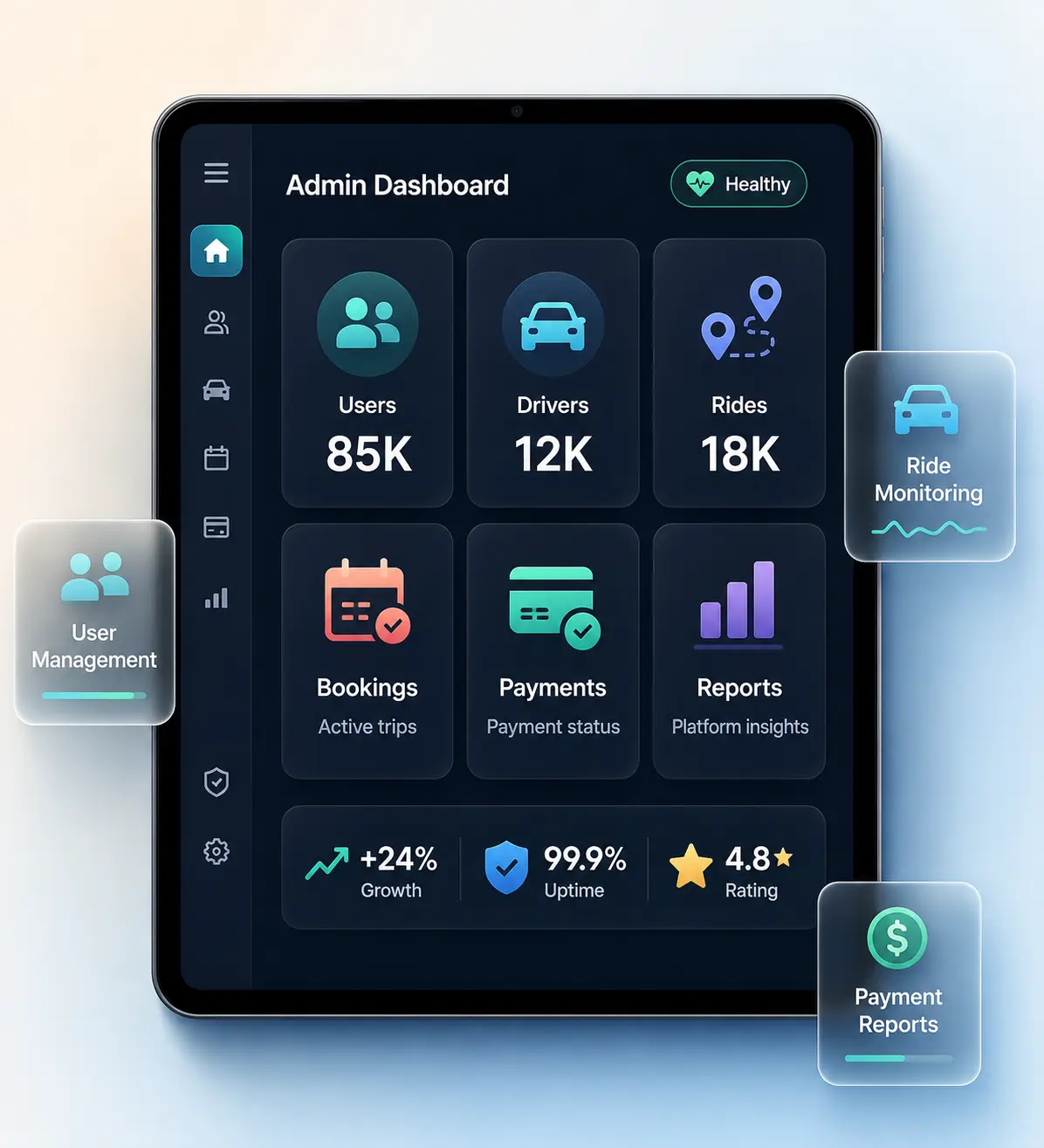
The admin panel is how you run the marketplace without developer involvement. Every core operation, including the price ceiling, is covered from one place.
Price Ceiling Control
Set and enforce the per-kilometre cost-share ceiling by market, the single control that keeps drivers non-commercial.
Verification Review
Process ID, phone, and email verification through a review queue before a member earns a visible, trust-building badge.
Service Fee Configuration
Configure the passenger service fee by route, distance band, or market, without ever having to touch a line of code.
Dispute Resolution
Handle no-shows, cancellations, and refund disputes with a clear workflow and the entire trip record in a single place.
Route and Corridor Tools
Manage the cities, corridors, and stopovers that your network covers, and open new routes as your trip density grows.
Off-Platform Detection
Flag members exchanging contact details to book privately, the quiet leak that drains any marketplace of its revenue.
Moderation Queue
Work reports, flagged messages, and profiles in a real-time queue built for the volume that a live marketplace creates.
Payout Management
Configure payout methods, cycles, and holds, and release each driver payout once the trip is confirmed as completed.
Analytics Dashboard
Track members, published trips, fill rate, corridor density, and revenue in real time from one clear dashboard view.
Content and Pages
Edit landing pages, route pages, and metadata from the admin panel to help the platform rank and win far more signups.
AI Worth Adding Once Your Routes Get Dense
These AI capabilities are optional add-ons, not part of the standard MVP build. We layer them in as a customizable extra once your corridors carry enough trips for the data to mean anything.
AI Corridor Matching
Learns which detours drivers actually accept and surfaces matches a strict radius filter would miss, lifting fill rate on routes you already have.
AI Contribution Suggestions
Recommends a per-seat contribution inside your ceiling based on fuel, tolls, and demand, so drivers price fairly without ever breaching the cap.
AI Off-Platform Detection
Flags message patterns that signal two members arranging a trip privately, protecting the service fee that funds the entire business.
AI No-Show Prediction
Identifies bookings likely to end in a late cancellation, the single most common complaint in this category, so you can intervene early.
AI Trust Screening
Screens profiles and documents for fraud and impersonation at scale, which matters more when strangers share an enclosed car for hours.
AI Demand Forecasting
Predicts which corridors and dates will be under-supplied, so you can prompt drivers to publish before passengers search and find nothing.
What Other Carpool
Scripts Leave Out
Here is what separates our carpooling build from the other scripts ranking for this term.
A Real Cost-Share Ceiling
The pricing engine enforces a per-market, per-kilometre cap before a trip publishes. This is the mechanic that keeps your drivers non-commercial, and it is the first thing template scripts leave out.
Corridor Matching, Not Radius
We match passengers along a driver's whole route, including stopovers, rather than on origin and destination pairs. It is harder to build and it is the difference between a usable early network and an empty one.
Full Source Code Delivery
You receive the complete codebase at the end of the project. Host it anywhere, modify anything, and hand it to any development team in the future. No vendor lock-in after delivery.
Six Months of Free Support
Post-launch bugs and questions are covered at no extra charge for six months. You get answers and fixes, not a separate support invoice.
Free Server Installation
We deploy the platform to your server at no additional cost. You do not need a separate technical team to get from build to live.
No Hidden Fees
The quote you receive covers the full project scope. No surprise charges for assumed features or for deployment and launch support.
