Kalshi Clone Script for Event Contract Trading
Launch an event trading platform on exchange-grade software you own. Our Kalshi clone script ships the machinery that real prediction markets run on: a central limit order book, yes and no contracts with a full lifecycle, rule-based settlement, KYC onboarding, and risk controls with audit trails throughout. Built for real-money operation under the licensing framework approved by your legal team, or as a play-money forecasting product from day one.
A Kalshi Clone Is Built Around an Event Contract Exchange
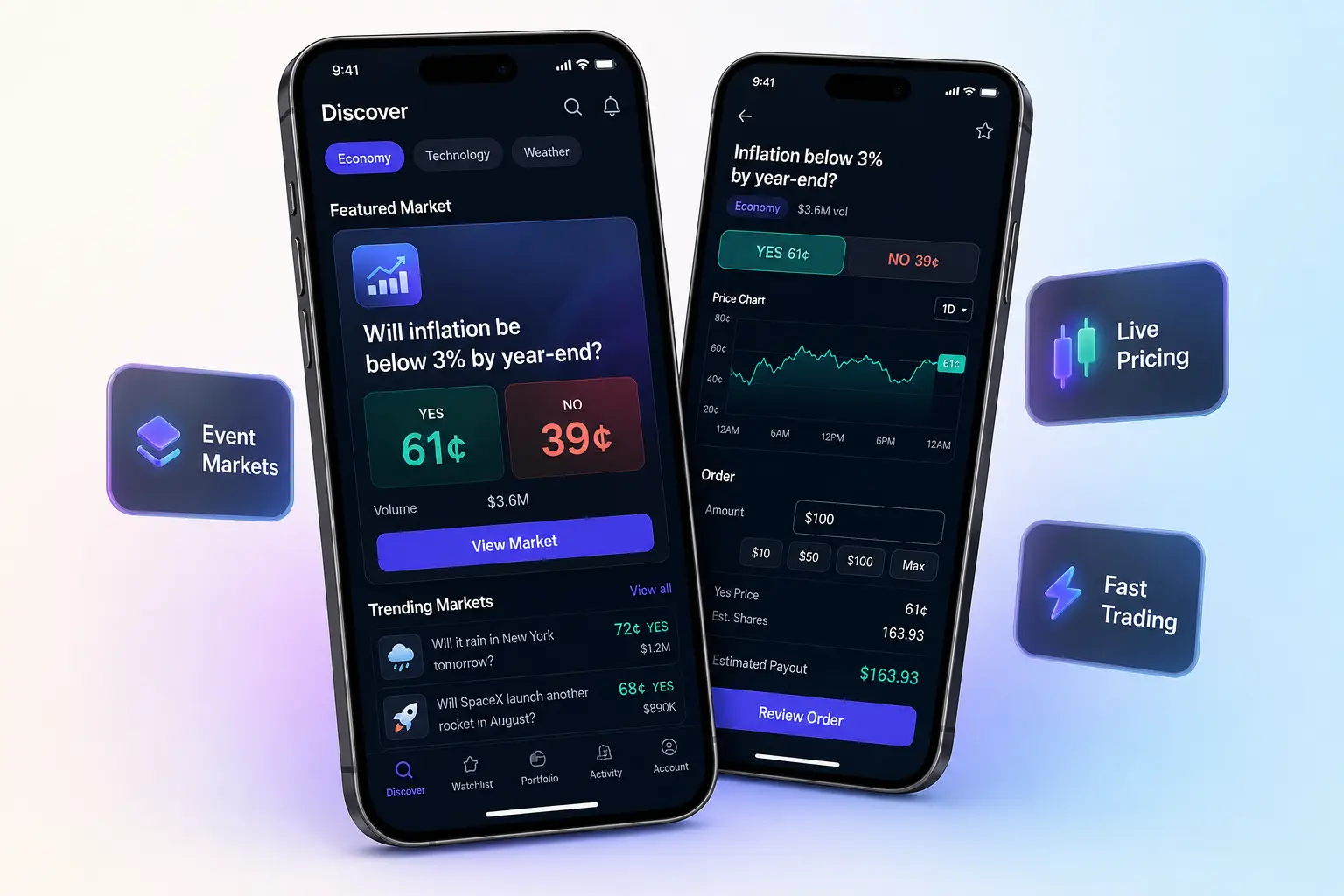
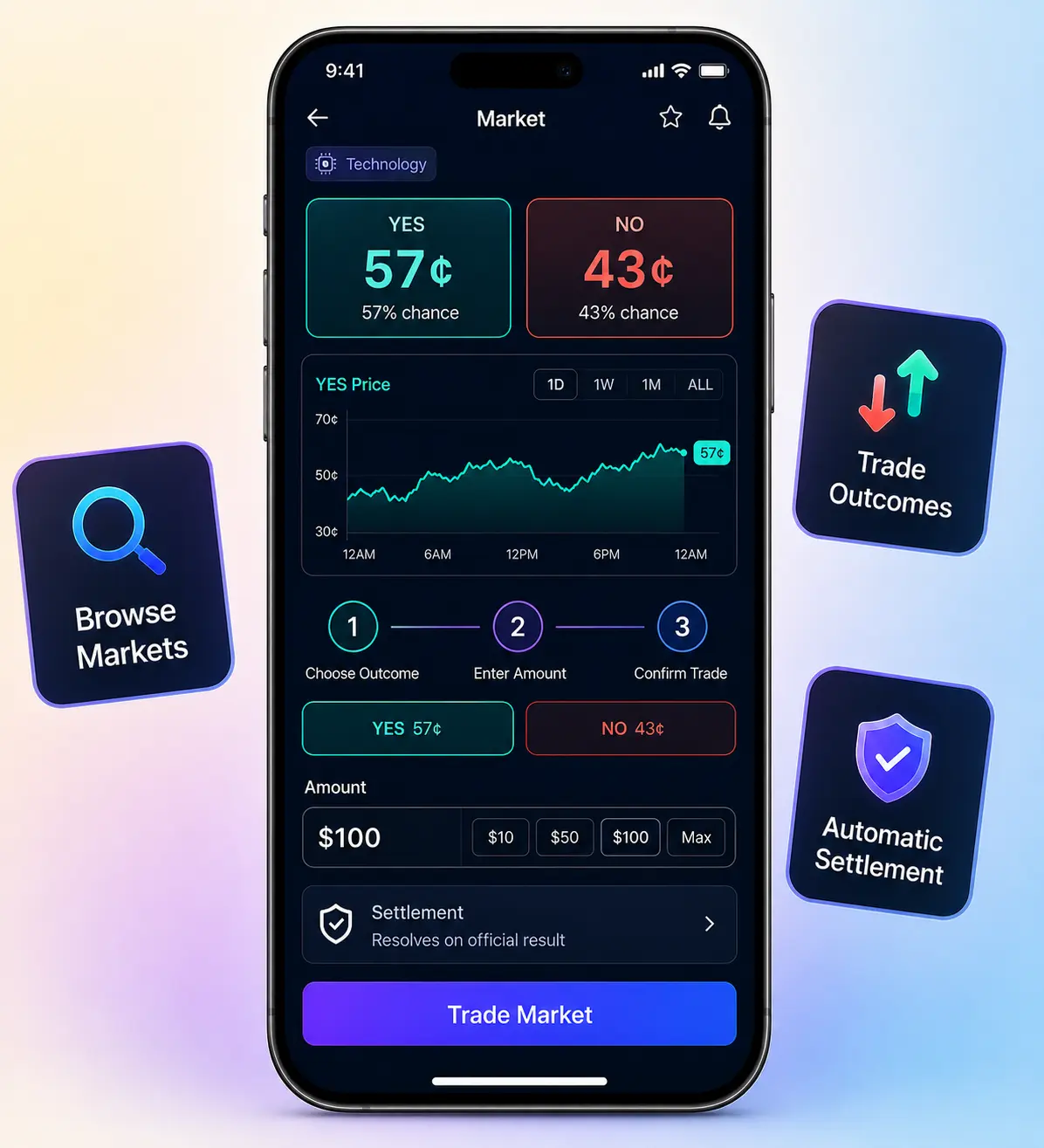
A Kalshi-style platform turns real-world outcomes into tradable Yes/No contracts. Traders place orders at their preferred price, the central limit order book matches buyers and sellers, and each contract moves through a defined lifecycle from market creation and live trading to resolution and settlement.
Behind that trading experience is the infrastructure that makes the model work: a matching engine, contract lifecycle management, trader balances and positions, rule-based settlement, market controls, risk monitoring, and complete transaction and administrative audit trails.
With Xpertz, these components are delivered as part of your own platform rather than tied to a vendor-controlled service. Your team can manage markets, trading rules, fees, maker incentives, settlement workflows, and platform operations from the admin system, with the source code deployed on your infrastructure.
Why Kalshi-Style Prediction Markets Are Gaining Ground
Prediction markets have moved beyond a niche trading product. Growing participation, major funding, brokerage distribution, and institutional involvement have turned event contracts into a serious financial technology category.
- $22B Valuation: Kalshi reached a $22 billion valuation following its latest funding round, reflecting substantial investor interest in regulated prediction markets.
- 1M+ Traders: The platform's us er base expanded rapidly as event trading reached a broader retail audience.
- Sports Drives Major Activity: Sports event contracts have become a major source of trading volume, showing how high-frequency, time-sensitive events can drive repeat participation.
- Distribution Beyond the Core Platform: Brokerage and API partnerships have brought event contracts to users outside Kalshi's own interface, making distribution infrastructure an important part of the business model.
For founders, the opportunity is not simply to reproduce Kalshi's interface. The bigger decisions are which markets to serve, how to build liquidity, where distribution will come from, and which regulatory model the platform will operate under.
Core Features of a Kalshi Clone Prediction Market Platform
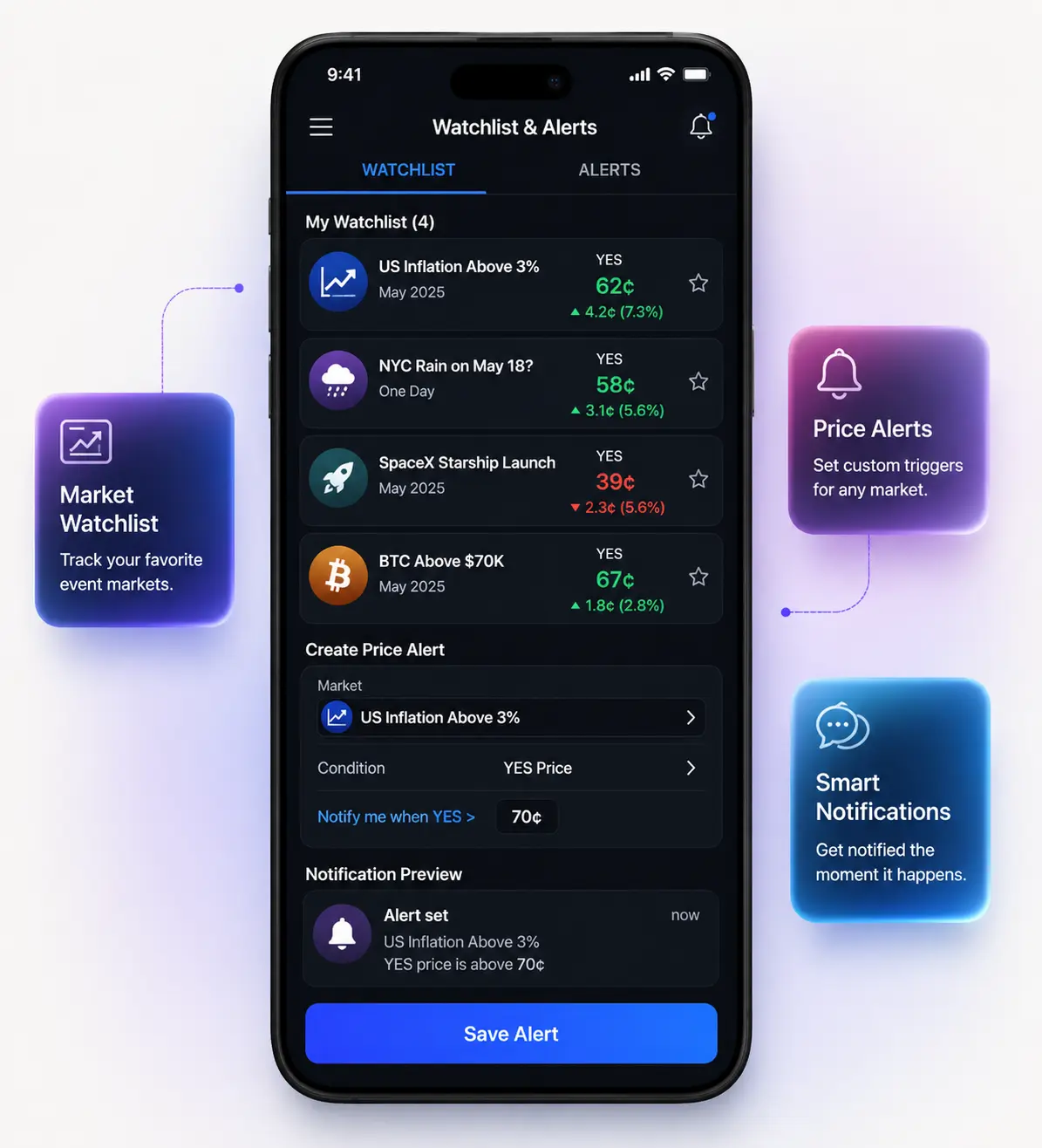
These features cover the core trading, market management, settlement, account, risk, and administrative workflows needed to run a Kalshi-style event trading platform.
Central Limit Order Book
Match Yes and No orders using price-time priority, with limit orders, partial fills, cancellations, market depth, and real-time order status across active markets.
Event Contract Management
Create contracts with defined questions, outcomes, trading windows, resolution sources, and settlement rules. Manage each market from draft and review through live trading, closure, and settlement.
Rule-Based Settlement
Resolve markets against predefined rules and sources, calculate contract payouts, update trader balances, and retain a complete settlement record for each market.
Market Operations Console
Draft, review, schedule, publish, pause, and resolve markets across approved categories from one workspace, with role-based permissions and logged actions.
Live Pricing & Market Data
Display Yes/No prices, order-book depth, spreads, recent trades, volume, and historical price movement with real-time updates throughout the trading interface.
KYC & Account Controls
Integrate identity-verification providers, manage verification states, apply age and jurisdiction restrictions, and control account access based on your operating model.
Ledger & Trader Balances
Track deposits, withdrawals, trading holds, fills, fees, settlements, and payouts through a double-entry ledger with a traceable history of balance movements.
Risk & Market Surveillance
Configure position limits and trading controls, flag unusual activity, monitor potential manipulation patterns, halt markets when required, and maintain detailed audit logs.
Admin Exchange Console
Manage users, markets, fee schedules, maker incentives, settlements, permissions, risk settings, integrations, and exchange-level reporting from one administrative system.
Who Can Build With a Kalshi Clone Platform?
A Kalshi-style prediction market can support several business models, from regulated event trading and fintech products to audience engagement and internal forecasting.
Prediction Market Founders
For teams launching an event trading platform under their own regulatory authorization or an approved licensed-partner model. The exchange can be scoped around your market rules, KYC requirements, risk controls, reporting, and settlement workflows.
Fintech and Trading Platforms
Brokerages, trading platforms, and financial communities can add event contracts as a new product category alongside their existing services, with APIs and account infrastructure connecting the prediction market to the wider platform.
Media and Sports Platforms
Publishers, sports communities, and audience-led platforms can use prediction markets to turn upcoming events into interactive forecasting experiences, including play-money models where appropriate.
Enterprise Forecasting Platforms
Companies can use private prediction markets to gather collective forecasts around product launches, sales targets, project timelines, operational risks, and other internal decisions.
Communities and Consumer Platforms
Existing online communities can add prediction markets around topics their users already follow, such as economics, technology, entertainment, culture, weather, or approved sports categories.
White-Label Exchange Operators
For teams planning to operate prediction exchanges across multiple regions or partner brands with centralized liquidity and risk controls.
Our Kalshi Clone Development Roadmap
Our development process starts with the operating model and exchange mechanics, then moves through architecture, trading workflows, integrations, testing, and deployment.
Define the Operating Model
We establish your jurisdiction, real-money or play-money launch model, market categories, fee structure, user roles, and required third-party integrations before the build is scoped.
Design the Exchange Architecture
We map the central limit order book, matching logic, contract lifecycle, settlement flow, trader ledger, market controls, surveillance requirements, and expected trading load.
Design the Trading Experience
We create the user experience for market discovery, Yes/No trading, order placement, portfolio tracking, settlement, and the operational interfaces used by your market and admin teams.
Build and Connect the Platform
We develop the trading engine and platform modules, then connect approved KYC services, payment or banking rails, resolution data sources, APIs, notifications, and other required integrations.
Test Trading, Settlement and Risk Controls
We validate order matching, partial fills, market state changes, settlement calculations, ledger reconciliation, access restrictions, administrative controls, and system behaviour under heavier trading activity.
Deploy and Hand Over the Platform
The completed platform is deployed to your infrastructure, the source code is handed over, your team is trained on the exchange console, and post-launch support begins.
How a Kalshi Clone Platform Can Make Money
A Kalshi-style prediction market can support several revenue streams, depending on the operating model, jurisdiction, and features enabled on the platform.
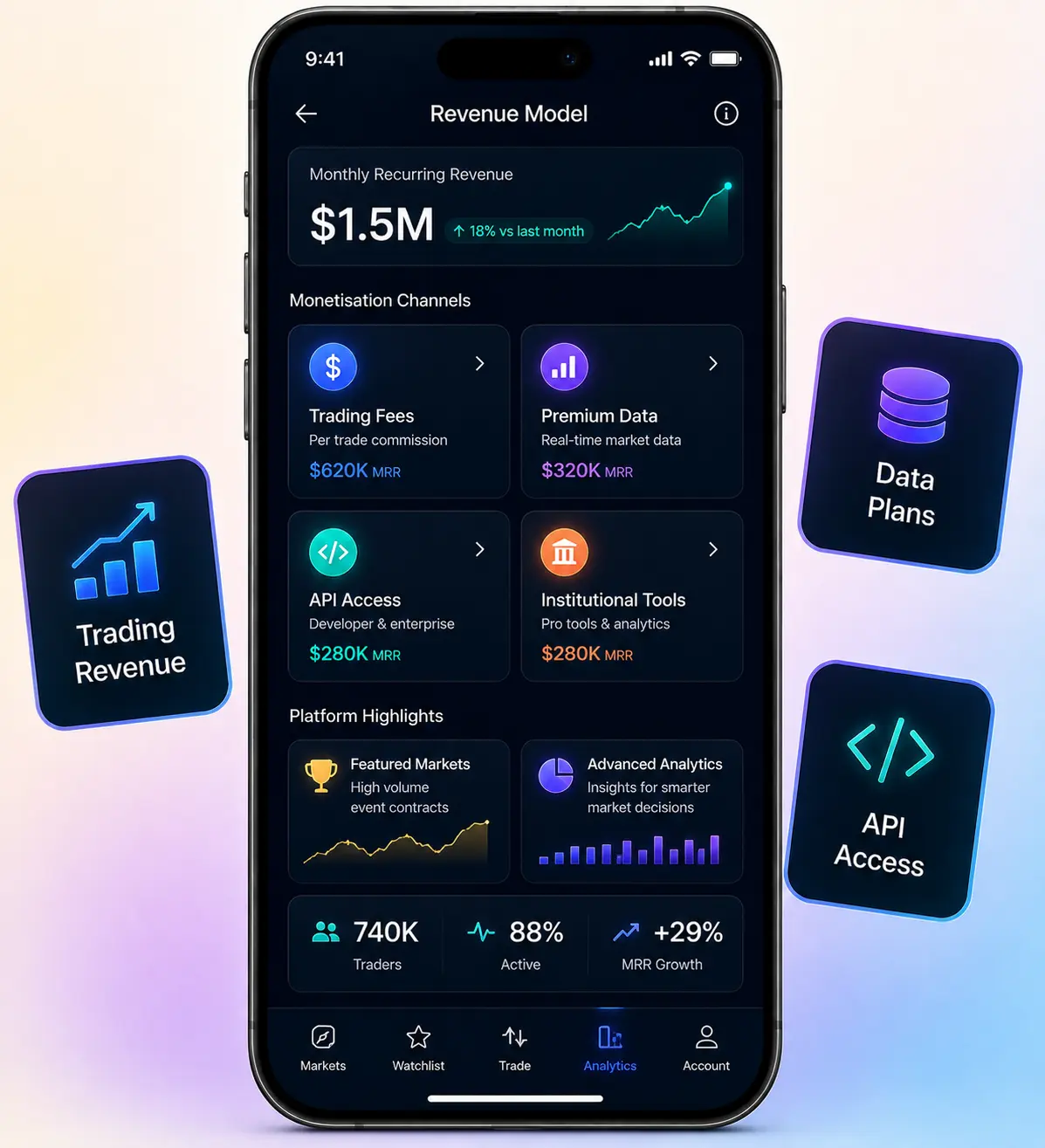
Trading Fees
Charge per contract, per fill, or based on trading volume. Fee schedules can be configured by market, trader tier, or account type.
Maker and Liquidity Programs
Use maker rebates or other liquidity incentives to encourage tighter spreads and deeper order books, with the economics managed through the platform's fee engine.
Settlement and Withdrawal Fees
Apply configurable fees to eligible withdrawal or settlement workflows where your operating model and payment structure support them.
Partner and API Revenue
Monetize partner access through transaction revenue sharing, API usage plans, market-data access, or distribution agreements with third-party platforms.
Market Data Products
Offer historical pricing, probability data, market activity, or data feeds to media companies, research teams, analysts, and other approved customers.
Premium and Play-Money Monetization
For non-cash prediction products, revenue can come from premium analytics, subscriptions, sponsored markets, paid access, or other platform features that do not depend on trading fees.
Technology Stack Behind Our Kalshi Clone Platform
The platform uses established technologies chosen for real-time trading, reliable transaction processing, maintainability, and deployment on client-controlled infrastructure. The architecture can also be extended through APIs and third-party integrations as the exchange grows.
Node.js
NestJS
Rust / Go Matching Engine
PostgreSQL
Redis
Kafka
WebSockets
React.js
React Native
TimescaleDB
KYC Integrations
Stripe / Banking Rails
The Case for Launching a Kalshi Clone Now
Yes, with the discipline the category demands, and the argument is stronger than momentum. The exchange model has been validated by revenue in the billions, institutional entry, and the largest social platforms reportedly building their own, while the incumbents' fights, state litigation, partner-turned-rival maneuvering, concentration in sports, keep the category unsettled enough that positioning still matters. What decides your version:
- Your legal posture, decided first: Real-money, licensed venue, or play-money launch is the scoping question everything else hangs on, and changing it mid-build is the expensive mistake this page exists to prevent.
- Liquidity strategy: An order book without resting orders is a lonely place. Market-making arrangements, rebate design, and market curation, fewer markets with depth beat hundreds of empty ones, are launch strategy, not features.
- A wedge the giants underserve: A country, a language, a vertical like entertainment or local politics where your resolution sources are strong, or the enterprise forecasting niche the consumer platforms ignore.
The build removes the exchange-engineering risk. The posture, the liquidity, and the wedge are the founder's work, and scoping will tell you honestly which one your plan is missing.
How Money Moves Through a Kalshi Clone Platform
Every deposit, trade, fee, settlement, and withdrawal is recorded through the platform ledger, giving traders and administrators a traceable account of how funds move across the exchange.
Deposits and Withdrawals
Connect the payment and banking rails supported by your operating model and jurisdiction. Deposits and withdrawals can follow KYC status, account limits, transaction controls, and approval workflows configured for the platform.
Trading and Position Accounting
When traders place orders, the required balance is reserved and updated as orders are filled, partially filled, cancelled, or closed. Positions, trading fees, and available balances remain synchronized with the ledger throughout the order lifecycle.
Settlement and Payouts
When a market resolves, winning contracts are settled according to the defined outcome and payouts are posted to trader balances. Each settlement retains the market, position, payout, and transaction records needed for reconciliation and operational review.
Kalshi Clone Features for Traders
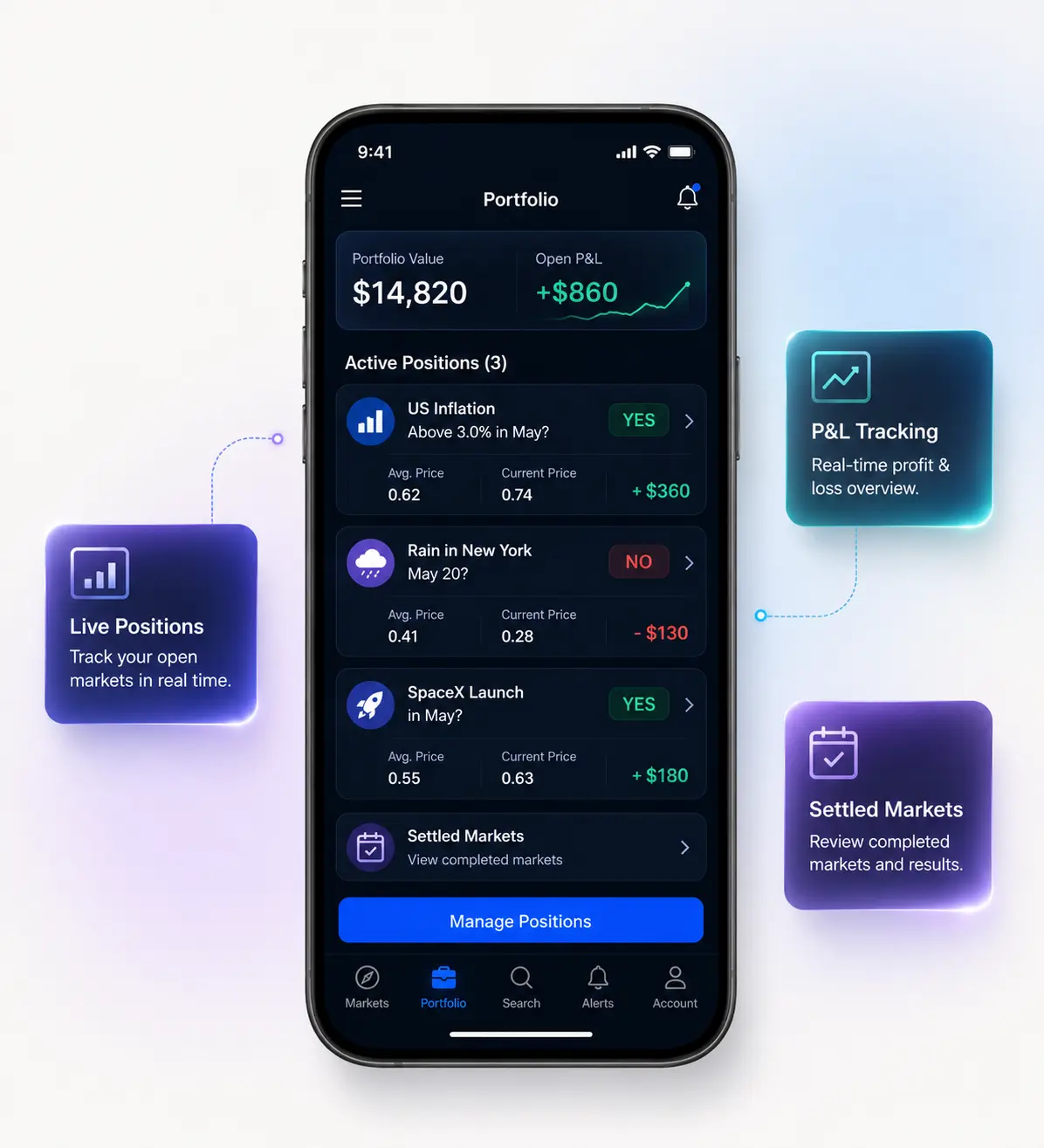
Your prediction market includes dedicated experiences for the people trading contracts.
Trade Yes or No
Buy and sell Yes/No contracts on available event markets with live pricing and clear order status.
View the Order Book
Check bids, asks, market depth, spreads, recent trades, and price movement before placing an order.
Place & Manage Orders
Submit limit orders, track partial fills, cancel open orders, and follow order status from the trading interface.
Track Positions
Monitor open positions, available balances, trading history, fees, and settled outcomes from one portfolio.
Review Market Rules
See the question, trading deadline, resolution source, and settlement conditions before entering a market.
Manage Funds
Access supported deposit and withdrawal methods, transaction history, and account statements from the wallet area.
Kalshi Clone Features for Market Teams
Dedicated tools for the operations team managing markets, contract lifecycles, and outcome resolution.
Create Event Markets
Define market questions, Yes/No outcomes, trading windows, resolution sources, and settlement rules.
Schedule Markets
Prepare upcoming markets and control when contracts open and close for trading.
Manage Market Lifecycle
Move contracts through draft, review, live, halted, closed, and settled states with logged changes.
Resolve Outcomes
Record the final outcome against the defined resolution source and initiate the settlement workflow.
Monitor Market Health
Track volume, spreads, order-book depth, open interest, and trading activity across active markets.
Manage Market Categories
Organize markets across approved topics and control their availability according to your operating requirements.
Kalshi Clone Features for Admins
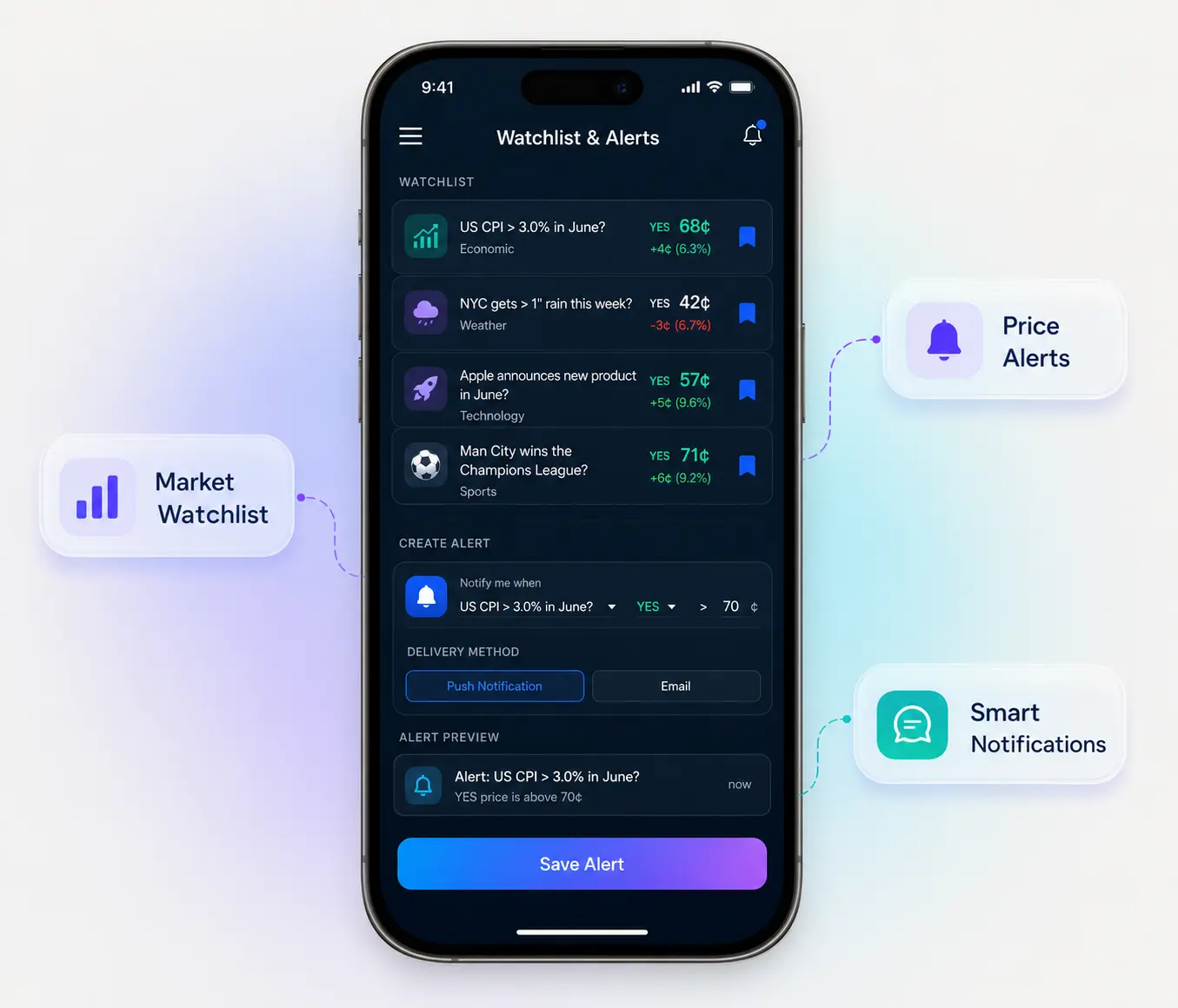
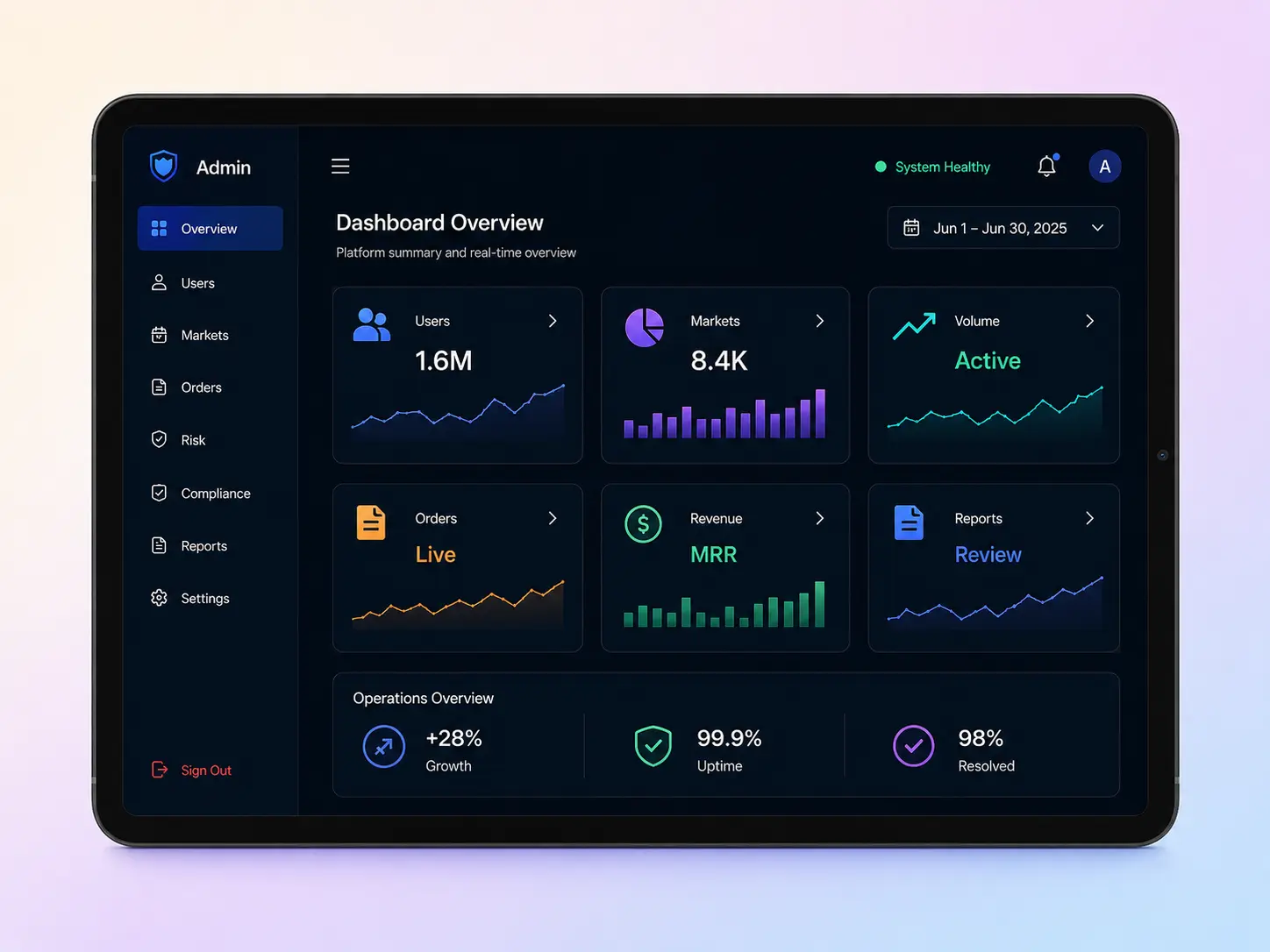
Comprehensive administrative controls to manage users, compliance, risk, and platform operations.
User & KYC Management
Review trader accounts, verification status, jurisdiction controls, account limits, restrictions, and administrative actions.
Fee & Rebate Controls
Configure trading fees, maker incentives, partner revenue shares, and applicable fee schedules.
Ledger & Settlement Oversight
Monitor balances, transactions, settlements, payouts, and reconciliation exceptions across the platform.
Risk & Surveillance
Review unusual trading activity, manipulation flags, account alerts, position limits, and market-risk events.
Exchange Controls
Pause individual markets, restrict accounts, manage permissions, and apply platform-level operational controls.
Analytics & Reporting
Track traders, trading volume, revenue, liquidity, market performance, and settlement activity from the admin dashboard.
Optional AI Features for a Kalshi-Style Exchange
AI features can help market teams work faster, review information, and monitor activity without replacing human oversight or defined market rules.
AI Market Drafting
Turn an event or topic into a draft prediction market with a suggested question, outcomes, rules, and possible resolution sources for your team to review.
Resolution Research Assistant
Collect and organize relevant evidence from approved sources when a market reaches settlement, helping your operations team review outcomes faster.
Trading Surveillance Support
Use AI-assisted pattern detection to surface unusual account activity, coordinated behavior, or trading patterns for manual investigation.
Market Movement Explanations
Generate plain-language summaries of notable price movements and market activity that can be reviewed before publishing to traders.
Liquidity Monitoring
Identify markets showing weak depth, widening spreads, or changing activity so your team can prioritize liquidity and market-management actions.
Responsible Trading Signals
Surface account behavior that may require additional review, limits, or responsible-use interventions based on the policies configured for your platform.
Why Choose Xpertz for
Kalshi Clone App Development?
Build your prediction market with a team that understands the exchange infrastructure behind a Kalshi-style platform, not just the trading interface.
Exchange-Focused Architecture
Our platform is built with the core infrastructure required for an event trading exchange, including a matching engine, double-entry ledger, and reliable settlement processing.
Full Source Code Ownership
Receive the complete platform codebase, including the trading engine, admin console, APIs, and supporting modules, so you retain control over future development.
Compliance-Aware Development
We scope KYC, jurisdiction controls, surveillance, reporting, and other regulatory-supporting capabilities around the operating requirements established with your legal and compliance advisors.
6 Months Post-Launch Support
Get six months of post-launch support for platform fixes, technical assistance, and operational issues that arise as your team begins running live markets.
Deployment on Your Infrastructure
Your Kalshi clone can be deployed on client-controlled cloud or server infrastructure, giving you greater control over the platform, data, and hosting environment.
Fixed, Scoped Project Pricing
Your quote is based on an agreed project scope covering the required platform modules, integrations, deployment, and support, helping reduce uncertainty during development.
