
Grubhub Clone for Local Food Delivery
Launch a food delivery platform built for the market you actually serve. Our Grubhub clone pairs customer ordering, restaurant dashboards, a driver app, and live dispatch with the mechanic most scripts leave out: a delivery model you set per restaurant, from your own fleet to restaurant self-delivery to pickup. You set the commissions, the zones, and the fees, shaped to the city you plan to win.
The Grubhub Model: Marketplace First, Fleet Second
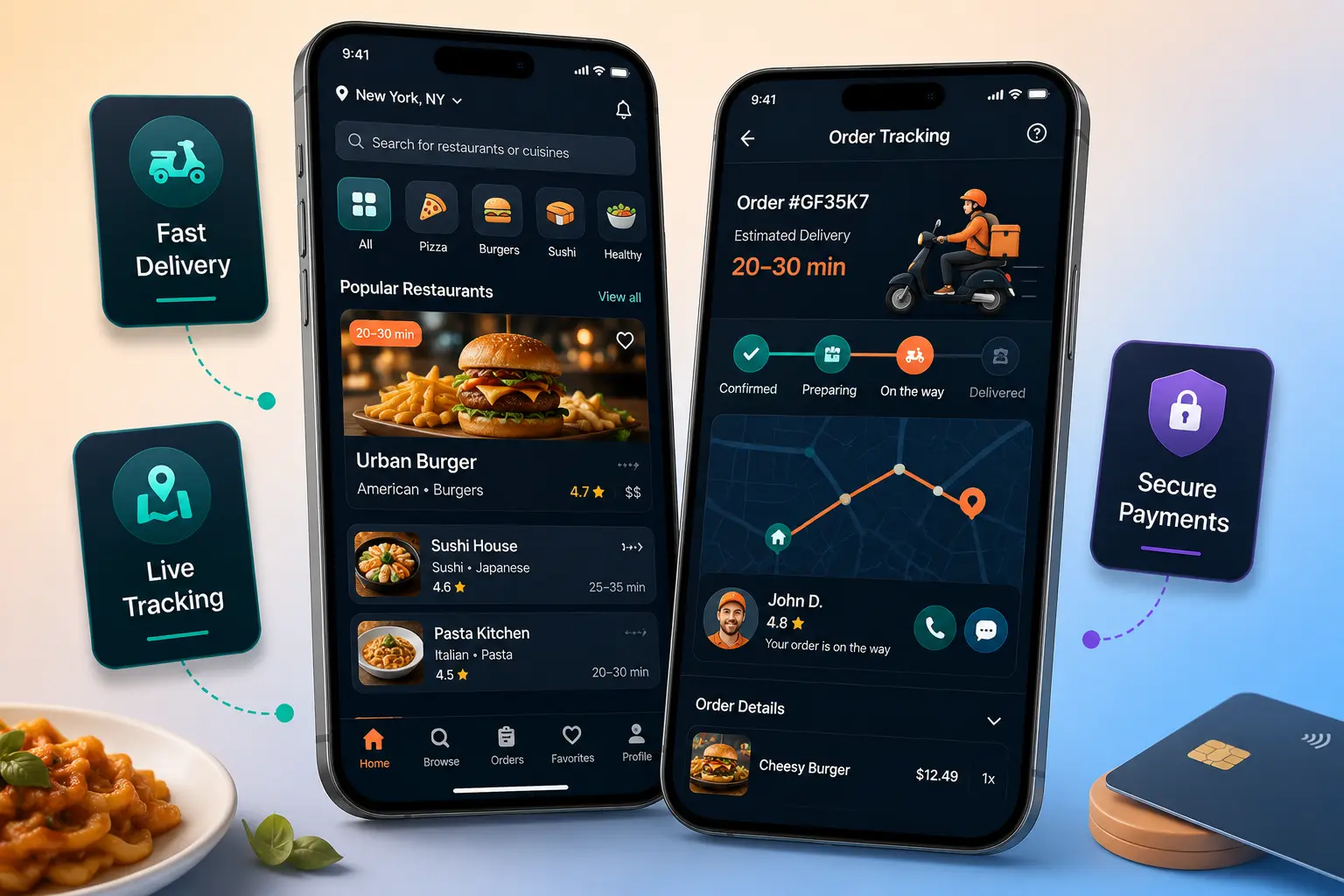
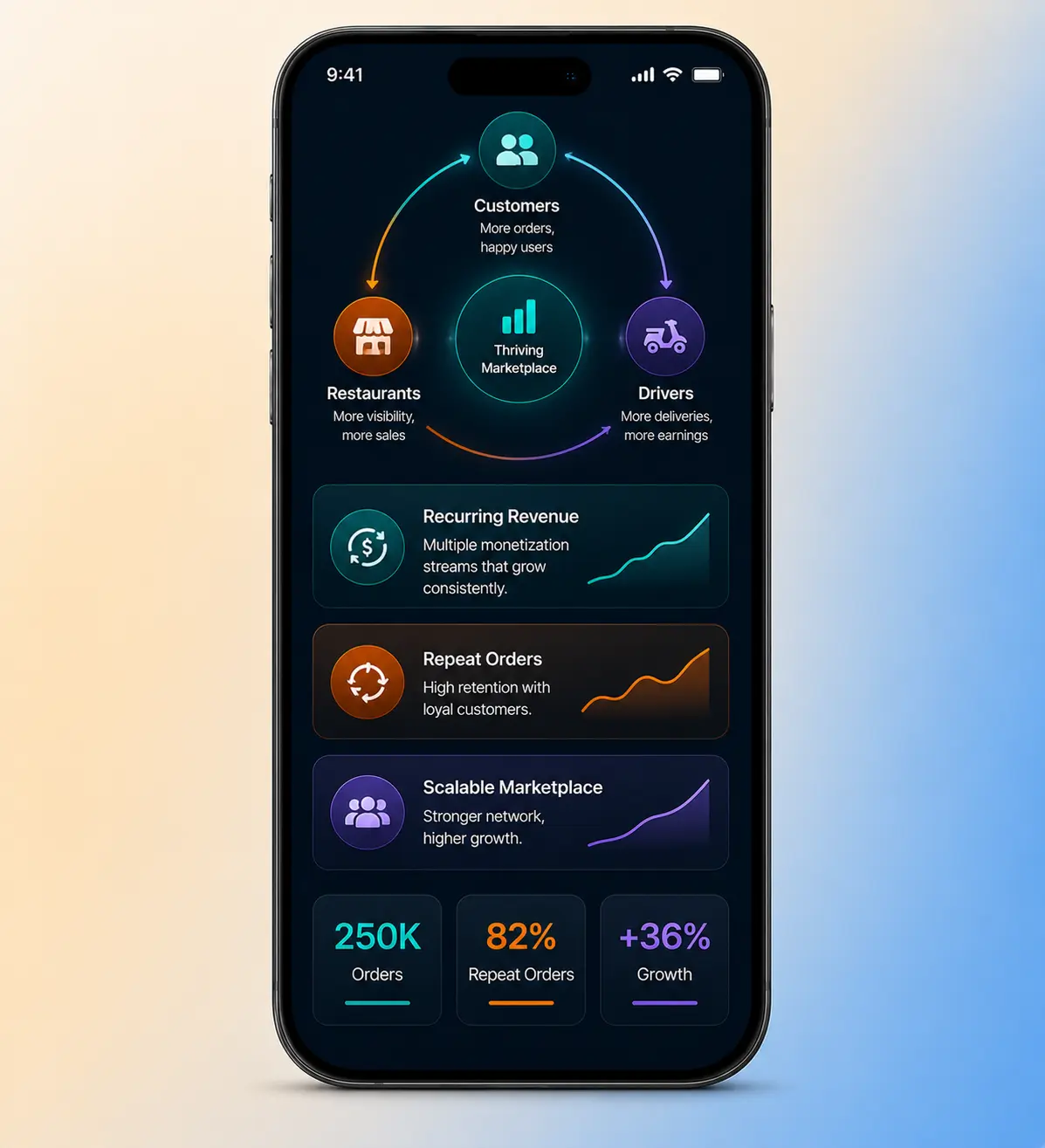
A Grubhub clone is a multi-restaurant food ordering and delivery platform: customers browse menus and order, restaurants manage their kitchens from a dashboard, drivers deliver through their own app, and you run the marketplace between them. It is the standard three-sided model, and the software for it is well understood.
What most vendors get wrong is the model's history, and the history is the useful part. Grubhub did not start as a logistics company. It grew for over a decade as an ordering marketplace where restaurants delivered their own food, and added a courier fleet later. That order of operations matters enormously for a new platform, because a marketplace-first launch needs no fleet, no driver recruitment, and no per-delivery subsidy on day one.
Our build makes that a setting rather than a philosophy. Every restaurant on your platform runs in one of three modes, switchable at any time: delivered by your fleet, delivered by their own drivers, or pickup only. You can launch a whole city on self-delivery and pickup, then add your own couriers zone by zone once the order volume pays for them.
That single mechanic changes the cost of entry more than any feature list, and it is the reason this page talks about strategy before it talks about screens.
What Grubhub's $650 Million Sale Teaches Founders
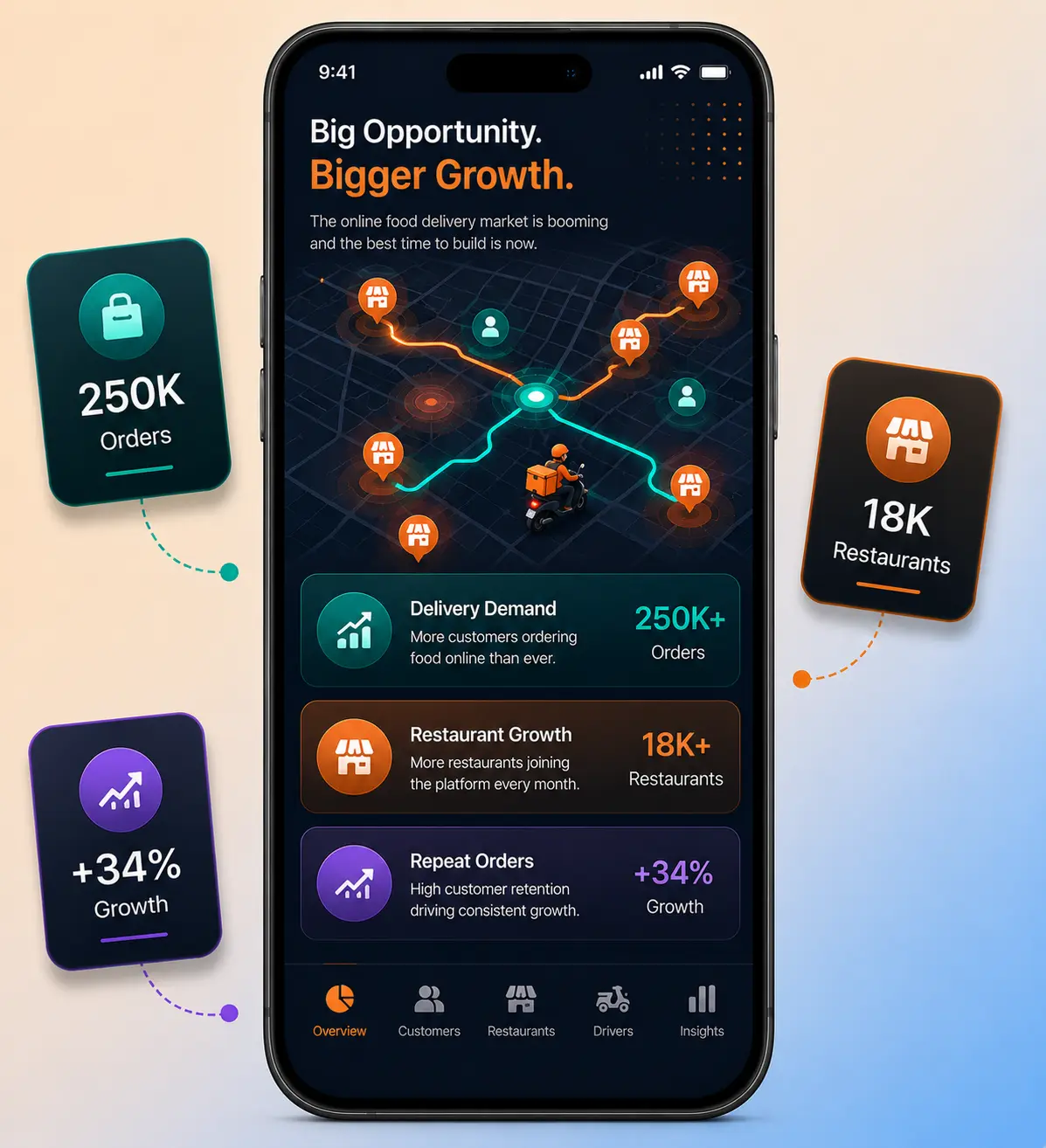
Most pages selling a Grubhub clone tell you the market is enormous and the leaders are rich. Here is what actually happened to the company this product is named after, because it is the most useful case study in the category.
- Just Eat Takeaway bought Grubhub for $7.3 billion at the pandemic peak, closing in 2021
- In January 2025 it sold Grubhub to Wonder for $650 million, roughly a 91 percent decline, with one analyst noting more than 7 billion dollars of shareholder value destroyed
- Grubhub fell to roughly 8 percent of US delivery sales, behind DoorDash at about 67 percent and Uber Eats at about 23
- New York capped delivery commissions at 15% and other charges at 5%, rules the parent said cost it around $100 million a year
- And yet the platform still ran more than 375,000 merchants, 200,000 couriers, and hundreds of millions of orders a year
The marketplace itself never stopped working. What failed was the strategy of fighting a national logistics war against better-funded rivals in a market where regulators cap your core fee. That is the war a new founder should refuse to fight, and the section below is about the wars you can actually win.
Where a Food Delivery Clone Can Still Win
The national platforms are weakest exactly where a focused operator is strongest. Four launch strategies consistently work in this category, and the build supports each of them directly.
- Own one city or region: Delivery is a density business: a platform with 200 restaurants and 15-minute delivery in one city beats a thin national app there. The national players under-serve smaller metros, and their fees leave you pricing room.
- Arm a restaurant coalition: Restaurants paying 20 to 30 percent commissions are actively looking for an exit. A platform owned by or built for a local restaurant group, with a flat-fee zero-commission tier for pickup and self-delivery, wins supply the aggregators cannot keep.
- Capture a captive campus: Universities, hospitals, and business parks concentrate thousands of daily orders among the same kitchens. Small territory, repeat demand, trivial marketing.
- Serve one cuisine or need deeply: Halal, vegan, regional cuisines, tiffin services: curation and community beat a generic catalog, and the audience finds you.
Each of these avoids the trap in the section above. None requires a driver fleet on day one, none competes on national advertising spend, and all of them monetize through fees the incumbents cannot undercut without breaking their own economics.
Food Delivery App Features, From Menu to Doorstep
Every feature below ships in the standard Grubhub clone build. Not add-ons, not upsells, not a stripped tier. The base platform your customers, restaurants, and drivers get on day one.
Menus and Discovery
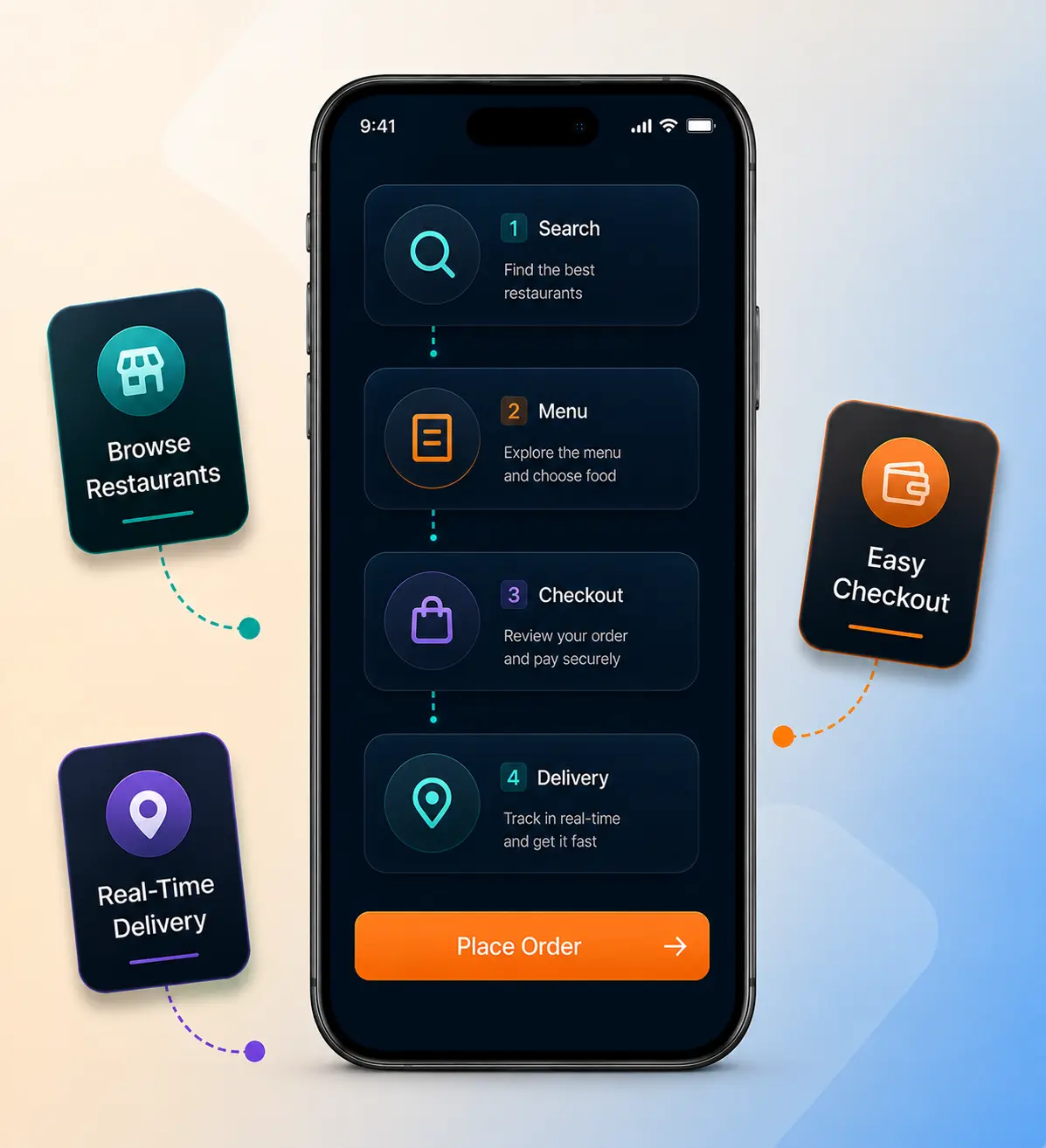
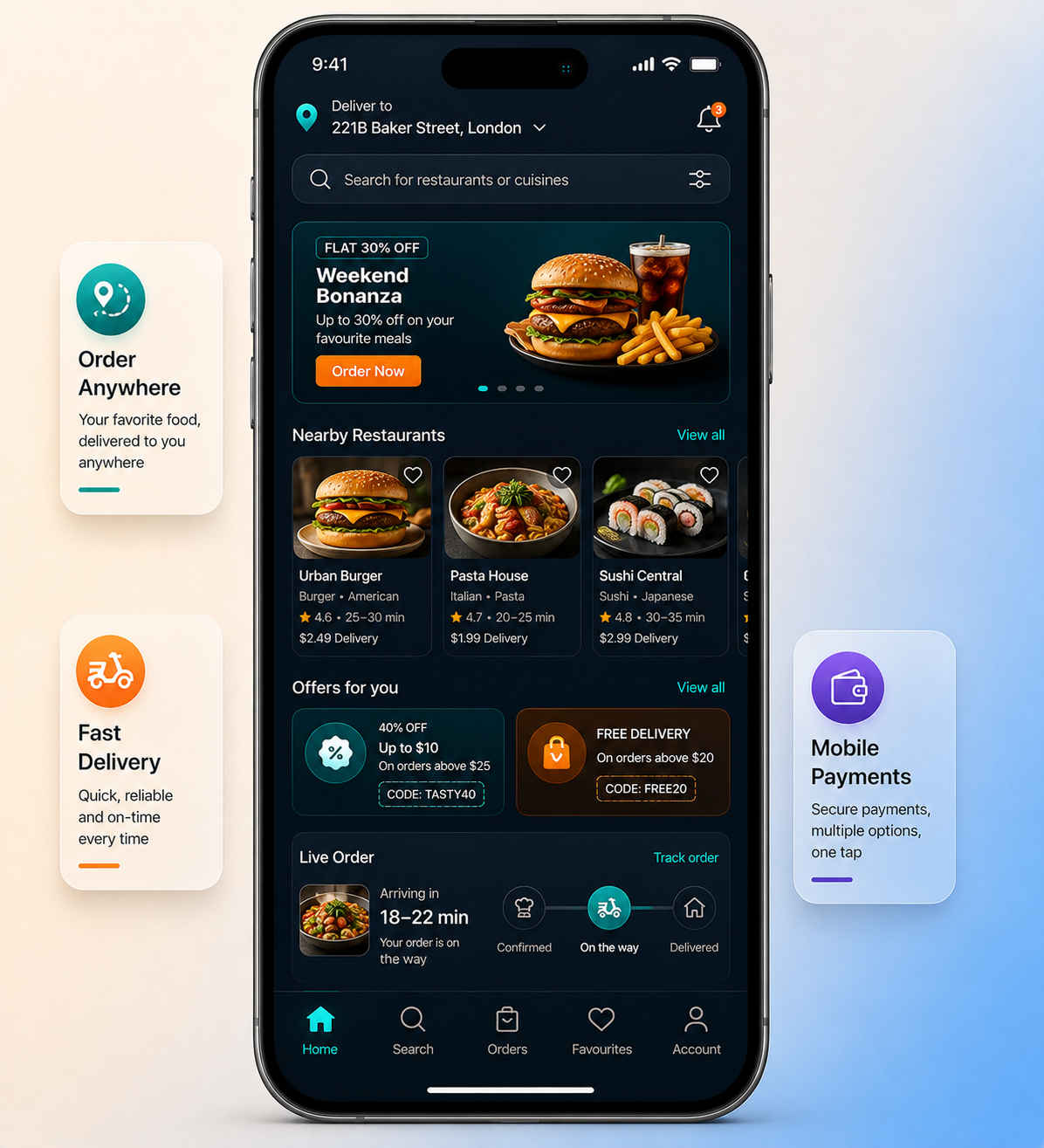
Customers browse restaurants by cuisine, distance, rating, and offers, with menus, photos, and honest delivery estimates. Discovery decides which restaurants earn orders, and you control how it ranks.
Real-Time Order Tracking
Customers follow every order live, from kitchen confirmation to pickup to a courier moving on the map. Tracking is the single feature customers judge a delivery platform on, so it is built to be accurate.
Dispatch Engine
Orders route to drivers automatically by distance, load, and readiness timing, with manual override from the ops screen. Good dispatch is the difference between cold food and a repeat customer.
Per-Restaurant Delivery Mode
Each restaurant runs your fleet, their own drivers, or pickup only, and can switch as they grow. This is the mechanic most scripts leave out, and it is how you launch without a driver fleet on day one.
Driver App and Earnings
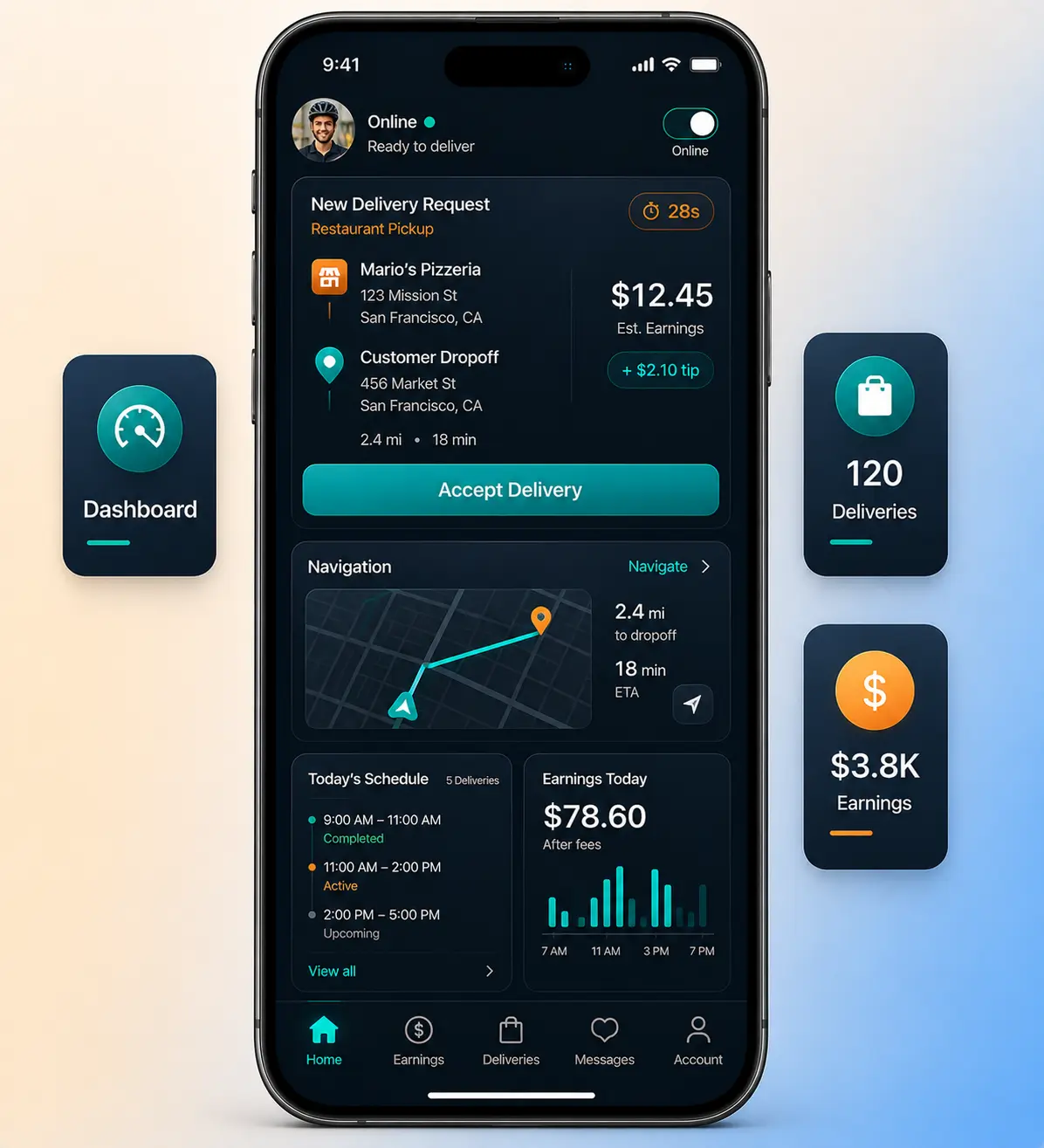
Drivers get offers with pay shown upfront, navigate pickups and drop-offs, and track earnings per delivery in real time. Reliable, transparent driver pay is what keeps a small fleet actually showing up.
Restaurant Dashboard
Restaurants manage menus, hours, prep times, and incoming orders from a tablet or browser without calling you. A kitchen that can pause orders during a rush is a kitchen that stays on your platform.
Pickup and Takeaway
Customers order ahead for pickup at a lower fee or none at all, and restaurants keep the counter moving. Pickup carries zero delivery cost, which makes it the highest-margin order type on the platform.
Scheduled and Group Orders
Customers schedule orders ahead and build shared carts for offices and events, raising average order value. Catering and group orders are where local platforms quietly out-earn the national apps.
Promotions and Coupons
You and your restaurants run discounts, free-delivery windows, and first-order offers with clear rules. Promotions bootstrap demand in a new zone, and the spend is visible instead of buried.
Delivery Zones and Fees
Draw zones per restaurant or per city, and set delivery fees, small-order fees, and surge rules inside them. Zone discipline keeps delivery times honest, and honest times keep ratings high.
Ratings and Reviews
Customers rate food and delivery separately after each order, so a slow courier does not sink a good kitchen. Separated ratings keep restaurant scores fair, which keeps restaurants invested.
Live Ops and Admin
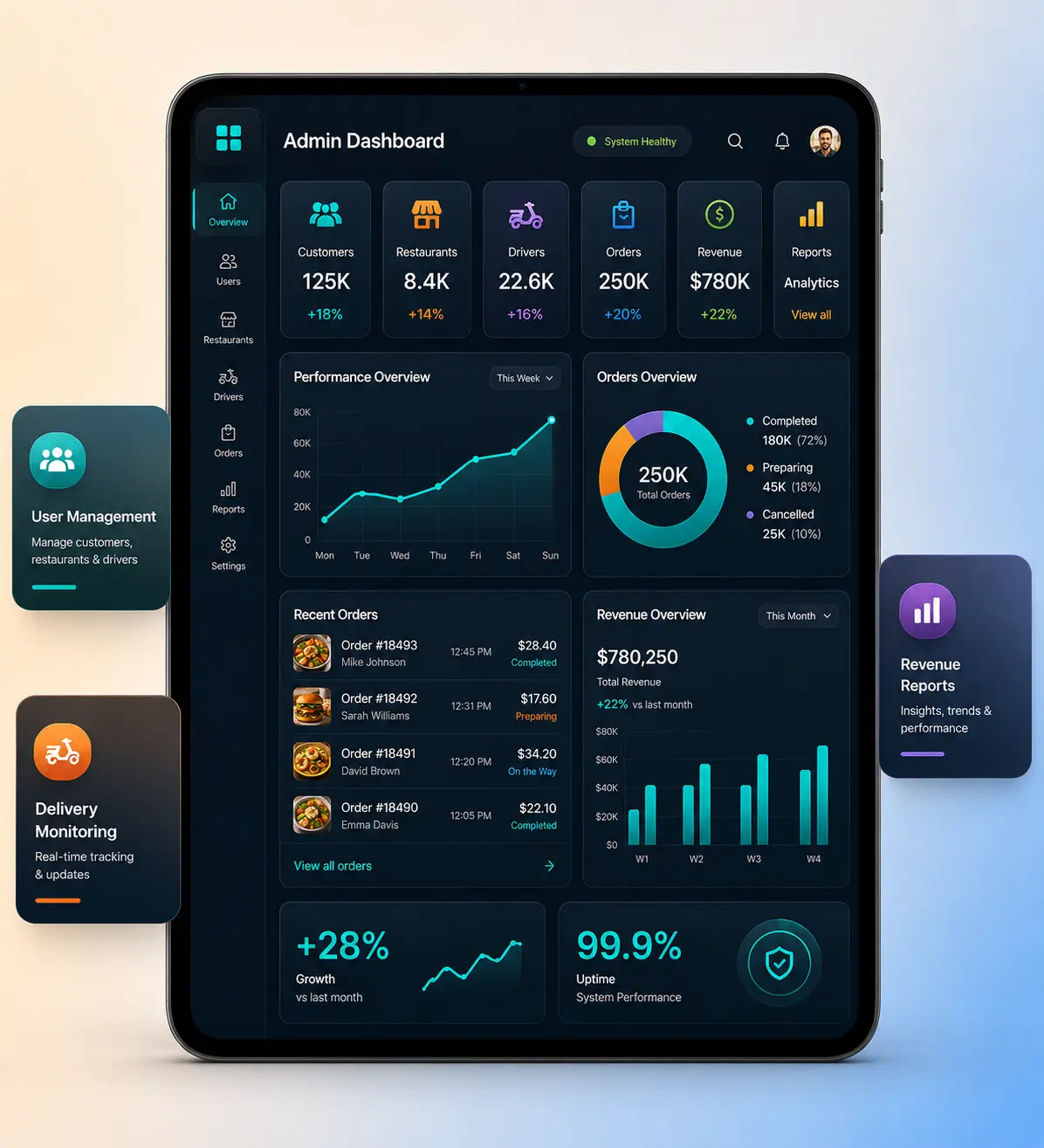
A live operations screen shows open orders, delayed kitchens, and unassigned deliveries across the whole city. You run the night from one panel, stepping in before a delay becomes a refund.
Who Should Launch a Food Delivery Platform
Food delivery is not one business. The same platform serves local founders, restaurant coalitions, cloud kitchens, and campus operators who want ordering under a brand they own.
Local and Regional Founders
You want to own food delivery in one city or region the national apps serve with high fees and thin coverage.
Restaurant Groups
You run or represent restaurants tired of 20 to 30 percent commissions and want ordering under a brand you own.
Cloud Kitchen Operators
You run delivery-first kitchens and want direct ordering that does not hand your margin to an aggregator.
Campus and Corporate
You serve a university, hospital, or business park where a captive audience orders from the same kitchens daily.
Niche Cuisine Platforms
You focus on one cuisine, dietary need, or community where curation beats the national apps' generic catalog.
Investors
You want a launch-ready delivery platform aimed at defensible local markets rather than a national spending war.
Food Delivery Platform Development in Six Stages
Our build process is structured and transparent. Six clear stages take your food delivery platform from scope to launch, tested, documented, and delivered on the schedule we agree.
Discovery and Requirements
We start with a detailed conversation about your launch market, restaurant supply plan, delivery-mode mix, commission structure, and timeline, and produce a written scope you approve before any work begins.
Planning and Architecture
Our team designs the ordering, dispatch, and tracking systems around your delivery-mode mix and expected zone density, with a milestone timeline mapped before development starts.
UI/UX Design
Custom interface design applied to your brand. The customer app, restaurant dashboard, driver app, and admin panel are designed and approved before development starts.
Development and Integration
We build the platform and integrate ordering, dispatch, live tracking, payments, split payouts, and notifications. You have staging access throughout to review progress.
Testing and Quality Assurance
Comprehensive testing across ordering, dispatch, tracking accuracy, payments, and payouts on web, iOS, and Android, plus load and security checks before anything goes live.
Deployment and Handoff
App store submission, deployment to your infrastructure, an admin walkthrough, and six months of free post-launch support starting from handoff.
Commissions, Fees, and Subscription Revenue
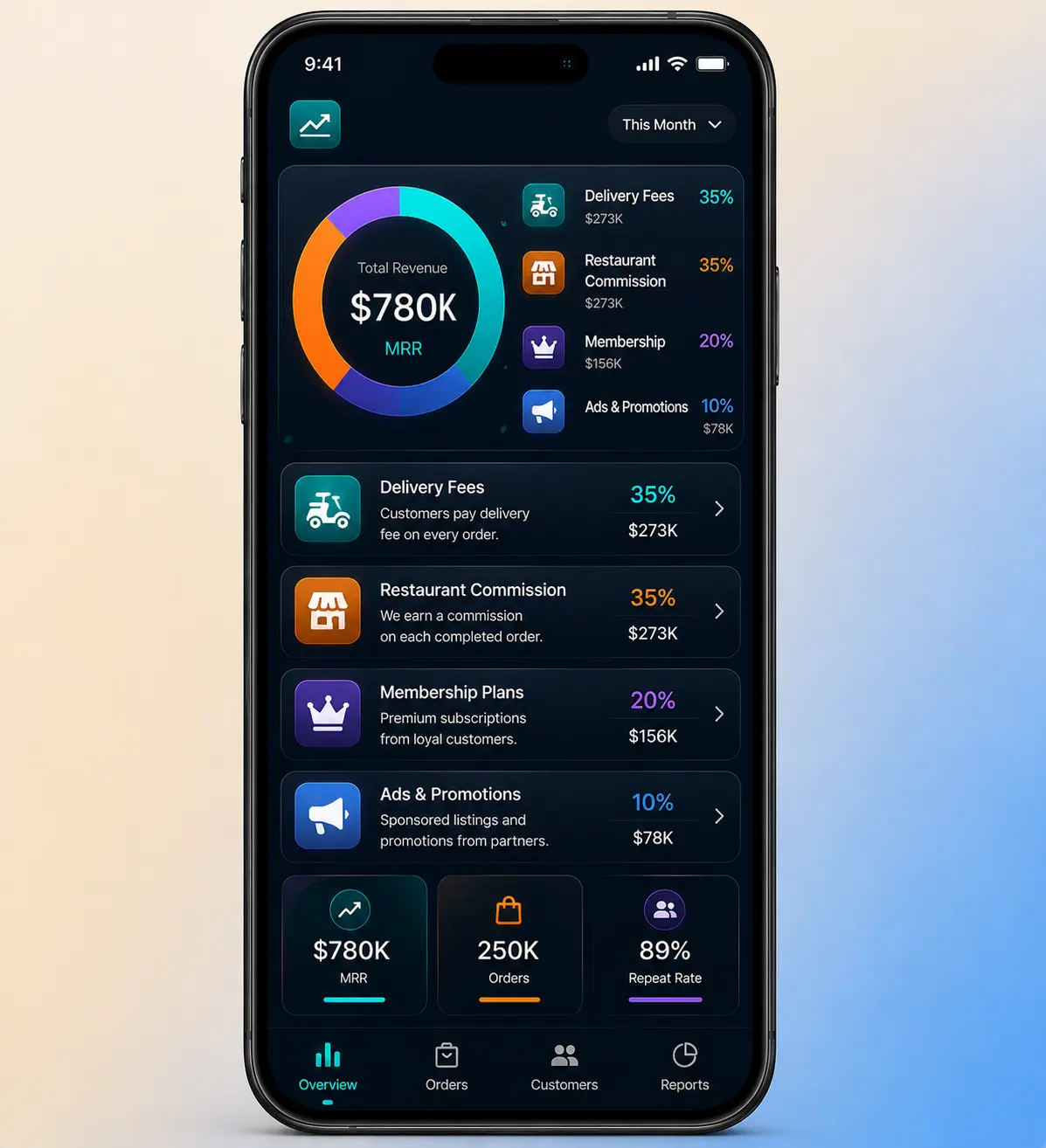
Delivery revenue mixes commissions, fees, and subscriptions, and parts of that mix are capped by law in some cities. Here is where the platform earns, configured from your admin panel.
Restaurant Commission
Take a percentage of each order, set per restaurant and service level from the admin panel. Commission is the core line, and some cities cap it by law, so the rate is a setting, not hardcoded.
Delivery and Service Fees
Charge customers delivery fees by zone and distance, plus small-order and service fees where they fit. Customer-side fees fund the fleet and flex by market without touching the restaurant's split.
Free-Delivery Subscription
Sell a monthly pass that waives delivery fees over a minimum basket, the model every major platform runs. Subscribers order more often and churn less, turning your best customers into steady revenue.
Sponsored Placement
Restaurants pay for featured spots in search and category pages during their own push weeks. A clean, high-intent revenue line that monetizes your busiest screens without touching customer data.
Zero-Commission SaaS Tier
Offer restaurants a flat monthly fee for pickup and self-delivery orders instead of a commission. This is the pitch that wins commission-weary restaurants, and it is recurring software revenue for you.
Corporate Catering
Serve offices with scheduled group orders, invoiced billing, and per-seat budgets under one account. Catering carries the largest baskets on the platform and the national apps serve it badly.
Dispatch, Tracking, and the Technology Stack
We build on standard, well-documented technologies. Any developer can read the code, extend it, and maintain it without a proprietary framework learning curve.
React Native
React.js
Node.js
PostgreSQL
Redis
WebSockets
Dispatch and batching
Maps
Stripe
Push notifications
AWS
Paypal
Is a Grubhub Clone Still Profitable?
Yes, if you refuse the war Grubhub lost. Delivery margins are thin at national scale, but the economics look different for a focused operator, and three decisions drive the outcome.
- Density before geography: Profit lives in zones where kitchens, drivers, and customers are close together. One dense city beats ten thin ones, so expansion should follow order volume, never precede it.
- Delivery-mode economics: Every self-delivery and pickup order costs you no courier subsidy, which is why the marketplace-first launch is the profitable one. Your own fleet is a margin decision you make per zone, when volume covers it.
- Fee design under caps: Where commissions are capped, revenue shifts to customer-side fees, subscriptions, sponsored placement, and the flat-fee SaaS tier. Platforms that planned for caps keep their margin; platforms that discovered them in court did not.
A professionally built platform removes the technical failure points. The rest is execution on density, mode mix, and fee design.
Handling Order Payments and Restaurant Payouts
A delivery order splits four ways in one transaction: the restaurant's share, the driver's pay, your commission and fees, and any promotion funding it. The build handles the whole split automatically.
Customer Checkout
Customers pay by card, wallet, UPI, and cash-on-delivery where you enable it, with saved methods and tips handled at checkout.
Automatic Order Splits
Each order's restaurant share, driver pay, and platform fee are calculated and ledgered at confirmation, including promotions and refund adjustments.
Restaurant and Driver Payouts
Restaurants and drivers are paid on the settlement cycles you configure, with per-order statements and instant-payout support where enabled.
Refunds and Disputes
Missing-item and late-order refunds run through a workflow that allocates the cost to the right party and logs every decision against the order.
Complete Feature Set for Customers
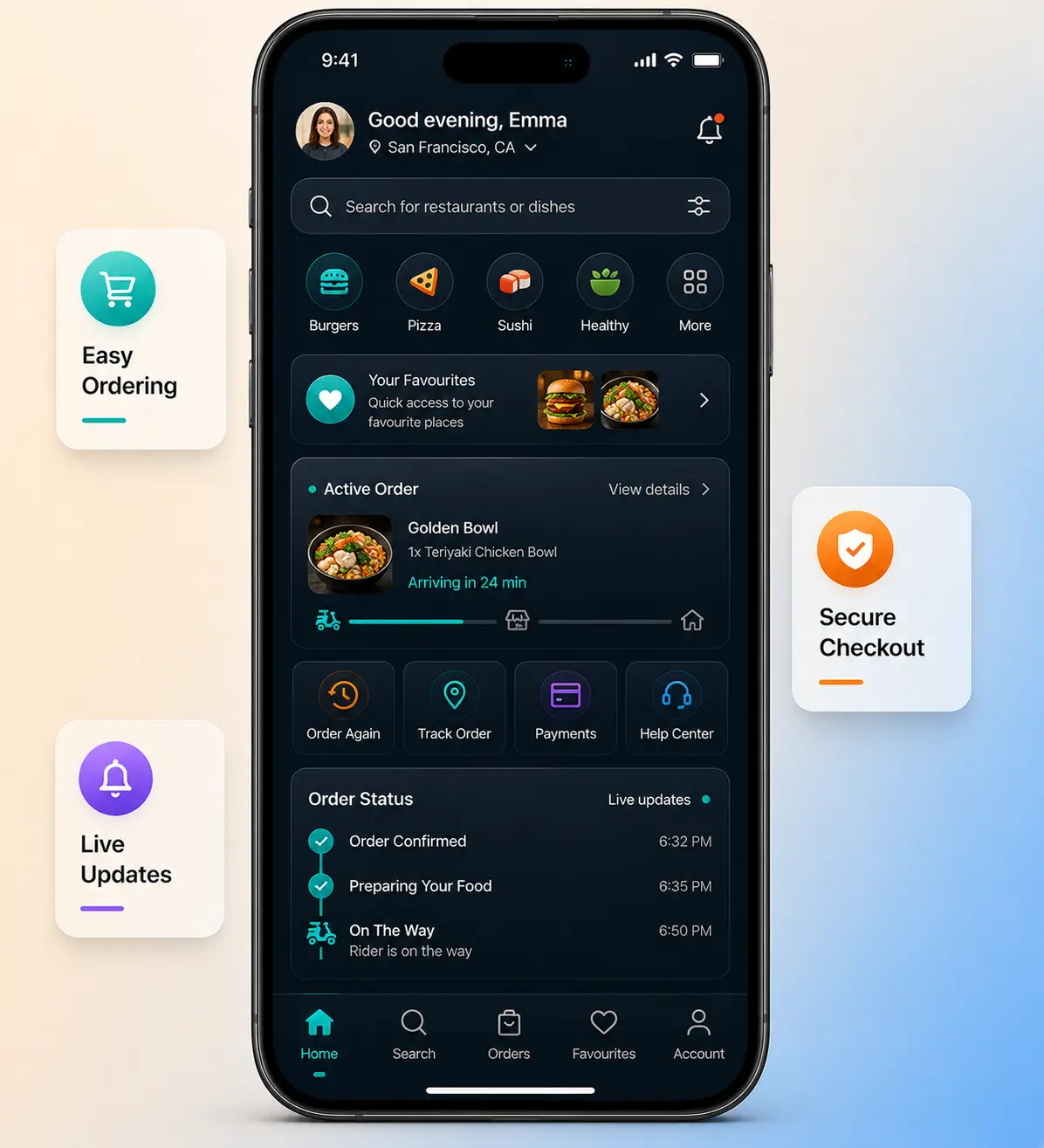
The customer experience decides reorder rate, and reorder rate decides the platform. Here is the full feature set for customers.
Browse and Search
Customers find restaurants by cuisine, rating, distance, and offers, with menus and photos that load fast on any phone.
Order in a Few Taps
Customers build a cart, customize items, add notes for the kitchen, and check out with saved addresses and payments.
Track Every Order
Customers watch status move from confirmed to preparing to picked up, with the courier live on the map until arrival.
Order Ahead
Customers schedule delivery or pickup for later today or this week, which suits offices, events, and family dinners.
Start Group Carts
Customers share a cart link so colleagues or friends add their own items before one person pays for everyone at once.
Pick Up and Save
Customers order ahead for counter pickup at a lower fee or none, skipping the queue and the delivery charge entirely.
Rate Food and Delivery
Customers rate the meal and the courier separately, so the feedback lands where it belongs and stays genuinely useful.
Reorder Favorites
Customers repeat past orders in two taps and follow favorite restaurants for offers, which quietly drives frequency.
Complete Feature Set for Restaurants
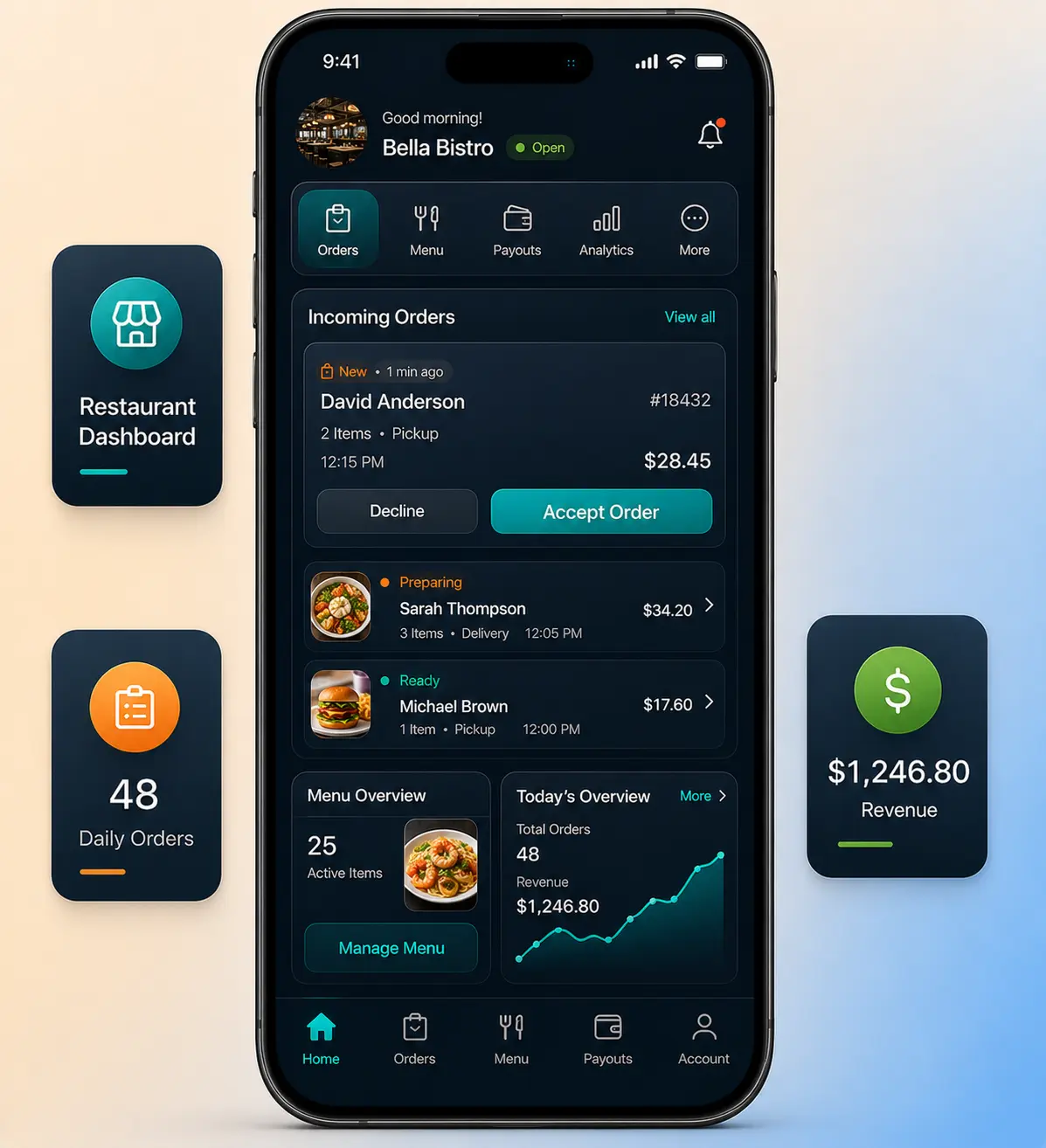
Restaurants are your supply, and the dashboard is why they stay. Here is the full feature set for restaurants.
Manage the Menu
Restaurants edit items, photos, prices, and availability in real time, with out-of-stock toggles the kitchen controls.
Control Order Flow
Restaurants accept, time, and sequence their incoming orders, and pause new ones during a rush without calling anyone.
Choose a Delivery Mode
Restaurants run your fleet, their own drivers, or pickup only, and switch modes as their volume and staffing change.
Set Prep Times
Restaurants set honest prep times per item and per daypart, which keeps delivery quotes accurate and ratings protected.
Run Their Own Offers
Restaurants launch discounts and free-delivery windows inside the rules you set, funding promotions from their own side.
See Their Numbers
Restaurants track their orders, revenue, ratings, and top items in a dashboard built for owners rather than analysts.
Get Paid on Schedule
Restaurants receive payouts on the settlement cycle you configure, with statements per order and per fee, nothing hidden.
Reach Their Regulars
Restaurants message their followers about new items and offers through the platform, keeping the relationship on it.
Complete Feature Set for Drivers
A small fleet stays reliable when pay is transparent and support is real. Here is the full feature set for drivers.
See Pay Before Accepting
Drivers see the distance, restaurant, and guaranteed pay on every offer before taking it, which builds real trust fast.
Navigate the Job
Drivers get pickup and drop-off navigation, order details, and customer notes in a single screen, with no app switching.
Batch Smart Deliveries
Drivers carry stacked orders along one route when the timing allows, earning more per hour without delivering cold food.
Track Earnings Live
Drivers watch their earnings per delivery, tips, and daily totals update in real time, with history they can export.
Cash Out on Your Cycle
Drivers are paid out on the settlement schedule that you configure, with instant-payout support wherever you enable it.
Set Their Hours
Drivers go online and offline whenever they choose and set the zones they prefer, which keeps a small fleet reliable.
Get Fair Support
Drivers reach live ops for wrong addresses, closed kitchens, and disputes, with every outcome logged and reviewable.
Build a Record
Drivers accumulate ratings and completion stats that unlock priority offers, rewarding the ones who reliably show up.
Complete Feature Set for Admin
The admin panel is how you run the marketplace without developer involvement, from commissions to live operations.
Run Live Operations
Watch open orders, delayed kitchens, and unassigned deliveries citywide, and intervene before delays become refunds.
Configure Commissions
Set commission rates per restaurant, service level, and city, within any legal caps that apply in your launch market.
Manage Zones and Fees
Draw delivery zones and set the fee schedules, small-order rules, and surge windows for every zone from a single screen.
Onboard Restaurants
Approve restaurants through a verification queue with documents, menus, and banking details collected in one clean flow.
Manage the Fleet
Approve drivers, track their performance and completion rates, and manage the mix of fleet and self-delivery partners.
Handle Refunds
Resolve missing items, late orders, and disputes with a workflow that logs each decision against the order record.
Read the Analytics
Track orders, baskets, retention, restaurant performance, and revenue by zone in a single consolidated dashboard view.
Edit Pages and SEO
Manage city pages, cuisine pages, and metadata from the admin panel so the platform ranks and grows its own demand well.
Add AI Once Your Order Volume Justifies It
These AI capabilities are optional add-ons, not part of the standard MVP build. We layer them in once your platform is live and produce the order data they need.
AI Dispatch Optimization
Learns real prep times and traffic patterns to assign and batch deliveries better than distance rules alone, cutting late orders in dense zones.
AI Demand Forecasting
Predicts order volume by zone, daypart, and weather so you can prompt driver supply before the Friday rush instead of during it.
AI Menu Intelligence
Flags underpriced items, missing photos, and menu gaps for restaurants, lifting their revenue and your commission with it.
AI Recommendations
Personalizes restaurant and dish suggestions from order history, raising basket size and reorder frequency.
AI Support Assistant
Handles where-is-my-order and refund-status questions automatically, cutting support load on your busiest nights.
AI Fraud Detection
Catches promo abuse, refund farming, and fake-account patterns before they quietly eat your margin.
What Separates Our
Food Delivery Clone Script
Here is what separates our food delivery build from the scripts ranking for this term.
Delivery Modes Are Per Restaurant
Fleet, self-delivery, or pickup, switchable per restaurant. Most scripts hardcode the three-sided model and quietly hand you a driver-fleet cold start. Ours makes the launch model a setting.
Commission Rules Built for Caps
Rates are per-market settings with the regulatory reality documented, not a hardcoded percentage you discover is illegal in your launch city.
Strategy Before Screens
The scoping call starts with your market, supply plan, and mode mix, because the section above is not marketing. It is how we scope.
The Codebase Is Yours
Complete source at handoff. On a platform whose economics you will tune weekly, waiting on a vendor to change a fee rule is not a dependency you want.
Six Months of Free Support
Post-launch bugs and questions covered at no extra charge for six months. You get answers and fixes, not a separate support invoice.
