
Hire Unity Developers
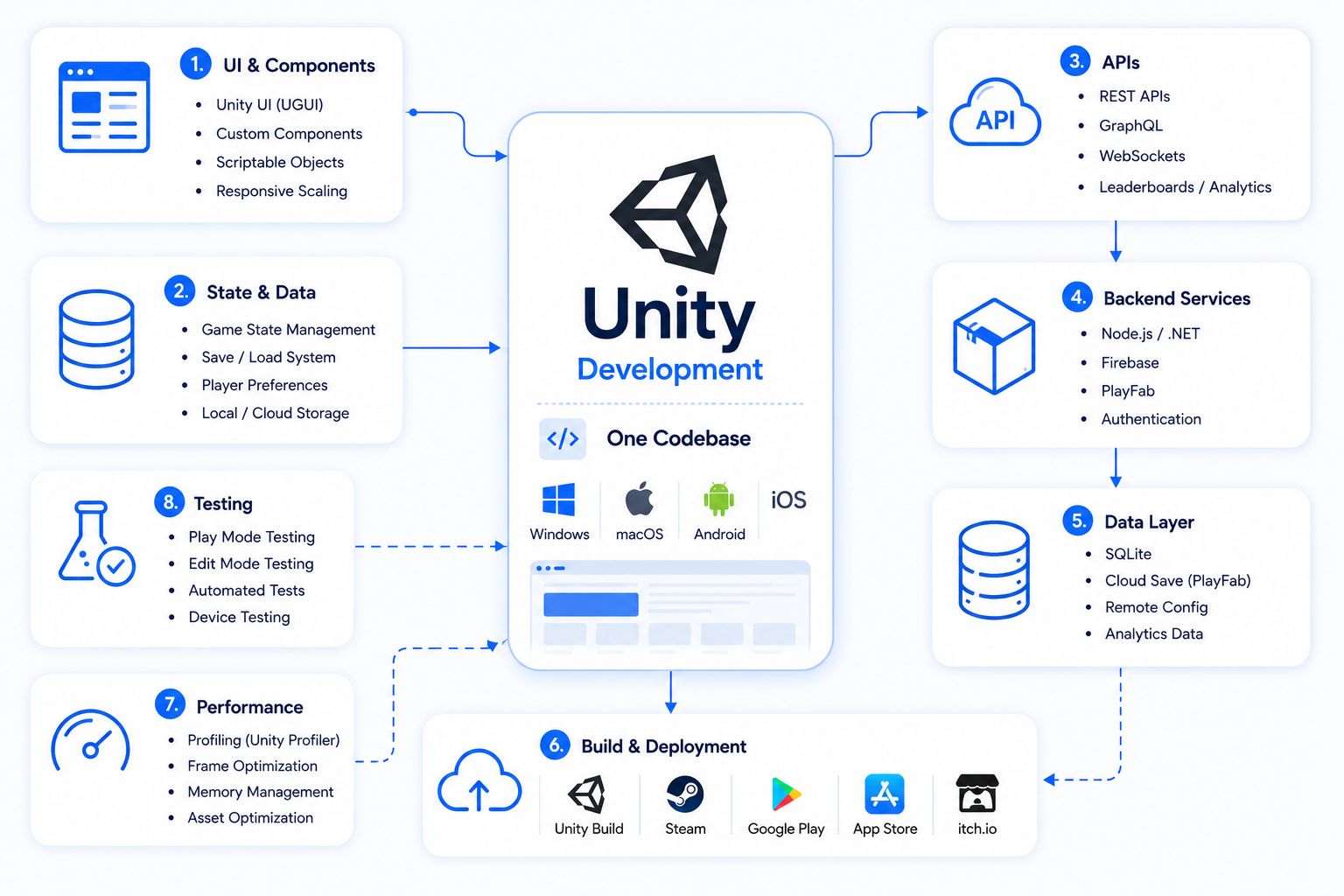
Unity developers for the engineering side of game development: C# gameplay systems, 2D and 3D builds, performance tuning, and live-game features. For online products, the backend can be paired with Node.js, WebSockets, and Redis expertise.
Successful Businesses Created & Maintained by Our Team!











Ways to Hire Unity Developers
Choose the setup based on whether you need one engineer for ongoing gameplay work, short-term specialist help, or a combined game + backend team.
Dedicated Unity Developer
One Unity developer working full time on your game or interactive product.
Best for gameplay systems, content updates, performance work, feature delivery, and maintaining a live Unity project over time.
See monthly rates →Hourly Unity Specialist
Senior Unity help for a specific engineering problem.
Fix frame-rate drops, debug physics issues, stabilize a broken build, improve memory use, or take over a project that has stalled.
See hourly rates →Unity + Backend Team
A Unity developer paired with backend engineers under one technical lead.
Best for online games that need gameplay on the client and multiplayer state, chat, leaderboards, matchmaking, or live features behind it.
Talk Through Team Sizing →What a Unity Developer Can Actually Own
A Unity developer can own the engineering of the game, but not the entire production around it. The clearest split is between gameplay code, performance, live systems, and the creative disciplines that need separate specialists.
Gameplay & Systems
Build C# gameplay logic, character controllers, game state, save systems, interactions, and reusable systems that can keep evolving as the game changes.
Get consultationPerformance on Real Devices
Profile frame rate, memory use, draw calls, asset loading, and device-specific bottlenecks so the game performs outside the editor, not just on a development machine.
Leave a requestMultiplayer & Live Features
Connect the Unity client to multiplayer state, matchmaking, leaderboards, chat, presence, and live-event systems when the game needs an online backend.
Order an estimateOne Developer Is Not a Studio
A Unity engineer does not replace game design, art, animation, sound, or production. If those pieces are still missing, we identify that before matching engineering capacity.
View Our PortfolioHow We Screen Unity Developers
We look for developers who can work inside a real Unity project, manage performance constraints, and write C# systems another engineer can extend.
Shipped Project Review
We screen for real Unity work, released games, live interactive products, or production builds. Tutorial clones and portfolio-only demos do not count.
Unity Technical Screen
A live session covering C#, Unity’s component model, update loops, memory behavior, physics, scene and prefab structure, asset handling, and build decisions across target platforms.
Existing-Project Exercise
The candidate adds or repairs a mechanic inside an unfamiliar Unity project while a technical lead reviews how they navigate scenes, prefabs, game state, and existing architecture.
Paid Unity Assignment
A scoped, paid task is reviewed for code structure, performance discipline, maintainability, and whether another developer could continue the work without rebuilding it.
Hire a Unity Developer in 4 Steps
From requirements call to first commit, with a clear process for matching the right Unity developer to your game, target platforms, and current project stage.
Define the Unity Work
Tell us what you are building, where the project stands today, which platforms you are targeting, and whether the priority is gameplay, performance, multiplayer, a takeover, or release preparation.
Review Your Unity Match
We screen for the Unity, C#, platform, and project experience your game requires. You receive the developer’s profile, relevant shipped-project history, technical background, and code samples before approving the match.
Developer Joins the Project
The developer starts inside your existing Unity project, repository, build setup, scenes, prefabs, and issue tracker. Existing architecture is reviewed before major changes are proposed.
Build, Optimize, or Prepare for Release
The engagement moves into the work you hired for: gameplay systems, performance improvements, multiplayer integration, project stabilization, or release preparation. If the fit does not work, a replacement is available within 5 business days.
What You Review Before a Unity Developer Joins
Before approving a match, you see the evidence that matters for game engineering: shipped Unity work, C# depth, platform experience, and code quality.
Unity Developer Profile Pack
Generated by Xpertz Vetting Team1. Shipped Unity Projects
Review the games or interactive products they have worked on, the systems they owned, and the platforms those builds targeted.
2. Unity & C# Experience
See their Unity versions, C# background, scene and prefab architecture, gameplay systems, and editor tooling experience.
3. Performance & Platform Work
Check whether they have handled profiling, memory issues, mobile optimization, device-specific bugs, and release builds for your target platforms.
4. Code Samples
Review recent Unity code showing how they structure gameplay logic, manage state, work with existing scenes, and leave systems maintainable for the next developer.
Not the right match? We rematch before you commit.
Cost to Hire Unity Developers
Hiring a Unity developer through Xpertz costs $25- $80/hr based on seniority, with full-time monthly plans priced below the equivalent hourly cost.
| Seniority | Experience | Hourly Rate | Monthly Full Time |
|---|---|---|---|
| Mid Level | 3 to 5 years | $25 - $35 | $3,000 - $4,000 |
| Senior | 5 to 8 years | $35 - $50 | $5,000 - $7,000 |
| Lead | 8+ years | $50 - $80 | $7,000 - $10,000 |
Unity Skills for Gameplay, Performance & Live Features
The Unity stack your project may need across gameplay systems, optimization, platform delivery, and online features.
Unity & C#
Gameplay Systems
Performance
2D & 3D Delivery
Multiplayer Client
Live Game Backend
Testing & Stability
Build & Release
How Your Unity Developer Fits Into Production
Your Unity developer works around the game, assets, build targets, and production process already in place instead of forcing the project into a new workflow.
Your Unity Project Stays Yours
Unity organization, repositories, store accounts, signing keys, builds, and project files remain under your control throughout the engagement.
Design Decisions Stay With Your Team
Game design, art direction, animation, and creative decisions stay with your production team. The developer owns the engineering required to make them work.
Existing Scenes Come First
Scenes, prefabs, gameplay architecture, packages, and project conventions are reviewed before major restructuring is proposed.
Performance Is Checked on Target Devices
Optimization decisions are made against the hardware you actually plan to support, not only against performance inside the Unity Editor.
Game and Backend Stay Clearly Split
Unity handles the client experience while multiplayer state, chat, leaderboards, and live systems can remain separate backend services where appropriate.
Code Moves With the Game
C# code, editor tools, integrations, tests, and technical documentation created during the engagement remain part of your project and IP.
Why Unity Teams Choose Xpertz
The value is in matching the right game engineer to the project stage, platform targets, and systems your game actually needs.

Nathan
Engagement LeadHandles the requirements call and coordinates your Unity developer match.
Book a Technical CallChoose mid-level, senior, or lead experience based on the complexity of the Unity work.
Profiles are screened for gameplay systems, C#, performance, platform targets, and existing-project experience.
Code, editor tools, integrations, tests, and technical documentation created during the engagement belong to you.
Reduce or end a monthly engagement with 30 days notice.
Get Matched With a Unity Developer
Tell us what you need. We'll use it to shortlist developers who fit your stack, seniority, and working hours.
FAQs About Hiring Unity Developers
Through Xpertz, mid-level Unity developers with 3 to 5 years of experience cost 25–35/hr, senior developers cost 35–50/hr, and lead developers cost 50–80/hr. Full-time monthly plans range from $3,000 to $10,000 depending on seniority.
Unity is handled as a specialist match. The profile and start timeline are confirmed based on your project stage, target platforms, gameplay requirements, and seniority needs.
Yes. You can review their Unity experience, shipped-project history, C# background, platform exposure, and code samples before approving the engagement.
Yes. Unity matches can be screened for 2D or 3D development, including gameplay systems, physics, scene architecture, asset handling, and performance optimization based on your project.
For the engineering side, yes. A Unity developer can handle gameplay systems, C# architecture, performance, integrations, and technical delivery. A complete game may also require separate art, animation, design, audio, and production roles.
Yes. Online-game backends can be handled with Node.js, WebSockets, Redis, matchmaking, leaderboards, chat, and other real-time services while the Unity developer focuses on the client.
Yes. A developer can assess an existing Unity project, understand its scenes, prefabs, packages, gameplay architecture, and performance issues before continuing development or proposing larger changes.
Yes. Mobile optimization can include profiling frame rate, memory usage, draw calls, asset loading, physics cost, and device-specific performance issues across your target hardware.
You do. C# code, editor tools, integrations, tests, technical documentation, and other work created during the engagement belong to you. Your Unity organization and store accounts also remain under your control.
You approve the developer before they start. If the first match is not suitable, Xpertz can rematch you. If the fit becomes a problem later, a replacement is available within 5 business days at no additional cost.
Tell Us About Your Game. We’ll Match the Right Unity Developer.
Share your project stage, target platforms, gameplay requirements, and technical challenges. Review the developer’s Unity experience and code samples before approving the engagement.
