Travel app development cost typically ranges from $20,000 – $250,000+, depending on whether you are building an itinerary app, booking product, multi-service platform, or OTA.
Booking complexity drives the budget more than the number of screens. Live availability, dynamic pricing, payments, cancellations, refunds, and travel APIs require significantly more development and testing.
Budget an additional 15% – 25% annually after launch for ongoing maintenance, third-party services, hosting, security, and updates.
Your development approach affects both upfront and long-term costs. Platform choice, team location, API strategy, integrations, and whether you build an MVP or full product can materially change the final budget.
Travel app development is no longer about budgeting for screens and booking flows alone. The real investment lies in handling live travel data, inventory, payments, personalization, supplier connections, and everything that happens after a booking.That’s why two travel apps with similar interfaces can have very different development costs. A discovery app may mainly manage destination content and recommendations, while a booking platform may require real-time availability, dynamic pricing, secure payments, refunds, and multiple external integrations.For a founder, the useful question is not simply how much does it cost to develop a travel app? It is what you are actually paying to build, which decisions will drive the budget, and where cutting costs could create problems later. This guide breaks down those factors in practical terms.
How Much Does Travel App Development Cost?
There’s no single number that answers this honestly, but travel app development costs typically range from $20,000 – $250,000+, with the final figure depending on scope. Below is a practical breakdown based on what the app does, not just how it looks.
These figures are planning ranges, not fixed market averages. The final cost to develop a travel app can vary considerably based on the features, third-party integrations, customization level, development location, platforms required, and post-launch requirements. A useful way to estimate your own project is:Total Cost of Ownership (TCO) = Initial Development Cost + Third-Party Services + Infrastructure Costs + Ongoing Maintenance It will not produce an exact quote, but it gives you a more realistic view of the investment than a development estimate based solely on screens and features.
How Travel App Type Influences Development Cost?
The type of travel app you build directly affects development cost, because each model introduces different booking, payment, data, integration, and operational requirements
1. Travel Guide & Itinerary Apps: Lower Development Cost
These apps help travelers discover destinations and organize trips through features such as destination guides, search, maps, itinerary builders, saved trips, recommendations, and travel content.Since users typically do not complete transactions inside the app, there is less complexity around payment processing, reservations, refunds, and live supplier inventory. Development effort is mainly focused on the interface, content management, search, maps, and personalization.
2. Travel Booking Apps: Higher Development Cost
The cost rises when the app moves from trip planning to transaction processing. Users may search flights, hotels, tours, or rental cars, check live availability, make payments, and receive booking confirmations.The cost to develop a travel app at this level includes travel API integrations, payment processing, reservation management, cancellations, refunds, notifications, and booking synchronization. The challenge is ensuring that information remains accurate throughout the entire booking journey.
3. Travel Marketplaces & OTA Platforms: Highest Development Cost
Online Travel Agency (OTA) and marketplace platforms connect travelers with multiple travel services or suppliers. Beyond traveler features, they may require supplier onboarding, listing management, availability controls, commission rules, payouts, pricing management, disputes, and administrative tools.Supporting multiple suppliers also introduces different currencies, policies, pricing structures, and booking conditions. As these workflows become more interconnected, testing and development requirements increase, making this the most expensive category.
What Actually Drives Travel App Development Cost?
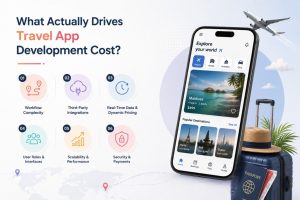
The travel app development cost is shaped by what the product needs to process, connect, support, and manage behind those screens. The following are the areas that usually have the biggest impact on the budget.Overview of Key Drivers of Travel App Development Costs
I. User Journey and Workflow Complexity
A browse-and-save experience requires far less development than a booking journey involving dates, guest details, add-ons, availability checks, payments, confirmation, modifications, and cancellations.Every additional step introduces business rules and edge cases that the app must handle reliably. As workflows become more detailed, development and testing requirements increase accordingly.
II. Travel API and Third-Party Integration Requirements
Connecting flight, hotel, activity, or GDS data is rarely a simple plug-in task. Each service has its own documentation, data formats, rate limits, authentication methods, update cycles, and technical requirements.For example,Amadeus provides APIs for travel search and booking use cases, while Google Maps Platform supports location-based functionality. The number and complexity of such integrations directly affect development effort and ongoing maintenance.
III. Real-Time Availability and Dynamic Pricing
Travel data can change while a customer is completing a booking. Flight inventory, hotel availability, room rates, and booking status may need frequent updates to prevent outdated information from reaching users.Supporting this level of accuracy requires additional development, testing, monitoring, and technical resources, which can significantly increase the cost to develop a travel app.
IV. Number of User Roles and Interfaces
A traveler-only application has a relatively focused scope. Adding suppliers, agents, partners, customer support teams, and admins introduces additional interfaces, permissions, workflows, and management functions.Each role must be designed around what that user needs to accomplish, increasing both development and testing requirements.
V. Scalability and Performance Requirements
An app processing a few hundred bookings per month has very different performance requirements from one expected to handle thousands of users during holiday peaks.Expected traffic affects response times, data processing, capacity planning, monitoring, reliability, and performance testing. These requirements should be reflected in the travel mobile app development cost rather than treated as post-launch concerns.
VI. Security, Authentication and Payment Requirements
Travel apps can process personal information, payment details, booking records, and high-value transactions. Secure authentication, payment processing, data protection, fraud prevention, and relevant compliance requirements therefore form a meaningful part of the development budget.For payment processing, services such as Stripe provide an established payment system, but integrating payments still requires careful handling of transactions, refunds, failed payments, and booking status.
Travel App Development Cost by Features & Functionality
Feature-level estimates can help with early budgeting, but assigning a fixed price to every feature is rarely reliable until the requirements are clear.
Features
Development Complexity
Estimated Cost
Registration & Profiles
Low
$2k – $5k
Search & Filters
Medium
$4k -$10k
Maps & Geolocation
Medium
$4k -$10k
Booking Engine
High
$12k – $30k+
Payment Integration
Medium-High
$3k – $8k+
Real-Time Availability
High
$12k – $25k+
Reviews & Ratings
Low-Medium
$2k – $5k
Push Notifications
Low-Medium
$1k – $3k
Multi-Language & Currency
Medium
$3k – $8k
AI Itinerary Planner
Medium-High
$6k – $15k+
Recommendation Engine
High
$10k – $25k+
Offline Functionality
Medium-High
$5k -$12k
Admin Dashboard
Medium-High
$6k -$15k
These figures represent development costs, not recurring charges for external services. Maps, travel-data APIs, payment gateways, messaging services, and AI models have separate usage-based fees.Google Maps Platform uses usage-based pricing, while Amadeus APIs are offered through the Amadeus Enterprise API Portal under its own pricing structure This distinction is important when estimating the cost to develop a travel app. A feature may be relatively affordable to build but become expensive to operate as usage increases.
How Platform and Development Approach Change the Budget?
The same travel product can require a very different budget depending on where it runs and how much of the code can be shared. Choosing the right approach early can prevent you from paying for duplicate development later.
1. iOS App Development
A dedicated iOS codebase gives the team tighter control over Apple-specific capabilities and the overall user experience. It can be the right choice when the app depends heavily on iOS features or requires deep platform integration. The trade-off is that Android requires a separate codebase, testing process, and ongoing maintenance.For platform-specific guidance, refer toApple Developer Documentation.
2. Android App Development
Android brings its own development requirements, with a broader mix of devices, screen sizes, OS versions, and hardware configurations. That can increase testing and support work, particularly when the travel app needs consistent performance across a wide range of devices.SeeAndroid Developers for current platform documentation and development guidance.
3. Cross-Platform Travel App Development
Frameworks such as Flutter & React Native allow teams to share a substantial portion of the code between iOS and Android. This can reduce duplicate development and simplify future updates.However, cross-platform development does not automatically mean lower costs. Apps requiring advanced offline capabilities, native device features, or platform-specific services may still need native code for certain functions.
4. Building a Mobile App Alongside a Web Platform
A travel business often needs more than the customer-facing mobile app. Depending on the business model, you may also need:
A customer-facing website
An admin panel for internal teams
A supplier portal for managing listings & availability
An agent dashboard for travel partners or affiliates
Each interface adds its own design, development, testing, and maintenance work. Factoring these requirements into the initial budget gives you a much more realistic picture of the total cost to develop a travel app.
How Development Team & Location Affect Travel App Development Cost?
The development team can significantly influence travel app development cost, but choosing the lowest hourly rate is rarely the best way to control the overall budget. The more useful comparison is the team’s expertise, delivery capability, communication, and ability to handle the product’s actual complexity.
I. Freelancers
Freelancers can be a practical option for smaller travel apps, MVPs, or clearly defined development tasks. Typical freelance software development rates can range from $20 – $80+ per hour, depending on experience and location.However, booking-focused products often require specialists across mobile development, backend engineering, UI/UX, QA, payments, and travel API integrations. Coordinating several independent professionals can increase management effort and make accountability less clear when an issue crosses multiple technical areas.
II. In-House Development Team
An in-house team offers greater control over product priorities, communication, development decisions, and long-term improvements. However, the cost to develop a travel app through an internal team extends beyond salaries.Recruitment, employee benefits, equipment, software subscriptions, management, training, and retention all add to the total investment. For a single travel product, maintaining dedicated specialists across multiple disciplines can therefore require a substantial annual budget.
III. Travel App Development Company
A specialized travel development company can bring UI/UX designers, mobile developers, backend engineers, QA specialists, project managers, and integration experts under one engagement.Typical development rates can range from around $25 – $150+ per hour, depending on the company’s location, expertise, and project requirements. This model can be particularly effective for booking-heavy travel apps where payments, availability, reservations, APIs, and customer workflows must work together reliably.
IV. Offshore vs. Onshore Development Rates
Development rates vary considerably by region, but location should not be the only factor in your decision. Seniority, technical expertise, team composition, communication, delivery process, and project complexity all affect the final cost to develop a travel app.As a broad planning reference, teams in South Asian markets may charge around $20 – $60/hour, while rates in North America & Western Europe can commonly reach $80 – $150+/hour for experienced developers.A lower hourly rate can lose its advantage if the team takes substantially longer, needs extensive supervision, or produces rework. The more useful metric is the total cost of delivering the required product, rather than the hourly rate in isolation.
Hidden Costs of Developing and Running a Travel App
Once the product goes live, recurring expenses start to accumulate, and several of them increase as bookings, users, transactions, and API calls grow.Businesses should typically keep aside 15% – 25% of the initial development cost annually for these ongoing expenses. Common hidden and ongoing costs include:
Flight, hotel, and GDS API fees
Maps and location API usage
Payment processing charges
Cloud hosting and server costs
Database and file storage
SMS and email delivery
Push notification services
Analytics and monitoring tools
Apple App Store and Google Play developer fees
Security monitoring and updates
Third-party API changes and upgrades
Bug fixes and ongoing maintenance
OS, browser, and device compatibility updates
How to Estimate the Cost of Your Travel App?
Before asking development teams for a quote, get clear on five things. These answers will give you a much more realistic idea of where your project sits on the cost spectrum.
Is the app mainly for information and planning, or will it process bookings?
How many travel services will users be able to book hotels, flights, activities, rentals, or several of these?
How many external APIs or travel data sources will the product depend on?
Which users need their own interface travelers, suppliers, agents, administrators, or others?
Are you validating the concept with an MVP, or do you need a broader product ready for commercial use?
Final Thoughts
The cost to develop a travel app depends on its functionality, integrations, booking workflows, user roles, and ongoing technical requirements. A planning app may require a modest investment, while bookings, live availability, supplier connections, payments, and multiple APIs can significantly increase the budget. The most practical approach is to define the core user journey, estimate development & recurring costs, and prioritize features based on business value. Building in phases also allows you to validate demand before expanding the product. For businesses planning a tailored travel solution, Xpertz.io offers custom travel app development, dedicated teams, and flexible engagement models to support different project requirements.
FAQs About Travel App Development Cost
1. What costs are most commonly underestimated in travel app development?
Businesses often underestimate integration maintenance, API usage, post-launch fixes, security updates, cloud consumption, and changes required when external travel services modify their APIs or policies.
2. How do international bookings affect travel app development costs?
International bookings can introduce multi-currency pricing, regional payment methods, tax rules, language localization, time-zone handling, and country-specific booking policies. Supporting these requirements increases development and testing effort.
3. How much does it cost to add an AI travel itinerary planner?
An AI itinerary planner can cost $6,000 – $15,000+ depending on personalization, destination data, model integration, itinerary complexity, and real-time information requirements. Recurring AI API usage should be budgeted separately.
Meet Charles, a technology content strategist specialising in website, platform, mobile app, and AI-powered product development. With a strong background in SEO, digital growth, and software-focused content, he turns complex technical ideas into clear, practical, and engaging narratives.
At xPertz.io, Charles creates content that explains how modern digital products are planned, built, launched, and scaled. From marketplace platforms and clone app development to SaaS solutions and AI-powered applications, his work helps founders and businesses understand the technology, features, costs, and opportunities behind successful digital products.



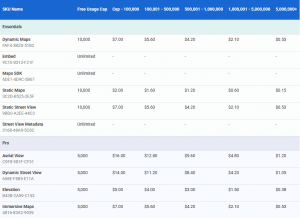 Google Maps Platform uses usage-based pricing, while Amadeus APIs are offered through the Amadeus Enterprise API Portal under its own pricing structure
This distinction is important when estimating the cost to develop a travel app. A feature may be relatively affordable to build but become expensive to operate as usage increases.
Google Maps Platform uses usage-based pricing, while Amadeus APIs are offered through the Amadeus Enterprise API Portal under its own pricing structure
This distinction is important when estimating the cost to develop a travel app. A feature may be relatively affordable to build but become expensive to operate as usage increases.