

TL;DR
- When learning how to create an AI dating website, define a specific audience, relationship intent, and market need instead of targeting everyone.
- Use AI for matchmaking, personalized recommendations, profile optimization, conversation assistance, content moderation, and fraud detection.
- A strong MVP for creating a dating website should include profiles, discovery, matching, messaging, verification, payments, privacy controls, and analytics.
- Use meaningful behavioral data to improve recommendations, identify friction points, strengthen retention, and continuously refine the dating experience as the site grows .
- Xpertz.io is an AI dating app development company that helps businesses build dating platforms tailored to their niche, matchmaking model, and AI requirements.
The biggest shift in dating right now is not another swipe feature, it is the move toward AI-assisted discovery. Tinder’s 2026 product announcement introduced AI-powered matching features such as Chemistry, which curates recommendations, and Learning Mode, which adjusts recommendations based on in-app activity.
But there is a catch: better personalization does not automatically mean users want more AI. A June 2026 Match Group survey found that 47% of US singles aged 18 – 39 have a negative view of AI in romantic contexts.
That tension is changing what it means to create a dating website. The opportunity lies in using AI where it genuinely improves matching, discovery, conversations, and safety, without taking control away from the people actually dating. This guide explains how to create an AI dating website that gets that balance right.
Why AI Is the Biggest Game-Changer for Dating Websites ?
AI is changing dating websites from simple profile-and-filter platforms into products that can understand behavior, preferences, and intent. The biggest impact is visible in 4 areas:
- Smarter Matching – AI can learn from likes, skips, profile activity, and conversations to improve match recommendations. Bumble’s 2026 Profile Guidance uses AI to help users improve their bios and prompts.
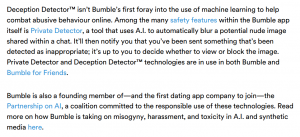
- Stronger Safety – AI can spot patterns linked to fake, spam, and scam accounts. Bumble says its Deception Detector automatically blocked 95% of accounts identified as spam or scam profiles during testing.
- Better Conversations – AI can suggest icebreakers, improve profile prompts, and provide conversation guidance without replacing genuine user interaction.
- More Relevant Discovery – AI can combine profile details with behavioral signals to surface profiles that are more relevant than basic age, location, or interest filters.
For anyone learning how to create an AI-enabled dating website, the takeaway is simple: AI should solve specific dating problems, not exist as a feature added for marketing. Used well, it can make matching more relevant, interactions safer, and discovery less repetitive.
How to Create an AI- Enabled Dating Website?
Building an AI-enabled dating website is not simply about adding a chatbot or recommendation engine to a conventional dating product. The AI needs to support a clear dating use case and improve decisions users already make throughout the matching journey.
1. Choose Your Dating Niche and Target Audience
Trying to build another general-purpose dating platform puts you up against established brands with massive user bases. A more practical approach is to serve a specific audience with a clear unmet need, such as professionals over 40, pet lovers, discreet date, sober daters, single parents, or faith-based communities.

A well-defined niche gives you clearer direction for:
- User Onboarding: Ask questions that actually matter to your audience.
- AI Matching: Prioritize compatibility signals specific to the niche.
- Product Features: Build around how that audience actually dates.
- Marketing: Target communities and channels where your users already spend time.
- Pricing: Align subscriptions and premium features with their willingness to pay.
Before creating a dating website, speak with potential users and identify what existing platforms fail to address. Their feedback can reveal the right matching criteria, safety concerns, and features worth building into your MVP.
Your positioning also matters. Decide whether the platform focuses on serious relationships, casual dating, companionship, or a specific community, because that decision will influence your AI strategy and product roadmap throughout the rest of the build.
2. Define Your AI Strategy and Core Use Cases
Once your target audience is clear, identify where AI can deliver measurable value. The right use cases will depend on how your users search, match, communicate, and interact on the platform.
Common applications include:
- Profile Optimization – Suggest improvements to bios, prompts, and profile content to help users present themselves more effectively.
- AI-Powered Matching – Analyze preferences, behavior, interests, and interactions to improve compatibility scoring.
- Conversation Assistance – Generate relevant icebreakers based on shared interests, profiles, or previous interactions.
- Content Moderation – Detects inappropriate, explicit, misleading, or policy-violating profiles, photos, and messages.
- Fraud Detection – Identify bots, fake profiles, suspicious behavior, and potential scam patterns during registration and ongoing activity.
- Personalized Recommendations – Continuously rank profiles based on user behavior and changing preferences instead of relying only on fixed filters.
Avoid adding AI features simply to make the platform appear more advanced. Start with two or three use cases that address genuine user needs, measure their impact, and expand AI capabilities based on real-world usage data. This approach helps you identify where further automation or personalization can meaningfully improve the dating experience.
3. Choose the Right Development Approach
The development route you choose will affect your launch timeline, customization options, development cost, and ability to introduce advanced AI features later. There are 3 practical approaches:
- Custom Development – Build everything from scratch for complete control over the product, matching logic, AI capabilities, and user experience. It offers maximum flexibility but requires more time and investment.
- Clone Dating Software – Start with proven dating functionality such as profiles, matching, messaging, subscriptions, and admin tools, then customize it for your niche and AI requirements. This can reduce development time while retaining substantial customization flexibility.
III. No-Code Platforms – Useful for testing an idea or launching a basic MVP, but often restrictive when you need advanced AI matching, custom payment workflows, sophisticated moderation, integrations, or deeper product control.
If you’re looking for a reliable AI dating website development company, Xpertz.io is worth considering for its flexible approach to building and customizing dating platforms.
Our solutions can be tailored to different concepts, whether you want to develop a platform inspired by Tinder or Bumble, or explore ideas drawn from Grindr, OkCupid, Hinge, and other established dating services.
This approach lets businesses customize core features and add AI for smarter matching, recommendations, moderation, and fraud detection.
📝Recommended Read – If you’re still evaluating your development route, take a look at our expert guide on best dating website builders. It provides useful insights into choosing an approach that aligns with your goals, budget, and customization needs.
4. Define Your MVP and Essential Features
Your MVP should contain everything users need to create a profile, discover relevant people, match, communicate, and stay safe. Keep the first release focused on the core dating experience.
Essential features to include in your AI-enabled dating site are:
- Registration & Login – Email, phone, or social sign-in with basic verification.
- User Profiles – Photos, bio, prompts, preferences, interests, and relationship goals.
- Discovery & Matching – Search, filters, recommendations, and swipe or match functionality.
- Messaging – Real-time text chat, with voice and video added as the platform evolves.
- Notifications – Push, email, and in-app alerts for matches and messages.
- Subscriptions & Payments – Premium plans, paid features, payment processing, and transaction management where required.
- Account Management – Privacy settings, preferences, data controls, and account deletion.
- Analytics – Basic insights into registrations, matches, conversations, retention, and conversions.
The AI use cases identified in Step 2 can then be integrated into these core workflows according to their priority and technical requirements. This keeps the MVP focused while leaving room to expand the platform based on real user behavior and product data.
5. Design an AI-Powered User Experience and Matching Journey
A successful AI dating website should minimize the gap between registration and meaningful interaction. Map the complete user journey and identify where each interaction can contribute to better matching and engagement.
- Smart Onboarding – Use targeted questions to understand relationship goals, preferences, interests, and compatibility factors. AI can adapt follow-up questions based on previous responses.
- Personalized Discovery – Keep browsing simple while continuously adjusting recommendations based on profiles viewed, likes, skips, matches, and other meaningful interactions.
- Relevant Match Presentation – Explain or highlight why a profile may be a good match when appropriate, helping users make faster and more informed decisions.
- Conversation Experience – Keep messaging intuitive while using optional AI assistance for relevant icebreakers or prompts when conversations become difficult to start.
- Continuous Personalization – Allow recommendations to evolve as users interact with the platform rather than treating onboarding preferences as permanent.
The underlying AI can be sophisticated, but the interface should remain straightforward. Users should feel that the platform understands their preferences and improves their recommendations over time, not that they are interacting with an AI system.
6. Choose the Right Technology Stack and AI Models
The technology stack should support fast interactions, reliable matchmaking, real-time communication, media processing, and continuous AI improvement. Your exact choices will depend on the platform’s scale, team expertise, and feature requirements.
- Frontend – Use React for web applications, or React Native & Flutter when a shared mobile codebase is preferred.
- Backend – Node.js, Python with frameworks such as FastAPI or Django, and Ruby on Rails are practical options for dating platforms.
- Database – PostgreSQL works well for structured user, subscription, and relationship data, while MongoDB can suit applications with more flexible data structures. Redis can support caching and fast-access data.
- Real-Time Communication – WebSockets or services such as Socket.IO can support real-time messaging, presence, and typing indicators.
- Media Processing – Use cloud object storage and CDN delivery for profile photos and videos, alongside automated image moderation where required.
- Audio & Video: WebRTC or services such as Agora can enable in-app voice and video calls without requiring users to move to another platform.
- Payments – Integrate a secure payment gateway such as Stripe or Razorpay for subscriptions, premium features, and recurring payments.
- Verification – Integrate identity, document, or liveness verification services when your platform requires stronger profile authenticity checks.
- AI Models: Use LLMs such as GPT, Claude, Gemini, Llama, or Mistral for profile analysis, personalized icebreakers, conversation assistance, and content moderation. For AI-powered matchmaking, combine embeddings, user preferences, behavioral signals, and recommendation models to identify and rank relevant matches.
Avoid selecting technologies simply because they are currently popular. Choose components your team can maintain, monitor, secure, scale, and design the matching system around a continuous feedback loop.
7. Define Your Monetization Strategy for Your AI Dating Site
A dating website does not need to charge users for the basic ability to discover and connect. A stronger approach is to keep the core experience accessible while charging for greater visibility, convenience, personalization, and advanced AI capabilities.
- Freemium Access – Let users create profiles, discover matches, and start conversations for free, while reserving advanced features for paying members.
- Subscriptions – Offer monthly, quarterly, or annual plans with benefits such as unlimited likes, advanced filters, profile visibility controls, and access to people who liked them.
- One-Time Purchases – Sell consumable features such as Boosts, Super Likes, priority visibility, or additional discovery opportunities. Tinder also offers these as separate purchases alongside subscriptions.
- AI-Powered Premium Features – Introduce paid AI capabilities such as advanced compatibility insights, profile optimization, personalized date recommendations, or enhanced conversation assistance.
- Ads & Partnerships: For platforms with sufficient traffic, carefully placed ad, brand partnerships, or affiliate opportunities can provide an additional revenue stream without restricting core dating functionality.
- Hybrid Monetization: Combine subscriptions, one-time purchases, and selected AI features to serve different willingness-to-pay levels.
Track free-to-paid conversion, average revenue per paying user (ARPPU), subscription retention, churn, purchase frequency, and lifetime value rather than focusing only on total subscribers. Bumble, for instance, reports both paying users and ARPPU as core operating metrics.
8. Build a Marketing Strategy for Your AI-Enabled AI Dating Site
Marketing should focus on attracting the right users, building trust, and creating enough activity for the matching system to deliver value.
- Invest in SEO: Create useful, people-first content around dating advice, niche dating, compatibility, and location-based searches. Use Google Search Console to identify high-performing topics and pages, then refine your content accordingly.
- Run Targeted Campaigns: Use Google Ads & Meta Ads to test audiences, locations, creatives, and acquisition costs.
- Build Social Proof: Use genuine testimonials, success stories, creator partnerships, and relevant communities to establish credibility.
- Create Referral Loops: Reward existing members with premium credits, boosts, or other benefits for bringing relevant users to the platform.
- Build Local Density: If launching city by city, concentrate acquisition in selected markets so users have enough relevant profiles to discover.
- Plan Retention Campaigns: Use personalized notifications, relevant match alerts, re-engagement emails, and carefully timed recommendations to bring inactive users back.
- Track User Quality: Monitor profile completion, matches, first conversations, retention, referrals, and paid conversion, not just registrations or downloads.
The goal is to build a relevant and active user base, because even the best AI matching system cannot deliver meaningful recommendations without sufficient quality data and user activity.
9. Ensure Privacy, Security, and Compliance
Dating platforms handle highly sensitive information, including personal details, location, relationship preferences, private conversations, photos, verification records, and payment data.
For an AI-enabled dating website, protecting this information also means being transparent about how AI systems process and use it.
Key considerations include:
- Data Protection: Encrypt sensitive data, restrict access, and follow secure data-handling practices.
- Data Minimization: Collect only necessary information and securely delete data that is no longer required.
- Privacy Controls: Let users manage profile visibility, location sharing, data access, and account deletion.
- AI Transparency: Explain how AI processes profile, behavioral, or conversation data and disclose AI interactions where applicable. EU AI Act transparency requirements became applicable on August 2, 2026.
- Human Oversight: Keep human review available for serious moderation, fraud detection, and account suspension decisions.
- Regulatory Compliance: Address applicable requirements such as GDPR, CCPA/CPRA, age restrictions, consumer protection, and data-deletion rights.
- Account & Payment Security: Use strong authentication, secure sessions, suspicious-login detection, and established payment processors.
- Age Assurance: Implement appropriate safeguards to prevent minors from accessing adult dating services.
- Incident Response: Establish procedures for detecting, containing, and communicating security or data breaches.
- Content Protection: Provide clear reporting mechanisms for impersonation, abusive content, and non-consensual intimate imagery. The US FTC notes that the Take It Down Act became effective in May 2026.
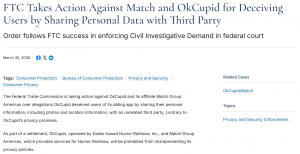
Privacy is ultimately a trust and retention issue, not just a compliance requirement. The FTC’s March 2026 action against Match and OkCupid over alleged sharing of users’ personal information further demonstrates the business risks of mishandling sensitive dating data.
10. Test, Launch, and Scale Your AI-Enabled Dating Website
Before a public launch, run a closed beta with your target audience to identify onboarding friction, weak matches, usability issues, and safety gaps.
Testing should cover registration, profiles, matching, messaging, payments, notifications, verification, reporting, and AI-powered features across different devices.
Focus on metrics that indicate genuine product performance:
- Match Rate: How often users receive relevant matches.
- Conversation Rate: How many matches progress into actual conversations.
- Profile Completion: Whether users provide enough information for effective recommendations.
- Retention: Track week-one and month-one retention to understand whether users find ongoing value.
- AI Performance: Monitor recommendation relevance, moderation accuracy, false positives, and user feedback.
After launch, continuously refine the matching models using meaningful interaction data, monitor emerging fraud patterns, and improve onboarding based on user behavior. Add features according to measurable demand rather than simply following competitors.
Scale gradually by monitoring platform performance, moderation capacity, AI usage costs, and user activity before expanding into new markets or increasing acquisition spend.
The objective is to build a dating website that becomes more relevant, reliable, and valuable as its user base grows.
How Much Does It Cost to Build an AI-Enabled Dating Website?
The cost of building an AI-enabled dating website depends on the development approach, feature set, AI capabilities, and level of customization. Custom development generally requires a higher investment, while white-label and clone solutions can offer a faster, more cost-efficient route.
For a focused AI-enabled dating website MVP, development can typically start around $25,000 – $50,000, while a more advanced platform with AI matchmaking, recommendation models, real-time chat, verification, moderation, subscriptions, and audio/video can reach $60,000 – $150,000+.
Beyond development, budget for AI API usage, hosting, third-party integrations, payment processing, security, moderation, maintenance, and ongoing model improvements.
The Next Chapter in Online Dating
Creating an AI-enabled dating website is not about adding AI to every feature. It is about using intelligent technology where it can make matching more relevant, discovery more personalized, conversations more engaging, and the platform safer. A strong product starts with a clearly defined audience, a focused MVP, thoughtful AI use cases, reliable technology, and transparent data practices. As user behavior evolves, the platform should continuously learn and improve without taking control away from the people using it. As a leading dating app development company, Xpertz.io helps businesses turn these ideas into scalable products through custom, white-label, and clone dating website development with AI integration. .
FAQs About AI- Enabled Dating Website
1. How do you prevent AI from creating poor or repetitive matches in dating sites?
Use feedback loops, ranking evaluation, diversity controls, freshness signals, and negative feedback. Regularly audit recommendation quality to prevent over-personalization and repetitive profile exposure
2. Should every dating website use the same AI matching model?
No! Matching logic should reflect the platform’s niche, relationship goals, available data, and user behavior. A serious matchmaking platform may require very different signals from a casual dating product.
3. How should businesses calculate AI costs for a dating platform?
Estimate model usage by feature, user volume, message or media processing, recommendation frequency, and moderation workload. Track cost per active user alongside engagement and revenue to maintain sustainable AI spending.