

TL;DR of Develop an App like Patreon
- Start Patreon-like app development by selecting a focused creator niche and validating audience demand, willingness to pay, and recurring content opportunities.
- Define a revenue model around memberships, digital products, platform fees, creator plans, and flexible pricing.
- Build around essential features such as creator profiles, membership tiers, content access, community engagement, discovery, analytics, and creator management.
- The cost to develop an app like Patreon ranges from $15,000 – $150,000+, with ongoing costs of around $500 – $5,000+ per month for hosting, storage, maintenance, security, and third-party services.
- Businesses looking to build a subscription-based app like Patreon can use Xpertz.io’s Patreon clone script, which includes 50+ features, complete source-code ownership, independent hosting, and 6 months of post-launch support.
Paid creator memberships have become a proven way for creators to build recurring revenue while giving audiences access to exclusive content and communities. Patreon reports 10M+ paying fans each month, 300,000+ creators, and $10B+ earned by creators since 2013.
The platform combines memberships with digital products, community features, video, and audience insights. For founders planning to build a subscription-based app like Patreon, the opportunity extends beyond replicating an existing platform.
The product needs to align with a specific creator niche, audience behavior, content format, and monetization strategy. This guide covers the key steps, features, technology choices, and development considerations involved in Patreon-like app development, including the factors that influence the overall development cost.
Is it Profitable to Create a Membership Platform Like Patreon?
A membership platform can generate recurring revenue by taking a percentage of creator earnings and adding paid services or transaction-based revenue.
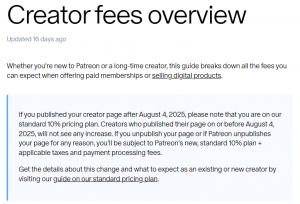
Patreon currently charges new creators who publish after August 4, 2025 a 10% platform fee on successfully processed membership & one-time payments, excluding applicable taxes. Payment processing, currency conversion, and payout fees are charged separately.
For a business building a subscription app like Patreon, potential revenue streams include:
- Platform Fees – Take a percentage of creator membership payments.
- Creator Subscriptions – Charge monthly fees for advanced tools or higher usage limits.
- Transaction Fees- Earn from digital products and other paid purchases.
- Premium Features – Monetize advanced analytics, community tools, video, or promotional capabilities.
Profitability depends on creator acquisition, paying-member growth, average transaction value, retention, payment costs, and operating expenses. For founders considering Patreon clone development, these factors help determine whether the chosen pricing model can support sustainable margins.
How to Create an App like Patreon?
To build an app like Patreon, you need a clear development path covering the product, its users, technology, and launch requirements. The following 8 steps break down the process into practical stages.
1. Identify a Profitable Creator Niche & Target Audience
The first step in Patreon-like app development is deciding which creator communities the platform should serve. Rather than targeting every type of creator, assess niches where audiences already have strong reasons to pay for closer access, exclusive work, or ongoing interaction.
Evaluate potential niches based on:
- Audience Demand – Examine search interest, social engagement, community activity, and creator growth within the niche.
- Willingness to Pay – Identify audiences already spending on memberships, digital products, courses, or exclusive content.
- Recurring Content Potential – Determine whether creators can consistently deliver enough value to retain paying members.
- Audience Ownership – Look for creators who want a more direct relationship with their most engaged fans instead of relying entirely on social platforms for reach and engagement.
- Market Gaps – Study existing membership platforms to identify underserved creator categories, pricing gaps, or missing capabilities.
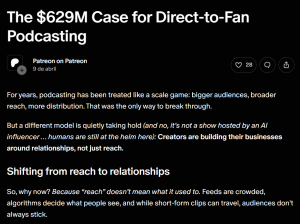
Patreon’s podcast category generated $629M in 2025, up 33% year over year, across 7.6M paid memberships. This shows the value of examining individual creator categories for proven spending patterns, recurring engagement, and room for a dedicated membership product
2. Define Your Creator Monetization and Revenue Model
Before you develop an app like Patreon, decide how creators will earn and how your platform will make money. A well-planned model can combine recurring memberships with one-time purchases, giving creators multiple ways to monetize their audiences.
For your Patreon clone development, consider:
- Paid Memberships – Offer one or multiple tiers with different benefits.
- One-Time Purchases – Let creators sell videos, audio, guides, images, & other digital products.
- Platform Commission – Take a percentage of successful creator transactions.
- Creator Plans – Offer optional paid plans with advanced analytics, community tools, or additional capabilities.
- Flexible Pricing – Support monthly & annual billing, discounts, gifting, and tier-based pricing.
- Digital Product Shop – Let creators list & sell individual digital products such as videos, audio files, guides, courses, templates, or artwork as one-time purchases.
- Community Engagement & Events – Give creators options to offer private community access, live streams, or ticketed virtual events as additional paid benefits.
Your monetization choices will determine how subscriptions, payments, commissions, and creator payouts work across the platform. They will also affect the cost to develop an app like Patreon, particularly when adding multiple payment and revenue-sharing models.
3. Select the Core Features for Your Patreon-Like App
Once the monetization model is defined, identify the features creators need to publish, monetize, and engage with their audiences while giving members easy access to exclusive content.
Features | What It Should Include |
Creator Profiles & Pages | Custom creator profiles with bio, branding, membership options, featured content, & digital products. |
Membership Tiers | Multiple paid tiers with different prices, benefits, content access, and member limits. |
Content Publishing | Support text, images, audio, video, & downloadable files, with options to publish content for public, free, or paid members. |
Content Access Control | Restrict posts, media, collections, and other content based on membership tier or purchase status. |
Digital Product Shop | Let creators list & sell individual digital products such as videos, audio files, guides, courses, templates, artwork, and downloadable files. |
Community & Engagement | Support comments, reactions, private chats, direct messages, and member discussions. |
Live Streaming & Events | Support livestreams, exclusive virtual events, and tier-based access to creator-led experiences. |
Member Dashboard | Give members access to their subscriptions, purchased content, saved or available media, community spaces, notifications, and account settings. |
Search & Discovery | Help members find creators and content through search, categories, recommendations, & creator discovery. |
Notifications | Send timely alerts for new posts, messages, livestreams, membership updates, and other creator activity across web & mobile. |
Analytics & Insights | Provide creators with data on members, membership growth, cancellations, engagement, and content performance. |
Free Memberships & Trials | Allow creators to attract audiences through free memberships and optional trials before converting them to paid plans.. |
Membership Management | Let members upgrade, downgrade, cancel, or change memberships while allowing creators to manage tiers, benefits, and member access. |
Creator Content Organization | Allow creators to organize posts, videos, podcasts, & other content into collections or series for easier discovery and access. |
Admin Dashboard | Give admin control over creators, members, content moderation, reports, categories, platform activity, and account management. |
4. Design the UI/UX and User Experience
A subscription app like Patreon needs a clean, intuitive experience for both creators and members.
Creators should be able to publish content, manage memberships, and monitor performance with minimal friction, while members should be able to discover creators, compare tiers, subscribe, and access exclusive content easily.
During Patreon-like app development, focus on simple navigation that keeps discovery, memberships, content, messages, and account settings easy to reach.
Membership tiers should clearly present pricing, benefits, and access levels so members can make informed choices. The creator dashboard should simplify publishing, tier management, member management, and analytics.
A mobile-first design should keep content discovery, checkout, notifications, and account management usable across smaller screens. Keep public and members-only content visually distinct to reduce confusion.
5. Choose Between Patreon Clone and Custom Development
The development approach can affect launch time, flexibility, ownership, and the overall cost to develop an app like Patreon. Founders generally choose between a ready-made Patreon clone and fully custom development.
- Patreon Clone – Suitable for launching with established features such as creator profiles, membership tiers, content access, payments, and admin controls.
- Custom Development – It is suitable for products that require unique membership models, specialized creator tools, custom workflows, or complete control over the product.
When evaluating Patreon clone development, compare source-code ownership, available modifications, integrations, scalability, security, maintenance, and future development requirements. A lower initial cost may not provide the same flexibility if significant changes are required later.
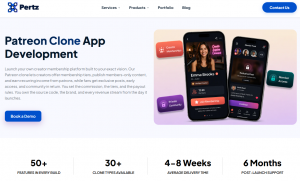
Xpertz.io offers a ready-made Patreon clone script with 50+ features, complete source-code ownership, independent hosting, and 6 months of post-launch support. The software covers core creator membership functionality while providing a starting point for launching your own branded platform.
6. Choose the Right Technology Stack
The technology stack should support content-heavy experiences, recurring memberships, real-time engagement, analytics, and secure media delivery. A practical stack for a Patreon-like app could include:
- Frontend – Use React for the web application. The latest React release is 19.3, providing an actively maintained foundation for interactive creator and member interfaces. A well-planned frontend for creator subscription sites should keep navigation and content access consistent across screens.
- Mobile App – React Native can support native Android & iOS applications while allowing teams to reuse React-based development skills across platforms.
- Backend – Node.js is a suitable choice for APIs handling user accounts, memberships, content publishing, notifications, and other application logic. As usage grows, backend architecture for creator platforms also becomes important for maintaining application performance.
- Database – PostgreSQL works well for structured data such as users, creators, membership tiers, subscriptions, content records, and transactions. Its built-in full-text search can also support content and creator discovery.
- Caching & Real-Time Features – Redis can support session management, caching, notifications, and real-time community features through its Pub/Sub capabilities.
- Media Storage – Amazon S3 is suitable for storing videos, audio, images, documents, and other creator-uploaded files, with configurable access controls and storage options.
- Payments & Subscriptions – Use a payment service such as Stripe billing to handle recurring subscriptions, trials, discounts, invoicing, and subscription management.
- Cloud & Deployment – AWS or another major cloud provider can support application hosting, databases, media storage, monitoring, backups, and scaling as usage grows.
The final stack should be selected based on the app’s feature set, expected traffic, media requirements, development resources, and long-term maintenance needs.
7. Integrate Subscriptions, Payments, & Creator Payouts
Once the membership model is defined, build a payment system that connects membership selection, checkout, billing, content access, and creator payouts smoothly. A subscription app like Patreon should support monthly & annual billing, automatic renewals, failed payments, cancellations, and refunds.
Use a trusted provider to manage subscription payments and billing workflows. Payment status should also connect with content access, ensuring members receive the right benefits based on their active subscription.
For creator payouts, define payout schedules, supported currencies, withdrawal methods, and applicable fees. Patreon’s payout documentation provides a useful reference for payout workflows.
If the app serves multiple countries, account for local payment methods, currency conversion, taxes, and regional requirements. Use tokenized payment processing and established security practices to protect sensitive payment data.
8. Test, Launch, and Improve Your App
Before launching your Patreon-like app, test the complete creator and member journey across web and mobile. Focus on membership sign-up, tier-based content access, recurring billing, cancellations, refunds, creator payouts, notifications, media uploads, and community features.
Test different payment scenarios and user roles to identify access or billing issues before release.Run a controlled beta with real creators and members to collect feedback on usability, content discovery, subscriptions, and engagement.
For iOS apps, TestFlight supports beta distribution and tester feedback before App Store release.
After launch, monitor conversion rates, active memberships, churn, failed payments, content engagement, retention, and support issues. Use this data to prioritize product improvements and test changes gradually.
How Much Does It Cost to Develop an App Like Patreon?
The cost to develop an app like Patreon generally ranges from $15,000 to $150,000+. A ready-made Patreon clone script can keep the initial investment lower by providing pre-built core functionality, while custom development requires more time and resources for tailored features, integrations, and workflows.
Ongoing expenses typically range from $500 – $5,000+ per month, covering hosting, media storage, maintenance, security, third-party services, and payment processing.
The final Patreon clone development cost depends on the chosen development approach, technical requirements, platforms, and expected user volume.
Final Thoughts
Patreon has shown how creator memberships can turn direct audience relationships into recurring revenue, but building a similar platform requires a clear reason for creators and audiences to switch. That could come from better monetization options, stronger community tools, niche-specific features, or greater control over the member relationship.. For businesses ready to build a subscription-based app like Patreon, Xpertz.io offers a Patreon clone software with complete source-code ownership, independent hosting, and 6 months of post-launch support.
FAQs About Patreon-Like App Development
1. Should a Patreon-like app launch on web and mobile together?
The decision depends on the target audience and product scope. Mobile adds convenience and engagement, but digital subscriptions also require platform-specific billing considerations, including Apple’s StoreKit subscription system.
2. How should a Patreon-like app handle creator & member disputes?
Establish clear policies for refunds, content violations, membership disputes, and account restrictions. An administrative workflow with reporting, evidence review, moderation actions, and audit records helps maintain consistent platform governance.
3. How can a Patreon-like app improve creator retention?
Give creators actionable analytics, reliable monetization tools, audience management capabilities, and flexible content options. Reducing operational friction can help creators spend more time producing content and engaging paying members.