
TL;DR of Creating a Dating App Like Bumble
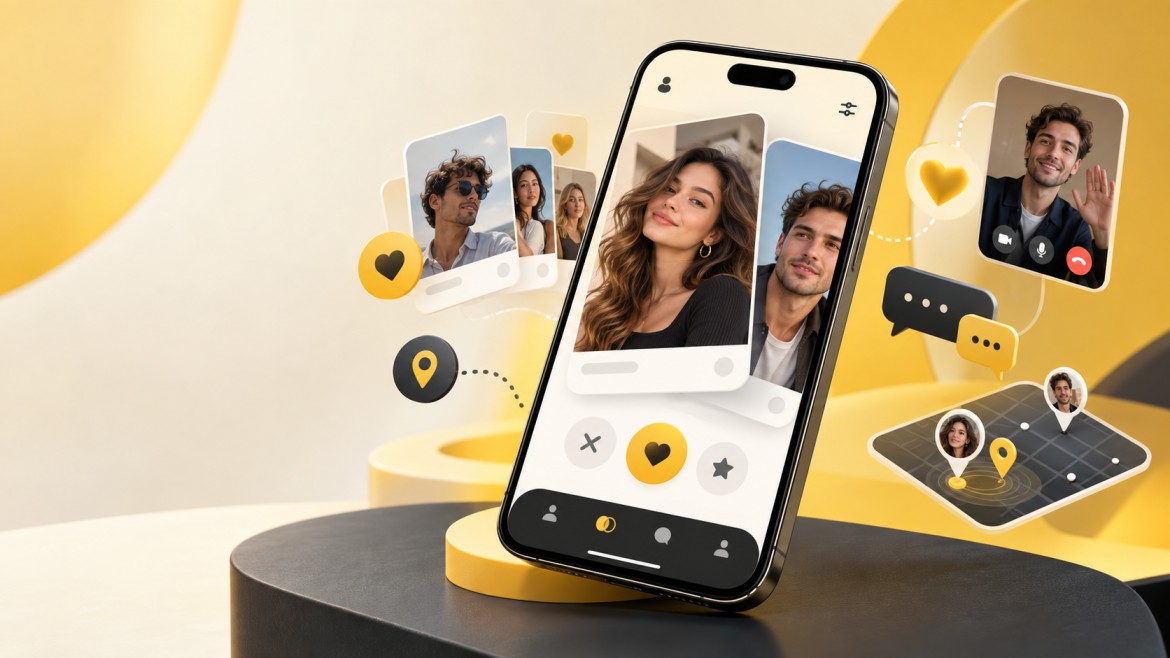
- Creating a dating app like Bumble starts with defining your target audience, dating experience, matching approach, conversation flow, and unique value proposition.
- The MVP should focus on profiles, discovery, matching, messaging, verification, safety, privacy, and basic monetization before adding advanced features based on user data.
- Founders can choose a Bumble clone script for a faster, lower-cost launch or custom dating app development for greater control over matching, AI, safety, and product functionality.
- The cost to create a dating app like Bumble ranges from $5,000 to $300,000+, while ongoing expenses for hosting, APIs, maintenance, moderation, and other services may start at $2,000 – $7,000+ per month.
- Xpertz.io offers a customizable Bumble clone script with core dating features and complete source-code ownership, giving businesses a ready foundation for launching their own dating platform.
Bumble generated $210.5M in revenue in Q2 2026, while continuing to refine how users discover matches and start conversations. Its newer Opening Moves feature, for example, gives users another way to begin a chat without relying entirely on the traditional first-message flow.
For founders researching how to create a dating app like Bumble, this evolution offers an important product lesson. User expectations change, and dating products need room to adapt with them.
Creating a dating app like Bumble involves much more than matching profiles and adding chat. Discovery, matching logic, verification, safety, messaging, monetization, and retention all influence whether users keep coming back. The goal is to translate those proven mechanics into a product built around your own audience, positioning, and business model.
What Should You Borrow From Bumble, and What Should You Rethink?
If you are creating a dating app like Bumble, studying the product is useful, but copying its feature set can limit your own positioning. Bumble has continued evolving its dating experience in 2026, including Opening Moves, AI-supported profile guidance, and features intended to help users move from matching toward real-world dates.
What to Borrow
- Intentional Matching – Use profile preferences, interests, dating intentions, and other meaningful signals to improve match relevance instead of depending only on photos & swipes.
- Conversation Prompts – Bumble’s Opening Moves gives users prompts that matches can respond to, creating an easier entry point for conversations.
- Safety & Verification – Build identity checks, reporting, blocking, privacy controls, and communication safeguards into the core experience.
- Layered Monetization – Premium filters, boosts, extensions, and other paid features can create upgrade opportunities without restricting the basic matching experience.
What to Rethink
- First-Message Rules – Bumble’s women-first approach became closely associated with its early positioning. Your app can establish different conversation rules based on its audience, relationship goals, or matching model.
- Swipe Dependency – Combine swiping with recommendations, compatibility signals, prompts, and curated discovery so users have more meaningful ways to find potential matches.
- Keeping Users in the Chat – If your product is designed around real-world dating, consider features that help users progress from matching to planning a date. Bumble’s recent product updates show this shift toward facilitating the next step after a match..
When planning how to create a dating app like Bumble, use Bumble as a product reference rather than a blueprint. Borrow patterns that fit your users, rethink Bumble-specific decisions, and consider how AI can improve matching, recommendations, or safety when building an AI-enabled dating website.
Essential Features to Create a Dating App Like Bumble
To create a dating app like Bumble, focus on features that make discovery, matching, communication, safety, and monetization work together. Here are the core features to consider:
| Features | Key Functionality |
| Registration & Onboarding | Phone/email/social login, age confirmation, consent, location permissions, dating intentions, onboarding preferences. |
| User Profiles | Photos, bio, prompts, interests, dating goals, preferences, profile visibility controls. |
| Profile Verification | Selfie verification, identity checks, verified badges, anti-bot controls, verification status. |
| Discovery & Swiping | Like, pass, location-based discovery, profile recommendations, daily like limits. |
| Matching | Mutual likes, compatibility rules, match queue, match status, match preferences. |
| Conversation Starters | Opening prompts, suggested questions, conversation rules, match-expiration logic. |
| Real-Time Chat | Text, GIFs, images, voice notes, read status, typing indicators, message controls. |
| Voice & Video Calls | In-app voice and video calls without requiring users to share personal contact details. |
| Notifications | Matches, likes, messages, reminders, verification updates, subscription alerts, safety notifications. |
| Search & Filters | Age, distance, interests, dating goals, lifestyle preferences, verification status. |
| Blocking & Reporting | Block, unmatch, report, abuse reporting, moderation workflows, report status. |
| Safety & Privacy Controls | Profile visibility, location privacy, unwanted-message controls, consent settings, safety resources. |
| Subscriptions & Payments | Premium plans, boosts, additional likes, visibility features, payment processing, subscription management. |
| Retention & Engagement | Profile prompts, match reminders, personalized recommendations, re-engagement notifications. |
| Admin Panel | User management, reports, moderation, subscriptions, analytics, content controls, verification management. |
How to Create a Dating App Like Bumble?
A dating app succeeds when its product decisions work together, from who gets recommended to how a match becomes a conversation and eventually a date. The following 8 steps break down what it takes to create a dating app like Bumble, from defining the concept and core features to development, monetization, testing, and launch.
1. Research the Market and Define Your Dating App Concept
When creating a dating app like Bumble, begin with the experience you want users to have. Decide how users should discover people, what makes a match relevant, how conversations should begin, and what happens after two people connect.
Map the Core Dating Behavior
Define the product around key decisions such as:
- Discovery – Will users swipe through profiles, receive curated recommendations, or use multiple discovery modes?
- Matching – Will matches depend on mutual likes, preferences, compatibility scores, interests, or dating intentions?
- Conversation – Can either person start the chat, or will your app use prompts, questions, or specific conversation rules?
- Dating Intent – Will users clearly state whether they are looking for a relationship, casual dating, friendship, or something more specific?
- Next Step – How will the app help users move from a match to an actual conversation or date?
Define Your Target User Proposition
A focused audience makes these decisions easier to shape. You could target professionals, people seeking serious relationships, single parents, LGBTQ+ users, or a specific dating niche, such as creating an extramarital dating app like Gleeden.
Define Your Unique Value
Choose one or two areas where your app can offer a distinctly better experience, such as more relevant matching, stronger verification, intentional conversations, niche dating, or a different discovery model. This becomes the foundation for your feature set and business model.
2. Define Product Requirements
Once the dating experience is clear, translate it into specific product rules and user flows. This gives your team a practical scope for design, development, moderation, and monetization.
- User Roles – Define access for regular users, premium subscribers, moderators, and admins, with separate permissions for sensitive actions.
- Core User Journeys – Map the flow from registration & profile creation through discovery, matching, messaging, date planning, reporting, and account management.
- Free vs. Paid Functionality – Decide which features drive subscriptions, such as advanced filters, additional likes, boosts, or profile visibility.
- Moderation Workflows – Establish how reports, fake profiles, inappropriate content, harassment, appeals, and account restrictions will be handled.
- Geographic Launch Scope – Select the initial markets and account for local dating preferences, languages, payment methods, and applicable regulations.
- Admin Requirements – Define controls for accounts, verification, reports, subscriptions, content, notifications, analytics, and moderation.
A well-defined requirement set keeps the scope measurable and gives the development team clearer inputs for estimating the cost to create a dating app like Bumble.
3. Choose the MVP features
Your MVP should test whether users can create a profile, discover relevant people, match, and start meaningful conversations. Keep the first release focused on the core dating loop and add advanced capabilities after you have real user behavior to learn from.
| MVP Features for Bumble-Like App | What It Should Include |
| Account Creation | Email, phone, or social sign-up with basic age and consent checks. |
| Profile Creation | Photos, bio, interests, prompts, dating intentions, and basic preferences. |
| Profile Discovery | Swipe-based browsing, like/pass actions, and basic location-based recommendations. |
| Matching | Mutual likes, match notifications, and match status |
| Conversation Starters | Prompts or predefined questions to help users initiate conversations. |
| In-App Messaging | 1-to-1 text chat with basic message controls |
| Basic Filters | Age range, distance, gender, & dating preferences |
| Profile Verification | Basic selfie or photo verification to reduce fake accounts |
| Block & Report | Block, unmatch, & report options available within profiles and chats. |
| Basic Monetization | One or two paid features, such as boosts or additional likes, to test willingness to pay. |
4. Design the UX/UI
When you create a dating app like Bumble, the interface should make the path from discovery to conversation feel natural. Design around the core user journeys rather than treating every screen as a separate feature.
Keep profiles focused on information that helps users make a dating decision, while making discovery actions instantly clear. The matching flow should provide enough context to encourage interaction, and messaging should reduce the friction of starting a conversation.
Keep safety & privacy controls easy to reach without disrupting the main experience. Premium prompts should also appear at relevant points in the journey instead of interrupting core interactions.
Prototype the key flows, test them with potential users, and refine the UX before development.
5. Choose a Development Approach for Your Bumble Like App
Your development approach affects dating app development cost, time to market, customization, and long-term control. When deciding how to create a dating app like Bumble, founders typically choose between a ready-made clone script and custom development.
A ready-made Bumble app clone script provides core modules such as profiles, matching, chat, subscriptions, notifications, and admin controls, reducing the time and investment needed for an initial launch. With Xpertz.io’s Bumble Clone, you can customize the branding, interface, features, and business model while retaining complete source-code ownership.
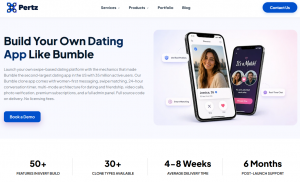
Custom dating app development gives you control over the product logic, matching model, user journeys, safety features, AI capabilities, and monetization. It generally requires more development time and investment, but works better when your concept depends on functionality that a ready-made solution cannot accommodate.
When evaluating dating app development companies, consider their experience with these requirements alongside customization and post-launch support. The choice ultimately comes down to your budget, launch strategy, product complexity, and customization requirements.
6. Develop the MVP
Once the product scope and development approach are finalized, move into MVP development. Build the core dating flow first, connecting registration, profiles, discovery, matching, and messaging into one working experience.
Set up the required backend services, databases, APIs, and third-party integrations alongside the app interfaces. Implement the matching rules, authentication, notifications, payments, and safety controls based on the product requirements defined earlier.
Develop in short iterations so your team can review working builds, identify gaps, and adjust functionality without creating major rework later. Keep the codebase modular enough to support additional features as user needs become clearer after launch.
7. Test and Launch
Before launching your Bumble clone app, test the complete user journey under real-world conditions. Check registration, profile creation, matching, messaging, notifications, payments, verification, reporting, and account deletion across supported devices and platforms.
Run functional, usability, security, and performance testing to identify issues that could affect trust or user retention. A small beta launch can also reveal problems that internal testing may miss, particularly around match quality, onboarding friction, and conversation activity.
Once the critical issues are resolved, release the app to your initial target market. Monitor crashes, user feedback, match activity, retention, and payment behavior closely during the first few weeks and use those insights to guide the next product updates.
8. Scale and Improve Based on User Data
Launching your dating app is the beginning of product learning. Track how users move through onboarding, discovery, matching, conversations, and subscriptions to understand where the experience performs well and where users drop off.
Use metrics such as match rate, conversation-start rate, response rate, retention, churn, subscription conversion, and report frequency to guide improvements. Test changes to recommendations, onboarding, prompts, and monetization rather than relying on assumptions.
As usage grows, expand into new locations, strengthen moderation, improve recommendation quality, and introduce features that address demonstrated user needs. This data-led approach helps you scale the product while keeping development focused on measurable user and business outcomes.
Safety, Verification & Privacy Features for a Bumble-Like Dating App
Safety directly affects trust, engagement, and retention in a dating app. When you create a dating app like Bumble, safety features should be built into everyday interactions, from profile creation, matching to messaging & offline dating.
- Profile Verification – Add selfie verification, identity checks, verified badges, and anti-bot measures to reduce fake, duplicate, and automated accounts.
- Reporting, Blocking & Unmatching – Let users quickly block, unmatch, or report profiles and messages. Connect reports to moderation workflows for scams, harassment, impersonation, and inappropriate content.
- Privacy Controls – Give users control over profile visibility, discoverability, location sharing, and communication preferences. Avoid displaying precise location information.
- Safe Communication – Add controls for spam, unwanted messages, suspicious links, and inappropriate content. In-app voice & video calls can also help users communicate without sharing personal contact details.
- Data & Account Controls – Provide clear options to manage consent, access or delete personal data, and permanently delete accounts based on applicable privacy requirements.
- Date Safety – If the app supports offline meetings, consider trusted-contact sharing, date details, check-in options, and quick access to safety resources.
How Much Does It Cost to Create a Dating App Like Bumble?
The budget for a Bumble-like app largely comes down to how much you build, customize, and automate. Matching, verification, chat, safety, monetization, and platform choices can quickly shift the development scope.
| Development Approach | Estd. Cost | Timeline |
| Bumble Clone Script | $5,000 – $15,000 | 4 – 8 weeks |
| Custom MVP | $30,000 – $50,000 | 3 – 5 months |
| Advanced-Level Platform | $60,000 – $150,000 | 5 – 8+ months |
| AI-Powered Dating App | $160,000 – $300,000+ | 8 – 12+ months |
The figures are indicative and can vary based on feature scope, platform selection, development team location, integrations, and customization requirements.
Ongoing Cost of Running a Bumble-Like App
Once the app is live, recurring expenses typically cover hosting, APIs, SMS & verification, maintenance, security, moderation, customer support, and feature updates. A small-to-mid-sized app may start around $2,000 – $7,000+ per month, with costs increasing as user activity, media usage, AI processing, and third-party services grow.
Your Next Step in Bumble Clone App Development
Building a dating app like Bumble requires a clear product idea, thoughtful user experience, reliable matching, and safety features that users can trust. The development approach also plays a major role in how quickly and cost-effectively you can bring the product to market. Xpertz.io offers a customizable Bumble clone app with core dating features and complete source-code ownership, giving founders a practical starting point to launch, customize, and grow their own dating platform.
FAQs About How to Create a Dating App like Bumble
1. How to prevent fake profiles & dating scams?
Combine selfie or ID verification with behavioral monitoring, duplicate-profile detection, suspicious-link detection, reporting tools, and manual moderation. Verification should reduce friction without making legitimate users abandon onboarding.
2. Can Apple reject a dating app that looks too similar to Bumble?
Yes! Apple states that established categories such as dating may be rejected when a submission does not offer a meaningfully different or improved experience. Product differentiation therefore matters during app review.
3. How to monetize a dating app like bumble without hurting user experience?
Keep the core dating journey accessible while monetizing optional advantages such as boosts, advanced filters, additional likes, and premium visibility. Test pricing and feature placement against conversion and retention data.