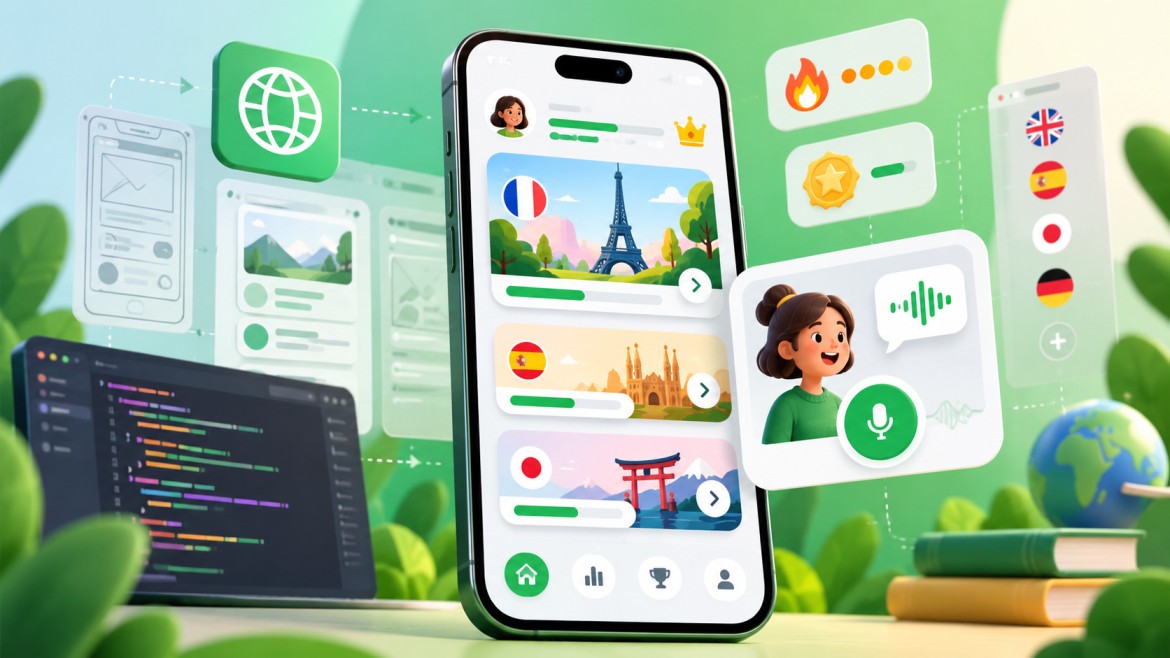

TL;DR of Duolingo-Like App Development
- Research your target market, choose a specific learner group & language pair, and define the learning goal before you create an app like Duolingo.
- Plan a focused MVP with interactive lessons, speaking and pronunciation, progress tracking, personalized practice, gamification, and AI-powered learning features.
- The cost to develop an app like Duolingo typically ranges from $20,000 – $300,000+, while ongoing costs can reach $2,000 – $15,000+/month for hosting, AI APIs, content, maintenance, and third-party services.
- Xpertz.io offers Duolingo clone script with complete source-code ownership and customization options, as well as custom language learning app development for building a tailored Duolingo-like app.
Duolingo ended Q2 2026 with 58.7M daily active users and 12.7M paying subscribers.Yet the language learning market still leaves room for focused products. Mobile apps accounted for about 62% of the $21 billion online language learning market in 2025, while corporate and tutor-led learning segments continue to expand, according to Mordor Intelligence.
For founders looking to create an app like Duolingo, the opportunity lies in choosing a clear audience, learning model, and monetization strategy that can support sustainable growth. This guide covers how to make a language learning app like Duolingo, from product planning and MVP development to AI features, content creation, launch, and cost estimation.
Why Build an App Like Duolingo Despite Market Competition?
Duolingo is competing at a scale most new language learning products do not need to match. It is targeting 100M daily active users by the end of 2028 while expanding into chess, math, and music.
That leaves room for products built around a specific learner, language, or learning outcome. Founders looking to create an app like Duolingo can focus on segments such as:
- Exam Preparation – IELTS, TOEFL, and other test-specific language training.
- Workplace Learning – Business communication and role-specific vocabulary.
- Heritage Languages – Speaking and listening practice for second-generation learners.
- Dialect Learning – Regional vocabulary, pronunciation, and cultural context.
- Speaking-First Practice – AI conversations, role-play, and pronunciation feedback
AI is also reducing the time required to expand course content. Duolingo says its first 100 courses took about 12 years to develop, while 148 additional courses were created and launched in about a year using generative AI, shared content systems, and internal tools.
For Duolingo-like app development, the opportunity is to combine proven mechanics such as short lessons, progress tracking, and personalized practice to a defined learning need.. The Duolingo business model can also help founders understand how these product mechanics connect with subscription, advertising, and other monetization options.
How to Make a Language Learning App Like Duolingo?
The following 8 steps outline how to make a language learning app like Duolingo. Each step settles decisions that affect the next, helping you avoid costly changes as development progresses.
1. Research the Market Before You Create an App Like Duolingo
Start with how people actually use competing products. Review user feedback for Duolingo, Babbel, Busuu, Memrise, Speak, & Mondly, and sort recurring complaints around lesson repetition, speaking practice, pricing, personalization, and usability.
Pay attention to complaints that appear repeatedly across different platforms, as they can point to areas where users are willing to consider an alternative.
Use the leading apps yourself and compare onboarding, lesson structure, progression, engagement, and upgrade prompts. Pay particular attention to limitations affecting the learner group you plan to target. This gives you a stronger basis for deciding what your language learning app like Duolingo should do differently.
Before product planning, narrow down your target markets and learner groups. Assess language demand, competitor coverage, willingness to pay, and desired learning outcomes, then define your target learner, core problem, and primary product advantage. This gives your Duolingo-like app development a clear product focus.
2. Define Your Target Audience and Language Learning Goals
Do not try to serve every type of language learner in the first release. Choose a specific audience, language pair, and reason for learning. That reason should directly influence what you build:
- Travelers need useful phrases, listening practice, pronunciation help, and quick lessons they can complete between trips.
- Exam candidates need structured preparation, mock tests, timed exercises, and performance tracking.
- Working professionals need realistic dialogues for meetings, presentations, emails, and workplace conversations.
- Parents & young learners need age-appropriate content, controlled access, and simple progress reporting.
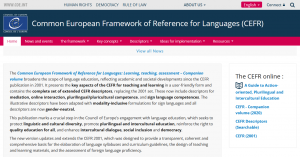
Define proficiency levels using the CEFR framework. For an MVP, covering A1 to B1 can give learners a meaningful progression without forcing the first release to carry an oversized curriculum.
Before you build an app like Duolingo, speak to 10 – 15 people who fit your target profile. Ask how they currently learn, where they lose motivation, what they struggle to practice, and what would make them pay for a better solution. Those conversations often expose product gaps that competitor research alone may not show.
3. Plan the MVP Features for a Language Learning App
Keep the first version focused on the features needed to deliver the core learning experience. Instead of trying to match every feature in Duolingo, prioritize functions that support lessons, practice, progress, and user retention.
| MVP Features | What It Should Include |
| User Registration & Profiles | Email, social login, learner profile, language selection, and learning goals. |
| Course & Lesson Structure | Language levels, units, lessons, vocabulary, grammar, and practice exercises. |
| Interactive Exercises | Multiple-choice questions, translation, listening, matching, sentence formation, and fill-in-the-blank tasks. |
| Speaking & Pronunciation | Voice-based exercises, speech recognition, pronunciation scoring, and repeat practice. |
| Progress Tracking | Completed lessons, XP, level progression, accuracy, learning streaks, and daily goals. |
| Personalized Practice | Review sessions based on incorrect answers, weak vocabulary, and previous learning activity. |
| Gamification | Points, streaks, achievements, daily challenges, and basic leaderboards. |
| Notifications & Reminders | Daily practice reminders, streak alerts, lesson reminders, and personalized notifications. |
| Subscription & Payments | Free & premium plans, in-app purchases, subscription management, and payment processing. |
| Admin Panel | Course management, lesson creation, user management, progress monitoring, subscriptions, and content updates. |
For the MVP, prioritize the features that directly affect learning and repeat usage. Advanced AI tutoring, live classes, social features, and extensive personalization can be added after you validate how users engage with the core product.
4. Design the UI/UX for an Engaging Learning Experience
When you build an app like Duolingo, the interface should make it easy for users to start a lesson, understand what comes next, and track their progress. Keep the learning path clear and minimize unnecessary steps between lessons.
Design lessons around active practice using short exercises, audio, visual cues, translation, vocabulary recall, and speaking activities. Give immediate feedback so learners understand mistakes and know how to improve.
Focus on these UI/UX decisions:
- Clear Progress – Show levels, completed lessons, daily goals, and milestones without overcrowding the screen.
- Focused Interactions – Give each exercise one primary action so users always know what to do next.
- Useful Feedback – Explain common mistakes and provide another attempt where appropriate, particularly for pronunciation activities.
- Short Sessions – Make lessons easy to complete in a few minutes for users learning during breaks or while travelling.
- Mobile Usability – Use readable typography, comfortable touch targets, and accessible audio controls.
- Consistent Design – Maintain familiar navigation, buttons, icons, and visual cues throughout the app.
Gamification should encourage consistent learning without becoming the main attraction. Streaks, daily goals, milestones, animations, and sound cues can make progress feel rewarding, but the interface should continue to emphasize learning outcomes.
For a language learning app like Duolingo that targets multiple languages or markets, localization should also be considered during UI/UX design. Text length, writing direction, character sets, pronunciation, & cultural context can affect usability.
Test prototypes with representative learners to identify confusing instructions, navigation issues, and points where users lose interest before development.
5. Choose the Right Duolingo-Like App Development Approach
The right development model depends on how much of the product you need to build, how quickly you want to launch, and where your differentiation will come from. For Duolingo-like app development, founders generally have the following 3 options:
| Approach | Best For | Key Advantages |
| Duolingo Clone Script | Founders targeting a faster launch with a familiar learning model | Pre-built features such as lessons, profiles, progress tracking, gamification, subscriptions, &admin controls reduce development time. |
| Custom Development | Products built around a distinct learning methodology or specialized audience. | A product designed around your own curriculum, assessment logic, AI capabilities, workflows, and business model. |
| Hybrid Development | Products that need a faster base but require custom differentiation. | Use ready-made modules for standard functions and custom-build features that differentiate your product. |
No-code or low-code tools can also help validate a simple concept, particularly when testing basic user flows. However, they may become limiting once your app requires advanced personalization, speech processing, complex gamification, or deeper integrations.
If you want a ready-made route, Xpertz.io’s Duolingo clone script provides a pre-built base with complete source-code ownership, which can then be customized for the intended product. For products with a distinct learning approach, specialized functionality, or custom workflows, they also provide custom language learning app development.
Whichever approach you choose, selecting the right education software development company can help you evaluate the trade-offs across budget, technical requirements, customization, and long-term product goals.
6. Develop High-Quality Language Learning Content
A language learning app can have a strong feature set and still fail if the lessons feel unnatural or repetitive. Build the curriculum around real usage, with lessons organized by proficiency, vocabulary, grammar, and difficulty rather than simply grouping translated sentences.
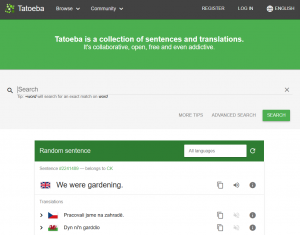
Start with vocabulary that learners are likely to encounter in real situations. Frequency lists can help prioritize common words for beginner lessons, while resources such as Tatoeba can provide example sentences. Always review the licensing terms of external datasets and credit them where required.
AI can reduce the time spent creating first drafts, but it should not be the final reviewer. Duolingo’s 2026 course expansion shows how generative AI can speed up course production, while user concerns reported by TechCrunch also highlight the risks of errors and weaker content.
A workable review process is:
- Draft with AI – Create exercise ideas, examples, translations, and variations.
- Review with Experts – Have a native speaker or language educator check accuracy, phrasing, and cultural references.
- Test the Lessons – Check difficulty, instructions, and answer quality across proficiency levels.
- Fix from User Feedback – Give learners an easy way to report errors or confusing exercises.
Do the same with audio also, use human recordings for important vocabulary, dialogues, and pronunciation practice. Text-to-speech can handle less critical audio at scale, helping control production costs without cutting corners where pronunciation matters.
7. Integrate AI & Speech Recognition into Your Language Learning App
AI can make a language learning app like Duolingo more responsive to individual learners. Instead of adding AI as a single chatbot feature, focus on on the following 3 areas that directly improve the learning experience
- Pronunciation – Services such as Microsoft Azure Speech and Google Cloud Speech-to-Text can assess spoken input, while models such as Whisper offer another option. Test them across accents, speaking speeds, microphones, and background noise before using pronunciation scores in the learning flow.
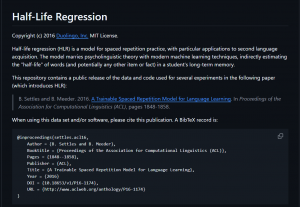
- Adaptive Practice – Adjust reviews based on learner performance. Duolingo has published its half-life regression code & data, which can inform spaced-repetition logic for deciding when users should review a word, repeat an exercise, or move ahead.
- AI Conversations – Use LLMs for roleplays such as job interviews, travel situations, or business conversations. Keep responses aligned with the learner’s level and define how corrections should appear.
AI can also increase recurring costs as usage grows. Set session limits, use smaller models for simpler tasks, and track whether each AI feature improves practice, completion, or retention enough to justify its cost.
8. Test, Launch, and Improve Your Duolingo-Like App
Quality assurance for a learning app goes beyond checking screens. Test audio on different Android devices, subscription flows in sandbox mode, offline sync after connection drops, and exercise types with long strings and non-Latin scripts.
Run a closed beta through TestFlight and Google Play testing tracks with a focused group of target learners. Track onboarding, lesson completion, drop-offs, errors, and subscription actions. Then consider a soft launch in one market with localized app-store listings before expanding further.
Acquisition can also benefit from creator partnerships. Duolingo reported more than 1B social media impressions per quarter, with influencer marketing performing particularly well in China, Indonesia, and India. A smaller language learning app can apply the same principle by partnering with niche teachers, language coaches, and exam-preparation creators whose audiences closely match the product.
After launch, monitor Days 1, 7, & 30 retention, lesson completion, trial-to-paid conversion, and subscription cancellations. Duolingo reported that user retention reached an all-time high in Q2 2026, highlighting the importance of keeping learners engaged after acquisition.
Use these insights to run focused experiments, changing one major element at a time. Regular updates based on learner behavior will help you improve the product without adding features that users do not need.
How Much Does It Cost to Develop an App Like Duolingo?
The cost to develop an app like Duolingo typically ranges from $20,000 – $300,000+, depending on the development approach, platforms, content volume, and features such as AI tutoring, speech recognition, personalized learning, and gamification.
After launch, a Duolingo-like app can cost around $2,000 – $15,000+/month ,to operate and maintain. This covers expenses such as cloud hosting, AI and speech APIs, content updates, maintenance, analytics, notifications, and other third-party services. As the user base grows, costs can rise significantly, especially for AI-powered conversations, speech recognition, and personalized learning features.
Final Thoughts
Duolingo has proven that language learning can become a daily habit, but its scale is not the benchmark every new product needs to chase. A stronger product can win by going deeper into one language, learner group, or outcome and making that experience noticeably better. That could mean better speaking practice, exam-focused lessons, workplace scenarios, or support for languages existing apps handle poorly. If you’re evaluating how to build an app like Duolingo, Xpertz.io offers a ready-made Duolingo clone script with source-code ownership, alongside custom development for a more differentiated product.
FAQs Related to Build an App like Duolingo
1. How to monetize a language learning app like Duolingo?
Common options include freemium subscriptions, premium plans, advertising, paid courses, certifications, tutoring, and B2B plans. A mixed model can work well when premium features offer clear learning benefits.
2. How long does it take to build an app like Duolingo?
A ready-made Duolingo clone script can typically be customized and launched within 4 -8 weeks, while custom development may take 3 – 5 months for an MVP and 6 -12 months for an advanced app, depending on features, content, AI integrations, and platforms.
3. How to create a Duolingo-like app with AI?
You can add AI to a Duolingo-like app for pronunciation assessment, adaptive learning, conversational practice, personalized exercises, automated feedback, and content generation, with expert review for accuracy.