

TL;DR
- Mobile fuel delivery helps fleets, construction companies, and field businesses reduce downtime by delivering gasoline, diesel, and DEF directly to vehicles and job sites.
- Starting a fuel delivery business requires selecting the right model, validating demand, securing suppliers, meeting licensing requirements, & following hazardous material regulations.
- Scalable technology, including customer apps, driver tools, GPS tracking, dispatch management, and digital billing, helps streamline operations and improve service quality.
- Launch costs typically range from $80,000 – $150,000+, covering vehicles, safety equipment, licenses, insurance, fuel inventory, software, and working capital.
- Long-term success depends on recurring commercial contracts, efficient delivery routes, strong customer relationships, and the right technology foundation.
For commercial fleets, fuel isn’t the biggest expense, downtime is. Every unplanned stop at a gas station disrupts schedules, reduces driver productivity, and increases operating costs.
That’s why businesses are increasingly turning to on-site fueling, where gasoline or diesel is delivered directly to trucks, equipment, and job sites. According to Business Research Insights, 71% of commercial fleet operators report lower downtime after adopting scheduled mobile fueling.
While 58% of logistics companies use automated fuel management systems to improve efficiency and fuel tracking.
As demand grows across logistics, construction, and field services, entrepreneurs have a strong opportunity to capitalize on this shift. If you’re wondering how to start a mobile fuel delivery business, this guide covers the key steps, legal requirements, costs, and technology needed to build a scalable and profitable operation.
What Is a Mobile Fuel Delivery Business? Is It Profitable?
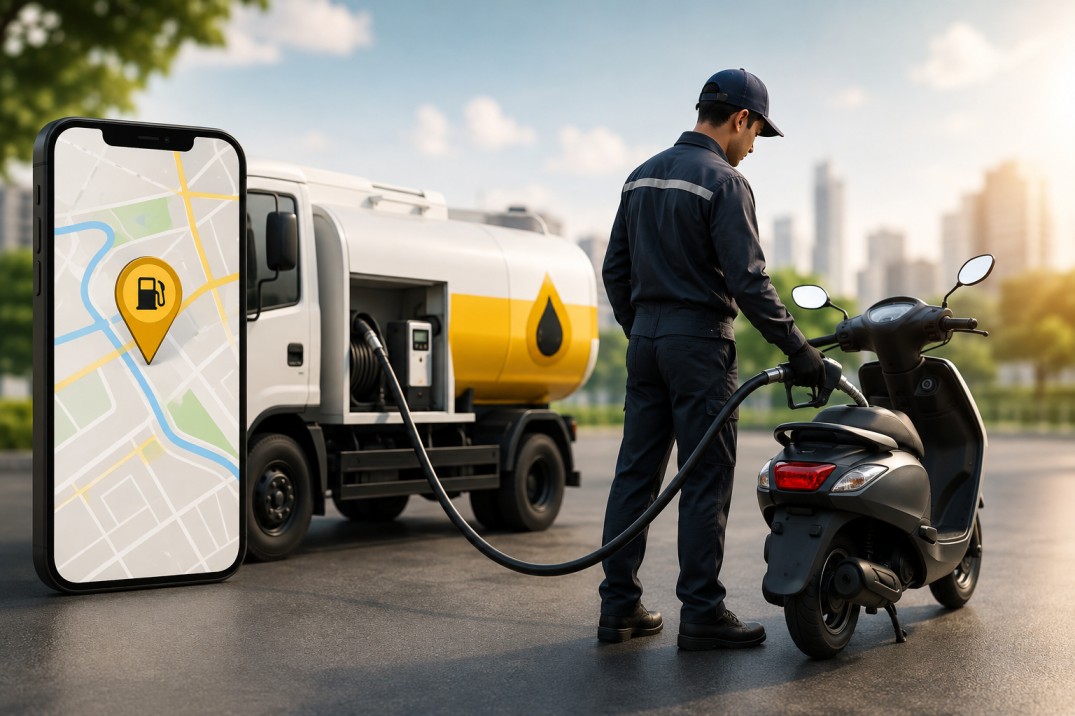
A mobile fuel delivery business transports gasoline, diesel, or diesel exhaust fluid (DEF) directly to customers instead of requiring them to visit a gas station.
Using fuel trucks or specialized delivery vehicles, businesses fulfill orders placed through a mobile app, website, or phone, refueling vehicles, heavy equipment, generators, and storage tanks at the customer’s location.
The service is widely used by commercial fleets, construction sites, farms, municipalities, marinas, and emergency backup facilities.
Fuel Logic cites a Geotab study showing that drivers typically travel about 2 extra miles and spend 20+ minutes per fueling stop at retail stations. By switching to on-site/mobile fueling, fleets can save 15 – 20 minutes per stop, which adds up to 65 – 87 productive driver hours per truck each year.
How to Start a Mobile Fuel Delivery Business?
Fuel is a hazardous material, which means almost every step, from the truck you buy to the software you run, has to account for federal and state rules. Here’s the sequence that actually works.
1. Choose Your Fuel Delivery Business Model and Customers
Before investing in vehicles or technology, define your target customers and revenue model.
- Business-to-Consumer (B2C): Deliver gasoline or diesel directly to individual vehicle owners through on-demand bookings made via a mobile app or website.
- Business-to-Business (B2B): Supply fuel to commercial fleets, construction sites, farms, municipalities, and industrial facilities through scheduled deliveries or long-term contracts.
- Hybrid Model: Combine B2B contracts with consumer deliveries to maximize vehicle utilization and diversify revenue.
For most entrepreneurs starting a fuel delivery business, the B2B model offers the strongest foundation. Long-term commercial contracts generate predictable revenue, improve route efficiency, and create recurring business, while consumer delivery services can be added later to increase fleet use.
2. Validate Demand in Your Service Area
A strong business model is only valuable if there’s consistent local demand. Research your target market to identify businesses that require regular fuel deliveries, such as logistics companies, construction contractors, farms, municipalities, and industrial facilities.
Speak directly with potential customers to understand their current fueling process, delivery frequency, and the challenges they face with off-site refueling.
Next, assess the competitive landscape by reviewing providers such as Booster, EzFill, and Filld. Compare their pricing, service coverage, response times, and customer focus.
If established companies already operate in your region, differentiate your business by serving underserved areas, offering scheduled fleet refueling, or providing flexible commercial contracts with faster response times.
3. Create a Mobile Fuel Delivery Business Plan
With your target market validated, develop a business plan that outlines how your company will operate and generate revenue. Define your target customers, pricing strategy, service area, fuel suppliers, delivery model, staffing requirements, marketing approach, and financial projections.
Your plan should also include startup costs, operating expenses, expected revenue, cash flow forecasts, and a realistic break-even analysis.
If you’re seeking financing, lenders and investors will expect detailed financial documents, including truck use, customer acquisition costs, and projected contract revenue.
Don’t overlook regulatory expenses such as licensing, insurance, and compliance, as these often represent a significant portion of the initial investment when starting a mobile fuel delivery business.
4. Register Your Business and Obtain Required Licences
A mobile fuel delivery business is subject to stricter regulations than most delivery businesses because it involves transporting hazardous materials. Depending on your location and business model, you may need the following licenses and approvals:
- Register Your Business: Form an LLC or corporation and obtain a local business license from your city or county.
- USDOT Registration: Register with the Federal Motor Carrier Safety Administration (FMCSA) if your operations require a USDOT number or interstate operating authority.
- Hazardous Materials Compliance: Follow transportation and safety requirements established by the Pipeline and Hazardous Materials Safety Administration (PHMSA), including fuel tank standards, placarding, and hazardous material handling.
- Commercial Driver’s License (CDL): Drivers typically need a CDL with Hazardous Materials (H) and Tank Vehicle (N) endorsements.
- Fuel Dealer License: Many states require a fuel distributor or dealer license, along with fuel tax registration, before you can legally sell gasoline or diesel.
- Environmental & Fire Permits: Depending on your state, permits may be required for fuel storage, spill prevention, and fire safety. Guidance is available through the U.S. Environmental Protection Agency (EPA) and local fire authorities.
- Weights & Measures Certification: Fuel dispensing meters must often be inspected and certified by your state’s Weights and Measures agency to ensure billing accuracy.
Since licensing requirements and fees vary by state, always verify the latest regulations with your state transportation department and local licensing authority before launching operations.
5. Secure Fuel Suppliers and Business Insurance
Before launching a mobile fuel delivery business, secure reliable fuel suppliers and obtain commercial insurance specifically designed for fuel transportation. Insurance costs depend on the type of fuel, vehicle and tank capacity, operating area, coverage limits, and business history.
While O Trucking estimates that new trucking businesses may spend around $15,500 – $36,500 annually on commercial insurance, this figure is based on general trucking operations and should not be treated as a standard cost for fuel delivery businesses.
For interstate carriers transporting gasoline, diesel, and other regulated petroleum products, the applicable FMCSA financial-responsibility requirement depends on the material and how it is transported.
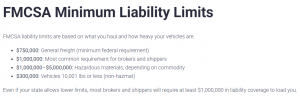
FMCSA’s insurance requirements specify $1 million in minimum public-liability coverage for certain hazardous materials, while some higher-risk hazardous-material operations require $5 million.
Therefore, mobile fuel delivery operators should confirm their exact insurance requirements with an insurer experienced in fuel and hazmat transportation and budget for coverage beyond standard trucking insurance where applicable.
6. Purchase Fuel Delivery Vehicles and Safety Equipment
Your fuel delivery vehicle will be one of the largest startup investments when starting a mobile fuel delivery business. Depending on capacity and condition, a used fuel truck typically costs $50,000 – $100,000, while a new tanker truck can exceed $150,000 with certified tanks, dispensing systems, and safety features.
Smaller fuel delivery vehicles are also available for businesses focused on light commercial or consumer deliveries. You can compare available inventory through Commercial Truck Trader and TruckPaper.
In addition to the vehicle, invest in certified fuel dispensing meters, petroleum-grade hoses, spill containment kits, fire extinguishers, grounding equipment, and personal protective equipment (PPE). The Pipeline and Hazardous Materials Safety Administration (PHMSA) provides safety requirements for transporting hazardous materials, making compliant equipment essential for safe and legal operations.
7. Build Your Fuel Delivery Website, Apps, and Management Platform
Once your operations are in place, the next priority is building the digital platform that powers your mobile fuel delivery business .
A professional website helps customers learn about your services, request quotes, schedule deliveries, and contact your team, while mobile apps make it easy for customers and drivers to manage deliveries on the go.
Behind the scenes, an admin panel enables you to oversee dispatching, monitor deliveries, manage customers, process payments, and track business performance from a single dashboard.
When planning your platform, choose a development approach that aligns with your budget, timeline, and long-term goals. White-label solutions offer a faster route to market, while custom development provides greater flexibility for businesses with unique operational requirements
At Xpertz.io, we help entrepreneurs build, launch, and scale fuel delivery business platforms that are tailored to their operational goals. From high-performance websites and intuitive mobile apps to powerful admin dashboards, our platforms are designed to streamline operations, enhance customer experience, and support long-term business growth.
8. Hire and Train Your Delivery and Operations Team
Your team plays a critical role in delivering a safe, reliable, and professional customer experience.
When hiring drivers, prioritize candidates with a valid Commercial Driver’s License (CDL), the required Hazardous Materials (H) and Tank Vehicle (N) endorsements, a clean driving record, and experience handling petroleum products.
Provide comprehensive training on fuel handling procedures, spill prevention, emergency response, equipment operation, and customer service. The Pipeline and Hazardous Materials Safety Administration requires hazmat employees to receive appropriate training based on their job responsibilities.
Beyond drivers, establish a dependable operations team to manage dispatching, customer support, fuel inventory, supplier coordination, and billing. Well-trained personnel and clearly defined operating procedures help improve service reliability, maintain compliance, and support long-term business growth.
9. Create Your Pricing, Operations, and Marketing Strategy
Develop a pricing model that balances profitability with customer value. Most fuel delivery businesses charge a combination of fuel markup, delivery fees, and discounted rates for recurring commercial contracts or bulk orders. Keep your pricing transparent and competitive to build long-term customer trust.
According to Fuel Logic, delivery fees typically range from $75 – $175 per trip, with scheduled commercial customers often paying $0.10 – $0.50 per gallon above truck stop prices, depending on location, order volume, and delivery frequency.
Beyond pricing, establish standardized operating procedures for dispatching, route planning, delivery scheduling, invoicing, customer support, and fuel inventory management. Clear workflows help minimize delays, improve fleet utilization, and deliver a consistent customer experience as your business grows.
Marketing Strategy
- Build Strategic Partnerships: Collaborate with fleet management companies, property managers, and local businesses to generate referrals and recurring commercial contracts, similar to EzFill’s partnership-driven growth strategy.
- Strengthen Your Online Presence: Invest in local SEO, optimize your Google Business Profile, and create location-specific landing pages to improve visibility in Google Search and Maps.
- Highlight Business Value: Focus your messaging on reduced fleet downtime, improved productivity, and operational efficiency rather than competing solely on fuel prices, a strategy successfully adopted by companies like Booster.
- Showcase Customer Success: Publish case studies, testimonials, and measurable results from commercial clients to build credibility and support future sales conversations.
10. Launch a Pilot and Scale Your Fuel Delivery Business
Start with a limited service area and validate your operations before expanding. Launching with one or two fuel delivery vehicles allows you to test your dispatch process, delivery schedules, customer experience, and operational efficiency while keeping costs under control.
During this phase, monitor key performance indicators (KPIs) such as delivery time, on-time delivery rate, customer retention, repeat orders, and cost per delivery to identify opportunities for improvement.
Once your operations are running smoothly and you’ve secured a stable base of recurring commercial customers, expand into nearby service areas by adding vehicles, drivers, and delivery capacity.
Scaling gradually helps maintain service quality, strengthen supplier relationships, and build a sustainable business without overextending your resources.
Mobile Fuel Delivery Startup Costs
The cost of launching a mobile fuel delivery business depends on factors such as vehicle type, service model, technology requirements, licensing, and operating area.
A single-truck operation typically requires an initial investment of around $80,000 – $150,000+, while businesses starting with multiple vehicles or custom technology platforms may require significantly more capital.
| Cost Category | Estimated Cost |
| Fuel delivery truck | $50,000 – $100,000 |
| Fuel pump, meter, hoses & safety equipment | $5,000 – $15,000 |
| Initial fuel inventory | $10,000 – $15,000 |
| Licences, permits, & CDL/hazard requirements | $2,000 – $5,000+ |
| Commercial insurance (first year) | $15,000 – $35,000+ |
| Website,app & fuel delivery software | $8,000 – $40,000+ |
| Business setup & working capital | $5,000 – $20,000 |
Essential Software Features for a Mobile Fuel Delivery Business
Whether you choose a custom-built platform or a white-label solution, the right software should simplify operations, improve customer experience, and support business growth. Here are the key features to look for:
- Customer App & Ordering Portal: Allow customers to request fuel deliveries, schedule recurring orders, manage accounts, view order history, and track deliveries through a mobile app or web portal.
- Admin Dashboard: Monitor orders, customers, drivers, payments, fuel inventory, and business performance from a centralized dashboard.
- Driver App: Provide drivers with delivery schedules, optimized routes, digital proof of delivery, and safety checklists.
- Live Order Tracking & ETA Updates: Let customers track their deliveries in real time with accurate arrival estimates.
- Intelligent Dispatch & Route Optimization: Assign drivers efficiently, reduce travel time, and maximize daily deliveries.
- Recurring Fleet Scheduling: Automate recurring fuel deliveries for commercial fleets and long-term contract customers.
- Fuel Inventory Management: Track fuel levels, monitor supplier deliveries, and receive low-inventory alerts.
- Secure Payment & Billing: Support online payments, digital invoices, recurring billing, and net payment terms for commercial accounts.
- GPS Fleet Tracking: Monitor vehicle locations, delivery progress, and driver activity in real time.
- Digital Proof of Delivery (POD): Capture customer signatures, delivery photos, timestamps, and fuel quantities for accurate record-keeping.
- Compliance & Documentation: Store delivery records, inspection reports, hazardous material documentation, and driver certifications in one place.
- Reporting & Analytics: Generate insights into delivery performance, fuel sales, revenue, fleet utilization, and customer trends to support informed business decisions.
Conclusion
Starting a mobile fuel delivery business presents a strong opportunity as fleets and industries increasingly prioritize convenience, efficiency, and reduced downtime. However, success depends on regulatory compliance, reliable suppliers, optimized operations, skilled teams, and the right technology platform. Entrepreneurs who focus on recurring commercial customers, efficient delivery routes, and scalable systems can build a profitable business in this growing sector. With the right digital foundation, Xpertz.io helps businesses launch and scale advanced fuel delivery platforms with customer apps, driver solutions, and powerful management tools built for long-term growth.
FAQs About Mobile Fuel Delivery Business
1. Can a mobile fuel delivery business operate without owning a fuel truck?
Yes! Some entrepreneurs begin with leased vehicles, third-party transportation partnerships, or smaller delivery models before investing in dedicated fuel trucks and expanding their operations.
2. How can fuel delivery businesses reduce delivery costs?
Companies reduce costs by optimizing routes, increasing order density, scheduling recurring deliveries, maintaining vehicles properly, and using software to minimize unnecessary travel and idle time.
3. What should entrepreneurs consider when choosing a fuel supplier?
Key factors include wholesale pricing, supply reliability, payment terms, fuel quality, delivery availability, and the supplier’s ability to support business growth as fuel demand increases.
4. What metrics should fuel delivery businesses track?
Important metrics include delivery completion rate, average delivery time, fuel volume sold, revenue per truck, customer retention rate, cost per delivery, and route efficiency.