

TL;DR: How to Build a Website Like Cambly
- Choose a profitable niche and validate demand before you create a tutoring platform like Cambly.
- Select the right business model and define tutor supply, pricing, subscriptions, commissions, and learner retention.
- Prioritize tutor matching, real-time availability, video lessons, bookings, payments, and progress tracking when you build a website like Cambly.
- The cost to build a platform like Cambly can range from $25k – $50k for an MVP to $100k – $200k+ for an advanced platform, excluding ongoing costs.
- Work with an experienced e-learning app development company such as Xpertz.io to develop an online tutoring platform like Cambly with custom or clone-based functionality.
Cambly has built a remarkably scalable tutoring business around a simple proposition that gives learners instant access to native English-speaking tutors whenever they want to practice.
The company says it serves learners in 200+ countries through more than 10,000 native English-speaking tutors, with its core service available 24/7. For entrepreneurs, that scale is worth studying, not because of its video calls, but because its business model turns tutor availability into recurring revenue.
If you’re weighing whether to build a website like Cambly, the demand is only one part of the equation. The real challenge is balancing tutor supply, learner demand, pricing, retention, and lesson quality. Here’s what it takes to build an online tutoring platform like Cambly and what it can realistically cost.
What to Replicate From Cambly’s Tutoring Platform?
The interesting thing about Cambly is how deliberately it turned a traditionally scheduled service into an always-available product. If you want to create a tutoring platform like Cambly, these are the core mechanics worth studying.
| Features | What To Replicate |
| On-Demand 1-to-1 Video Tutoring | Let learners connect with available tutors without depending entirely on advance bookings. |
| Real-Time Tutor Availability | Show tutors who are ready to teach and match learners based on preferences and actual availability. |
| Per-Minute Billing | Track lesson duration accurately and charge based on usage or subscription limits. |
| Tutor Discovery & Matching | Let learners compare tutors by accent, interests, teaching style, experience, ratings, specialization, and availability. |
| Streamlined Tutor Onboarding | Include profile screening, identity verification, qualification checks, and approval workflows. |
| Structured Learning Options | Add focused programs such as Business English, exam preparation, pronunciation, and vocabulary practice. |
| Subscription-Based Monetization | Offer recurring plans based on lesson access, frequency, duration, or premium features. |
| Performance & Retention Analytics | Track repeat sessions, cancellations, lesson completion, tutor utilization, subscription retention, and rebookings. |
How to Build an Online Tutoring Platform Like Cambly?
Building an online tutoring platform like Cambly involves several connected decisions, from choosing the right learner segment and tutoring model to defining the product, technology, and growth strategy. Here are the 8 steps to follow:
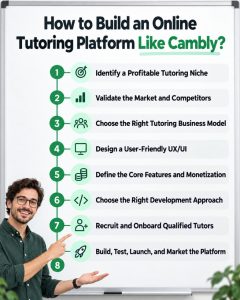
1. Identify a Profitable Tutoring Niche
To create a tutoring platform like Cambly, start by deciding exactly which learners you want to serve and what problem your platform will solve for them. A broad “learn English online” proposition can be difficult to differentiate, so consider a niche where learners have a specific goal and a stronger willingness to pay.
Potential niches include:
- Medical English: Clinical communication and OET preparation for healthcare professionals.
- Business English: Presentations, negotiations, meetings, and workplace communication for professionals.
- Aviation English: ICAO-focused language training for pilots and aviation professionals.
- Legal English: Legal terminology, contracts, and professional communication.
- Exam Preparation: IELTS, TOEFL, and TOEIC preparation with measurable learning goals.
- IT & Tech English: Communication skills for technology professionals working with global teams.
A focused niche can support better pricing and retention because learners are paying for a defined outcome. It also gives you a clearer direction for tutor recruitment, lesson design, marketing, and platform features.
2. Validate the Market and Competitors
A niche can look attractive on paper and still be difficult to monetize. Before you develop an online tutoring platform like Cambly, validate whether learners are actively paying for the problem you want to solve and understand what existing platforms already do well.
- Study Real Buying Behavior: Look for pricing, subscription plans, lesson frequency, reviews, and repeat-use patterns to understand whether learners are willing to pay regularly.
- Map Your Closest Competitors: Compare Cambly with Preply and italki. Their models differ meaningfully as Cambly emphasizes on-demand English conversation, while Preply & italki give learners broader tutor choice and advance booking.
- Find the Gap, Not Just the Competitor: Look for underserved combinations of audience, outcome, price, and format.
- Test the Proposition Cheaply: Run a landing page, collect tutor applications, interview potential learners, or sell a small pilot before committing to full development. Measure actual registrations, trial-to-paid conversion, repeat bookings, and willingness to subscribe.
- Factor in AI: AI tutors now offer instant practice and personalized feedback. Your differentiation should come from human expertise, accountability, specialized instruction, or outcomes AI alone cannot easily deliver.
3. Choose the Right Tutoring Business Model
Your business model determines how you charge learners, attract tutors, create recurring revenue, and scale the platform. When you build a website like Cambly, the right model should match your niche, lesson frequency, customer type, and willingness to pay.
- Subscription Model: Charge monthly or annual fees for a set number of lessons, minutes, or tutor access. This works particularly well for language learning, where consistent practice drives progress. Cambly uses recurring plans across its tutoring offerings.
- Pay-Per-Lesson: Let learners pay for individual sessions or lesson packages. It is simple and lowers the commitment for first-time users, but revenue is less predictable than subscriptions.
- Commission Marketplace: Allow tutors to set their own rates and take a percentage from each completed lesson. This model works well for platforms offering broad tutor choice, similar to Preply.
- Hybrid Model: Combine subscriptions with one-off lessons, premium tutors, group classes, or specialized programs. This gives you more pricing flexibility across different learner segments.
- B2B Model: Sell tutoring packages directly to companies for employee training. Corporate contracts can bring higher-value accounts and longer relationships, particularly for Business English.
After finalizing, calculate customer acquisition costs, tutor payouts, payment fees, average revenue per learner, and retention. A model can generate strong sales yet remain unprofitable if acquisition and tutor costs consume too much revenue.
4. Design a User-Friendly UX/UI
For a platform like Cambly, UX should minimize the gap between finding a tutor and starting a lesson. Keep tutor discovery simple with filters for availability, goal, specialization, rating, price, and teaching style, followed by a frictionless booking and payment flow.
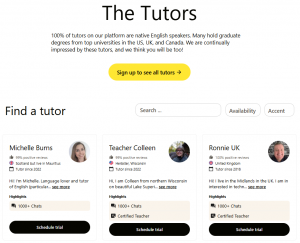
Give learners and tutors separate dashboards tailored to their needs. Learners need bookings, subscriptions, progress, and tutor history, while tutors need availability, sessions, earnings, reviews, and teaching resources.
Make the experience mobile-friendly, especially for short lessons, messaging, payments, and video calls. At the same time, build trust with verified profiles, credentials, reviews, introductory videos, transparent pricing, and secure payments.
Finally, show visible learning progress through goals, session history, feedback, and completed lessons. This turns individual tutoring sessions into an ongoing learning experience and gives learners a stronger reason to return.
5. Define the Core Features and Monetization
To build a website like Cambly, focus on features that simplify tutor discovery, lessons, payments, and platform management.
Core Features to Create a Tutoring Platform Like Cambly
| Student Features | Tutor Features | Admin Features |
| Registration and learner profile | Tutor registration and verification | Student and tutor management |
| Tutor search and filtering | Tutor profile and expertise | Tutor application and approval workflow |
| Tutor profiles and introduction videos | Availability management | Course and learning-content management |
| Instant 1-on-1 video lessons | Lesson requests and bookings | Subscription, commission and refund management |
| Tutor booking and scheduling | Instant-call and scheduled-session management | Session monitoring and dispute resolution |
| In-platform messaging | Lesson workspace and teaching resources | Reports, analytics and payout management |
| Lesson history and progress tracking | Earnings, commissions and payout tracking | Content moderation and support tools |
| Ratings and reviews | Ratings and performance dashboard | |
| Subscription and payment management |
How to Monetize a Tutoring Platform Like Cambly?
A tutoring platform like Cambly can monetize through a mix of recurring subscriptions and session-based revenue. Offer monthly or annual plans based on tutoring minutes, lesson frequency, or tutor access, while pay-per-session options can attract users who prefer flexibility.
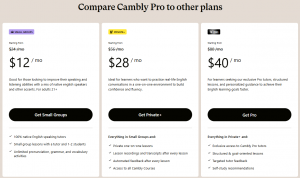
Additional revenue can come from commissions on tutor bookings, premium tutors, group classes, specialized courses, and corporate training packages. This diversified approach helps create a tutoring platform like Cambly with multiple revenue streams instead of relying solely on individual lesson payments.
6. Choose the Right Development Approach to Build a Website Like Cambly
Once the business model and user journey are clear, choose the development approach that fits your budget, timeline, customization needs, and growth plans.
- Custom Development: Best for differentiated tutoring models, advanced tutor matching, proprietary learning features, and greater control over the product, integrations, and monetization.
- Clone Script: A faster route to launch with core features such as tutor profiles, bookings, payments, video lessons, subscriptions, and dashboards. The platform can then be customized around your niche.
- No-Code/Low-Code: Useful for testing an idea or launching a limited MVP with lower upfront costs. However, complex matching, real-time video, subscriptions, and customized workflows may require custom development later.
For businesses planning to develop an online tutoring platform like Cambly, Xpertz.io is one of the best e-learning app development companies to consider for custom or clone-based solutions. The company can build tutoring platforms with features such as tutor management, real-time video communication, scheduling, payments, subscriptions, and personalized learning capabilities.
7. Recruit and Onboard Qualified Tutors
For a tutoring platform like Cambly, tutor quality and availability directly influence learner satisfaction, retention, and revenue. A strong recruitment process should therefore assess not only credentials but also teaching ability, communication, reliability, and fit with your target audience.
- Set Clear Tutor Criteria: Define requirements for language proficiency, teaching experience, subject expertise, communication skills, and availability.
- Create a Structured Application Process: Collect qualifications, experience, introduction videos, and certifications, followed by appropriate screening.
- Verify Tutor Profiles: Complete identity and qualification checks to build trust and maintain platform quality.
- Assess Teaching Ability: Use mock lessons or practical assessments to evaluate communication, teaching style, and learner engagement.
- Streamline Tutor Onboarding: Train tutors on lesson delivery, platform tools, cancellations, payments, ratings, and learner expectations.
- Manage Availability: Give tutors simple controls to set and update their schedules, particularly when offering instant or on-demand lessons.
8. Build, Test, Launch, and Market the Platform
Once the requirements are finalized, develop an online tutoring platform like Cambly in phases, prioritizing tutor discovery, availability, instant or scheduled lessons, video calling, payments, subscriptions, and tutor payouts.
Keep the first release focused on the workflows that directly affect bookings and revenue rather than loading the MVP with features that can wait. Test the platform with real tutors and learners before a wider launch.
Check tutor matching, real-time availability, video & audio quality, booking conflicts, payment failures, cancellations, refunds, and lesson completion. After launch, track trial-to-paid conversion, repeat bookings, lesson frequency, tutor utilization, subscription churn, and customer acquisition cost to identify where the platform is losing users or revenue.
Marketing should run alongside development, with SEO landing pages targeting high-intent searches, Google and social ads, referral offers, free trial campaigns, educational content, and institutional partnerships
At launch, maintain enough tutor availability for the target niche so marketing does not create demand the platform cannot fulfill. This approach helps build a website like Cambly that is ready to acquire, retain, and monetize learners.
How Much Does It Cost to Build a Platform Like Cambly?
The cost to build a platform like Cambly depends on the development approach, feature scope, number of user roles, integrations, and whether you need web, mobile, or both. A basic tutoring MVP can cost significantly less than a fully customized platform with real-time video, instant tutor matching, subscriptions, tutor payouts, learning tools, and advanced analytics.
| Platform Type | Estimated Cost |
| Basic Tutoring MVP | $25,000 – $50,000 |
| Mid-Level Platform | $50,000 – $100,000 |
| Advanced Cambly-Like Platform | $100,000 – $200,000 |
| Enterprise Platform | $200,000 – $300,000+ |
These are planning ranges, not fixed industry prices. The actual quote will depend on the custom UI/UX, tutor matching, real-time communication, AI tools, subscription logic, payment workflows, learning tools, analytics, and third-party integrations.
After launch, budget around $1,500 – $8,000+ per month for routine platform expenses, depending on user volume and feature usage.
This can cover cloud hosting, database and storage, video calling, maintenance, monitoring, email/SMS services, and third-party APIs. Video usage and media storage can increase as lesson hours grow, while payment processing and tutor payouts should be treated separately because they depend directly on transaction volume and lessons delivered.
Final Thoughts
To build a website like Cambly successfully, start with a clear learner segment, a strong tutor acquisition strategy, and a business model that supports recurring usage. Your technology choices should then support tutor matching, live lessons, subscriptions, payments, and measurable learning outcomes without adding unnecessary complexity. The cost to build a platform like Cambly will depend largely on these requirements and the level of customization involved. For tailored development, businesses can work with an experienced e-learning app development company like Xpertz.io to build custom or clone-based online tutoring platforms.
FAQs About Creating a Tutoring Platform Like Cambly
1. How can a tutoring platform differentiate itself from Cambly?
Focus on a defined learner segment, specialized tutors, measurable outcomes, flexible lesson formats, stronger personalization, or underserved subjects instead of competing solely on tutor availability or pricing.
2. How can a tutoring platform reduce cancellations and missed sessions?
Automated reminders, clear cancellation policies, calendar synchronization, easy rescheduling, tutor reliability scores, and appropriate penalties can reduce missed sessions without creating unnecessary friction for learners.
3. What factors affect the cost to build a platform like Cambly?
Development cost depends on platform complexity, number of user roles, video functionality, tutor matching, payment integrations, subscription logic, third-party services, mobile support, and the degree of custom development required.