
TL;DR
- A Talabat-like app requires four core modules: a customer app, merchant panel, delivery partner app, and admin dashboard to efficiently manage end-to-end delivery operations.
- A successful delivery platform starts with the right business model, market validation, MVP, and intuitive user experience.
- Real-time tracking, secure payments, merchant onboarding, rider management, and third-party integrations are the foundation of a scalable app.
- Developing a Talabat-like app typically costs between $30,000 – $250,000+, with recurring expenses for hosting, maintenance, security, and third-party services
- Xpertz.io’s Talabat clone helps businesses launch fully customizable food delivery platforms with everything needed to compete in today’s on-demand market.
Talabat has become one of the largest on-demand delivery platforms in the Middle East by connecting customers with restaurants, grocery stores, pharmacies, and delivery riders through a single digital platform.
Unlike traditional food delivery apps, Talabat operates as a three-sided marketplace that manages customer orders, merchant operations, and rider logistics simultaneously.
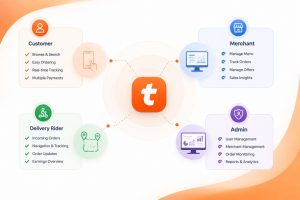
If you’re planning to make an app like Talabat, you will need four core components:
- Customer app
- Restaurant & merchant panel
- Delivery rider app
- Admin dashboard
Building a Talabat-like platform involves much more than online ordering. Features such as merchant onboarding, real-time tracking, rider management, payments, and delivery operations significantly influence development costs and technical complexity.
This guide explains how to develop an app like Talabat, the essential features you need, the development process, and estimated development costs.
What Makes Talabat Different From Traditional Delivery Apps?
Most people picture a single food-ordering app when they think about this kind of product, but Talabat’s actual value comes from stacking multiple revenue lines on top of one order-and-delivery engine.
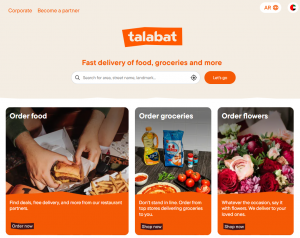
Beyond restaurant orders, the company has expanded into groceries, pharmacy items, and lifestyle categories, layered on a paid subscription called talabat pro. It bundles free delivery with perks like DineOut restaurant discounts and partner offers, and adds a points-based rewards program that keeps customers ordering instead of switching to a competitor.
Another key differentiator is the talabat pro Family Plan, introduced in 2025, which allows up to four users to share a single subscription at shared subscriptions, loyalty rewards, and multi-category ordering provide greater value than a traditional food delivery app.
If you want to make an app like Talabat, focusing on diverse services, subscription-based revenue, and customer retention features will help you develop an app like Talabat that drives higher engagement and long-term growth.
How to Make an App Like Talabat?
The following steps outline the key decisions and development stages involved in creating a scalable on-demand delivery platform.
Step 1: Choose Your Business Model and Target Market
The first step to make an app like Talabat is deciding what type of delivery business you want to build and who your target audience is. Your business model will determine the platform’s features, operational workflow, and overall development costs.
Some common models include:
- Restaurant Marketplace – Food delivery from restaurants only.
- Grocery Delivery Platform – Deliver groceries and daily essentials.
- Multi-Service Delivery Platform – Combine food, groceries, pharmacies, and other retail services like Talabat.
- Single-City or Multi-City Launch – Start locally or expand across multiple regions.
- Platform-Managed or Merchant-Managed Delivery – Choose whether delivery partners work directly with your platform or individual merchants.
Each decision influences the platform’s functionality. For example, grocery delivery requires inventory management and product substitutions, while platform-managed deliveries require rider management, payouts, and delivery tracking.
Step 2: Conduct Market & Competitor Research
Once you’ve defined your business model, the next step is to validate your market. Understanding customer expectations, merchant needs, and competitor strategies helps you build a platform that addresses real demand instead of relying on assumptions.
Focus your research on:
- Customer ordering behavior and peak demand hours
- Restaurant availability and merchant adoption in your target market
- Competitor pricing, delivery fees, and commission structures
- Average order value and revenue potential
- Customer pain points and service gaps
- Delivery partner availability and operational capacity
These insights will help you refine your pricing strategy, merchant onboarding approach, feature priorities, and overall business plan while giving you a stronger competitive advantage.
Step 3: Define the MVP Scope
A successful delivery app doesn’t need every advanced feature in its first release. Start with a Minimum Viable Product (MVP) that focuses on the core functionality required to launch, gather user feedback, and validate your business model.
Your MVP should include:
- Order placement and management
- Secure payment integration
- Restaurant and merchant management
- Delivery partner assignment
- Real-time order tracking
- Push notifications
- Admin dashboard
Once your platform gains traction, you can introduce advanced features such as loyalty programs, subscription plans, personalized recommendations, and promotional campaigns in future updates. This phased approach helps reduce development costs, shorten time-to-market, and improve product quality.
Step 4: Plan the User Experience
A smooth user experience is essential for the success of any on-demand delivery platform. Since a Talabat-like platform serves multiple user groups, each should have a simple and efficient workflow that minimizes effort and improves overall usability.
Plan the experience for:
- Customers – Quick browsing, seamless checkout, and fast order confirmation.
- Merchants – Easy order acceptance, preparation updates, and pickup management.
- Delivery Partners – Simple order assignment, route navigation, and delivery confirmation.
- Admins – Centralized control over users, orders, payments, and platform operations.
Additionally, streamline the checkout process with features like saved addresses, multiple payment options, and minimal steps to complete an order. Well-planned user journeys improve customer satisfaction, simplify merchant operations, and enhance delivery efficiency.
Step 5: Essential Features Required to Develop an App Like Talabat
The features you include directly influence your app’s functionality, development cost, and overall user experience. To develop an app like Talabat, you need dedicated features for customers, merchants, delivery partners, and admins.
I. Customer App Features
- User registration and social login
- GPS-based location detection
- Address management
- Restaurant and store discovery
- Search, filters, & categories
- Menu browsing
- Item customization
- Shopping cart
- Multiple payment methods
- Cash on Delivery (COD)
- Scheduled deliveries
- Promo codes and discounts
- Real-time order tracking
- Push notifications
- Ratings and reviews
- Order history and quick reorder
- In-app customer support
II. Restaurant and Merchant Panel Features
- Merchant registration and verification
- Business profile management
- Menu and inventory management
- Pricing and item availability
- Order management
- Order acceptance or rejection
- Preparation time updates
- Offers and discount management
- Sales reports and analytics
- Commission and payout tracking
- Multi-branch management
- POS integration
Why does POS integration matter?
Integrating with restaurant POS systems helps merchants receive orders directly into their existing workflow, eliminating manual order entry and reducing operational errors. It also improves order accuracy, preparation efficiency, and overall restaurant experience, making your platform more attractive to merchants.
III. Delivery Rider App Features
- Rider registration and verification
- Online/Offline availability
- Delivery request management
- Pickup and delivery details
- GPS navigation
- Real-time location sharing
- Order status updates
- Earnings dashboard
- Delivery history
- Customer communication
- Proof of delivery
IV. Admin Dashboard Features
- Customer accounts
- Merchant onboarding
- Delivery partner operations
- Live order monitoring
- Service area configuration
- Commission settings
- Payment & payout processing
- Promo code controls
- Refund & dispute handling
- Customer support tools
- Reports & analytics
- Role-based access control
- Fraud detection
V. Advanced Features That Can Differentiate Your Talabat-Like App
Once your platform gains traction, you can expand beyond core delivery services by introducing advanced capabilities that improve customer retention and create additional revenue opportunities.
Some valuable additions include:
- AI-powered recommendations
- Personalized offers
- Loyalty and rewards program
- Subscription plans with free delivery
- Grocery and pharmacy delivery
- Pickup orders
- Scheduled and recurring deliveries
- In-app wallet
- Contactless delivery
- Dynamic delivery fees
- Group ordering
- Multi-language and multi-currency support
- Dine-in reservations and payments
- Priority customer support
- On-time delivery guarantee
These features are best introduced after your core platform is established, allowing you to scale strategically while keeping your initial development scope and budget under control.
Step 6: Select the Development Approach
The development approach you choose will impact your budget, launch timeline, scalability, and long-term flexibility. Select the option that best aligns with your business goals and growth plans.
- Native App Development – Separate iOS and Android apps that offer the best performance and user experience but require higher development costs and longer timelines.
- Cross-Platform Development – Frameworks like Flutter or React Native allow you to build for both platforms using a shared codebase, reducing development time and costs.
- Custom App Development – A fully customized solution built around your business requirements, offering complete ownership, greater flexibility, and easier scalability.
- Clone Scripts – A pre-built software that can be customized with your branding and launched quickly, making it ideal for businesses looking to enter the market faster.
If you’re looking to develop an app like Talabat without starting from scratch, Xpertz.io’s Talabat clone offers custom on-demand delivery app development and white-label solutions tailored to your business requirements.
Whether you’re building a food delivery platform, grocery delivery app, or a multi-service marketplace, we help accelerate development with scalable, feature-rich solutions while reducing time-to-market.
Step 7: Design the UI/UX and Build a Prototype
A well-designed interface improves user satisfaction and reduces friction across every stage of the ordering process. Before development begins, create a prototype to validate user flows, identify usability issues, and gather feedback from real users.
The design phase typically includes:
- Wireframes – Define the layout and navigation for the customer, merchant, rider, and admin applications.
- Interactive Prototype – Create a clickable version to test user journeys before development.
- Design System – Establish consistent colors, typography, icons, and reusable UI components.
- Usability Testing – Collect feedback from customers, merchants, and delivery partners to refine the experience.
Testing the prototype with actual restaurant staff and delivery partners helps uncover operational challenges early, allowing you to improve workflows before moving into full-scale development.
Step 8: Integrate Essential Third-Party Services
Third-party integrations help accelerate development by providing reliable services for payments, maps, notifications, analytics, and customer support. Instead of building these capabilities yourself, integrating trusted solutions reduces development time and improves overall platform reliability.
Key integrations include:
- Maps & Navigation – Google Maps or Mapbox for route optimization and real-time location tracking.
- Payment Gateway – Stripe, Razorpay, PayPal, or regional payment providers for secure transactions.
- SMS & Push Notifications – Twilio and Firebase Cloud Messaging for order updates and alerts.
- Cloud Hosting – AWS, Google Cloud, or Microsoft Azure for scalable application hosting.
- Analytics – Mixpanel, Amplitude, or similar tools to track user behavior and business performance.
- Customer Support – Zendesk, Intercom, or in-app chat for efficient customer assistance.
Using proven third-party services allows you to focus your development efforts on features that deliver unique value while ensuring a secure, scalable, and reliable delivery platform.
Step 9: Test the Complete Ordering Workflow
Thorough testing is essential to ensure every part of your delivery platform works smoothly before launch. Validate the complete ordering journey across all user applications to identify and resolve issues that could impact the customer experience.
Your testing process should include:
- Functional testing across the customer, merchant, rider, and admin applications
- Payment testing for all supported payment methods
- GPS and real-time tracking validation in live delivery scenarios
- Performance and load testing to handle peak order volumes
- Security testing to protect payment transactions and user data
- User acceptance testing with merchants and delivery partners
A comprehensive testing process helps deliver a stable, secure, and reliable platform while minimizing issues after launch.
Step 10: Launch and Scale Strategically
Instead of launching across multiple locations at once, begin with a limited service area to validate your operations and gather real-world feedback. A phased rollout allows you to optimize your platform before expanding to new markets.
During the initial launch, focus on:
- Launching in a single city or delivery zone
- Partnering with a select group of restaurants and merchants
- Monitoring delivery partner availability and order demand
- Tracking key metrics such as delivery time, order completion, and cancellation rates
- Collecting customer and merchant feedback to improve the platform
Once your operations are running smoothly and performance metrics remain consistent, you can confidently expand into additional cities, service areas, or delivery categories.
How Much Does It Cost to Make an App Like Talabat?
The cost to make an app like Talabat depends on factors such as the number of features, supported platforms, UI/UX complexity, third-party integrations, and the development approach you choose.
A basic MVP costs significantly less than a full-scale multi-service marketplace with advanced capabilities like AI recommendations, subscriptions, loyalty programs, and multi-city operations.
| Development Stage | Estimated Cost |
| MVP | $30k – $60k |
| Mid-Level Platform | $70k – $120,000 |
| Enterprise Grade Talabat-Like App | $130,000 – $250,000+ |
Ongoing Costs to Consider
Launching your Talabat-like app is only the beginning. To keep your platform secure, reliable, and competitive, you’ll also need to budget for ongoing operational expenses, including:
| Ongoing Cost | Approximate Cost |
| Cloud Hosting & Servers | $300 – $2000+ |
| App Maintenance & Updates | 15 – 20% of the initial development cost/year |
| Payment Gateway Fees | 2% – 3.5% per transaction |
| Maps & Location APIs | $200 – $1,500+ |
| SMS & Push Notifications | $100 – $1,000+ |
| Security Monitoring | $200 – $1,500+ |
| Customer Support Software | $50 – $1,000+ |
| Third-Party Tools | $100 – $2,000+ |
| Marketing & User Acquisition | $1,000 – $20,000+ |
Depending on your platform’s traffic, order volume, and growth stage, the ongoing cost to operate a Talabat-like app typically ranges from $3,000 – $30,000+ per month, excluding payment gateway transaction fees, which vary based on the number and value of orders processed.
Budgeting for these recurring expenses helps ensure your platform remains secure, performs reliably, and continues to attract and retain customers as your business scales.
Final Thoughts
Creating an app like Talabat goes beyond replicating its features, it requires a platform built for operational efficiency, seamless user experiences, and long-term scalability. By focusing on the right business model, core functionality, and a phased development approach, you can launch faster while keeping future expansion in mind. Whether you’re building a food delivery app or a multi-service marketplace, choosing the right technology partner is equally important. Xpertz.io helps businesses turn their delivery app ideas into scalable, market-ready solutions through custom development and white-label expertise.
FAQs About Developing an App like Talabat
1. How can a Talabat-like app generate recurring revenue?
Besides delivery commissions, businesses can monetize through subscription plans, merchant advertising, sponsored listings, delivery fees, convenience charges, loyalty programs, and premium merchant services, creating multiple revenue streams.
2. Is it better to build a single-service or multi-service delivery app?
A single-service app is ideal for validating your business model with lower investment. As your user base grows, you can expand into grocery, pharmacy, and other on-demand services to diversify revenue.
3. How can businesses retain customers after launching a Talabat-like app?
Customer retention improves through loyalty programs, subscription memberships, personalized offers, referral programs, timely deliveries, and a seamless ordering experience that encourages repeat purchases