
TL;DR
- A successful Janitor AI-like clone app begins with a well-defined niche, target audience, and business model that guides every product and technical decision.
- Long-term user retention depends on high-quality AI conversations powered by persistent memory, personalization, intuitive user experiences, and effective safety controls.
- Development costs typically range from $35,000 for an MVP to $300,000+ for a production-grade platform, with ongoing AI operating costs scaling alongside usage.
- xPertz.io specializes in Janitor AI clone development, helping founders build scalable, production-ready AI chatbot platforms with the right technology stack, LLM integration, and long-term scalability.
Janitor AI has quietly become one of the internet’s most popular AI platforms, attracting 110.3M monthly visits. By combining deep character customization, flexible LLM integration, and greater creative freedom, it delivered an experience that many AI chatbot platforms failed to match.
If you’re an entrepreneur wondering how to create an app like Janitor AI, you’re entering a market with proven demand and substantial growth potential.
This guide breaks down the entire development process into 8 clear steps from defining your niche to launching at scale, so you can transform your idea into a production-ready AI character chatbot app with confidence.
Is Building a Janitor AI-Like App Worth It?
Yes! Building a Janitor AI-like app is worth considering if you’re entering the AI character chatbot market with a clear niche and sustainable monetization strategy. The demand is already proven.
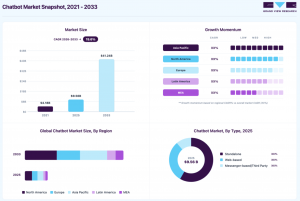
Janitor AI surpassed 15M registered users in 2026, while its closest competitor, Character.AI, attracts more than 194M monthly visits. Meanwhile, the global AI roleplay chatbot market is expected to grow from $11.8B in 2025 to nearly $41.2B by 2033, creating significant opportunities for new entrants.
Beyond subscriptions, businesses can generate revenue through creator monetization, premium AI models, white-label licensing, and industry-specific solutions for gaming, education, mental wellness, or adult entertainment.
The strongest platforms also benefit from network effects, where creators continuously publish new AI characters that attract and retain users. With the right product strategy, differentiated features, and scalable system, a Janitor AI-like app has the potential to become a highly profitable AI business.
How to Create an App Like Janitor AI?
Creating a successful AI chatbot requires much more than integrating a language model. Every stage, from market research to AI training and product testing plays an important role in delivering conversations that feel natural, engaging, and consistent.
Here’s a practical roadmap for businesses looking to create an app like Janitor AI.
Step 1: Define Your Niche, Target Audience, and Business Model
Many founders make the mistake of building a chatbot before deciding who it is actually for. Successful AI products begin with solving a specific problem for a clearly defined audience.
Instead of creating a general-purpose chatbot, identify a niche where conversational AI can deliver unique value.
Ask yourself:
- Who will use this app?
- Why will they choose it over existing alternatives?
- What problem does it solve?
- How will users interact with AI daily?
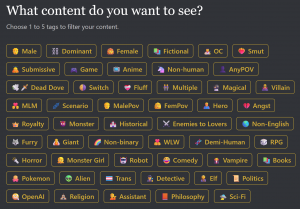
For example, your target audience might include:
- Anime fans seeking immersive character conversations
- Gamers looking for AI-powered companions
- Content creators monetizing personalized AI personas
- Businesses offering branded AI assistants
- Students learning through conversational AI
Defining your audience early also influences product design, moderation policies, pricing, and marketing. Furthermore, selecting the right monetization approach from the beginning helps prioritize feature development.
Common business models include:
- Freemium access with premium subscriptions
- AI credits for advanced conversations
- Creator revenue sharing
- Paid custom character creation
- Enterprise API licensing
Your monetization strategy should align with user expectations rather than disrupting the overall experience.
Step 2: Plan Your Core Features and Design an Engaging User Experience
Features determine whether users stay engaged after downloading your application. While AI powers conversations, the overall user experience influences retention, session duration, and customer satisfaction.
Rather than overwhelming users with hundreds of options, focus on delivering a polished experience around the features that matter most.
I. AI Character Creation
Users need a rich, intuitive character builder that lets them define personality traits, speaking style, backstory, relationship dynamics, and visual appearance. Janitor AI uses a natural language and tag-based definition system, no coding required, but the results feel deeply specific.
Your builder should support avatar generation or upload, personality sliders or descriptors, and scenario templates to get new users started quickly.
II. Character Discovery and Search
A searchable, filterable catalog of user-created and platform-curated characters is essential for retention. Include genre filters, popularity rankings, trending feeds, and recommendation logic that learns from individual usage patterns.
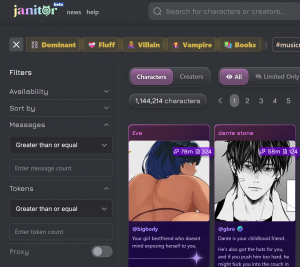
The top 1% of characters on Janitor AI capture 85% of all chats, your discovery layer determines who gets visible and who gets buried.
III. Personalized Conversations
The chat interface is your product’s core loop. It needs to feel fast, immersive, and responsive. Support markdown rendering for expressive responses, dynamic tone adjustment, and in-chat character context cards. Let users set the scene, define the setting, relationship status, and tone before a conversation begins.
IV. Chat History and Memory
Users invest emotionally in long-running conversations. Losing that context on a platform switch or session timeout is a deal-breaker. Build persistent chat history with search, the ability to resume sessions seamlessly, and in-session memory summaries that keep the character anchored to earlier conversation threads.
V. Voice and Image Generation
Voice output and AI image generation have moved from premium differentiators to expected features. Real-time voice synthesis (using providers like ElevenLabs or Rime) and on-demand character image generation (via Stable Diffusion or similar) significantly increase session depth and monetization potential.
VI. Mobile-First UI/UX
Janitor AI launched its official mobile app on February 7, 2026, expanding the platform beyond the web. A mobile-first experience is now an expectation rather than a feature. The chat interface, character browser, and creation tools should be optimized for thumb navigation, smaller screens, and varying network conditions to ensure smooth, uninterrupted conversations.
VII. User Profiles and Settings
Give users ownership over their experience with AI model preference toggles (including BYOK for advanced users), notification controls, content filters, conversation export, and privacy settings. Platforms that give users meaningful control over how they interact with AI tend to retain users longer than those that rely heavily on predefined defaults.
VIII. Admin Dashboard
Your operations team needs complete visibility across the platform. Build an admin dashboard that includes user analytics, content moderation queues, revenue tracking, character performance metrics, and API usage monitoring. A limited admin panel quickly becomes an operational bottleneck, making moderation, performance analysis, and business decisions slower as the platform grows.
Step 3: Choose the Right AI Models and Build the Conversation Engine
The quality of conversations largely depends on the language model powering your application. Selecting the right model affects response accuracy, personality consistency, operating costs, and overall user satisfaction.
There is no single “best” option. The right choice depends on your audience, budget, privacy requirements, and feature set.
I. Selecting the Right LLM
You have three credible paths to choose from i.e., commercial APIs, open-source models, or a fine-tuned proprietary model.
Commercial APIs such as OpenAI GPT-5o, Anthropic Claude, and Google Gemini offer the quickest route to high-quality responses, but they also come with recurring token costs and content policies that may limit unrestricted roleplay or adult-focused experiences.
Open-source models like Meta’s Llama, Mistral, and Nous Research’s Hermes provide greater flexibility, allowing you to self-host, fine-tune, and operate with fewer restrictions.
Janitor AI eventually introduced JanitorLLM after running into the limitations of third-party AI providers. For most founders building a Janitor AI-like app, launching with a commercial API and gradually transitioning to a fine-tuned open-source model as usage grows is often the most practical approach.
II. Prompt Engineering
Even the most advanced LLM won’t deliver engaging character conversations without well-designed prompts. Prompt engineering involves structuring system prompts, character definitions, and conversation rules so the AI stays in character, remembers context, and responds naturally throughout long interactions.
Maintaining a structured prompt library and continuously testing prompt variations helps improve response quality and consistency over time.
III. Character Personality Design
Store character definitions as structured data that includes personality traits, communication style, relationship dynamics, motivations, background, and scenario context.
Design a schema that balances flexibility with ease of use, allowing users to create rich, distinctive AI personalities without making the character creation process overly complex. Structured formats such as XML-style tagging, used by platforms like Character.AI, also provide greater control over character behavior while keeping the system organized and scalable.
IV. Context Management
Every LLM operates within a limited context window, meaning older parts of long conversations are eventually forgotten.
To preserve continuity, implement a sliding context window, summarize earlier conversations into the system prompt, and integrate a vector database such as Pinecone, Weaviate, or pgvector for long-term memory retrieval. Together, these techniques help characters remember previous interactions and maintain more coherent conversations.
V. Response Optimization
Response speed matters as much as response quality. Long delays can quickly break immersion in roleplay conversations.
Stream responses token by token to simulate real-time typing, cache reusable prompt components, optimize inference pipelines, and monitor latency using 95th percentile response times instead of relying solely on average performance metrics.
Step 4: Implement Memory, Personalization, and Safety Features
Striking the right balance between personalization and moderation is essential when you develop an app like Janitor AI.
A Janitor AI-like app needs more than capable language models to keep users engaged over time.
Long-term memory allows AI characters to remember names, preferences, relationship history, and important story events across multiple conversations, creating interactions that feel consistent and personal.
This is typically achieved using a retrieval-augmented generation (RAG) pipeline backed by a vector database. You can further improve engagement by recommending characters and conversations based on user behavior, such as chat history, preferred genres, and session patterns.
As the platform grows, combine AI-powered moderation with human review to enforce community guidelines while handling complex cases efficiently. If adult content is supported, implement layered NSFW controls, including age verification, content ratings, and region-specific filters.
Finally, protect user data through end-to-end encryption, secure API key management, robust authentication, and privacy tools that support regulations such as GDPR, ensuring users can trust your platform as it scales.
Step 5: Develop the Backend and Select Your Technology Stack
Choosing the right technologies has a direct impact on your application’s performance, scalability, maintenance, and long-term costs.
I. Backend
The backend powers every interaction on your platform, from processing AI responses to managing users and conversations. Python (FastAPI) is a strong choice for AI-intensive applications because of its mature machine learning system, while Node.js excels at real-time communication, streaming responses, and WebSocket performance.
Many production-grade AI platforms combine both technologies using Python for AI inference and backend intelligence, and Node.js for API gateways, authentication, and real-time features.
II. APIs and Third-Party Integrations
Third-party integrations accelerate development by providing capabilities that would otherwise take months to build. At launch, prioritize integrations for LLM providers (OpenAI, Anthropic, or self-hosted models), text-to-speech services, image generation, payment processing, analytics, email delivery, and authentication.
Rather than integrating every available service upfront, focus on the features required for your MVP and expand your integration stack as user demand grows.
III. Databases and Vector Databases
Use PostgreSQL as your primary relational database to manage user accounts, subscriptions, conversations, character definitions, and transaction records. Redis complements it by caching frequently accessed data, maintaining session state, and enforcing rate limits.
IV. Cloud Services
Modern AI applications require infrastructure that can scale with increasing workloads. AWS, Google Cloud, and Microsoft Azure all provide the services needed to host AI-powered applications.
If you’re self-hosting large language models, GPU instances are essential for inference, whereas platforms using commercial LLM APIs can typically run the application layer on standard compute instances, significantly reducing infrastructure complexity.
V. Scalability Planning
Scalability should be part of your plan, not an afterthought. Design stateless application servers, implement database connection pooling, distribute static assets through a CDN, and use background job queues for AI inference, notifications, image generation, and other asynchronous tasks.
Building these patterns into your platform early ensures it can handle increasing traffic, maintain low response times, and continue delivering a reliable user experience as demand grows. Janitor AI handled a peak of 2.5 million requests per minute, that level of traffic requires intentional system design, not reactive fixes.
Step 6: Build, Test, and Optimize Your AI Chatbot App
Developing the app is only half the journey, rigorous testing and continuous optimization determine whether users stay or leave.
Validate every core workflow, including character creation, discovery, conversations, subscriptions, and account management, using a combination of automated testing and manual quality assurance.
Since AI responses are inherently dynamic, evaluate them for character consistency, contextual accuracy, response quality, latency, and user satisfaction before deploying model or prompt updates.
Perform load testing to identify performance bottlenecks under peak traffic and conduct security assessments to protect authentication systems, APIs, and sensitive user data. Before the public launch, release a closed beta to a limited group of users, gather structured feedback, analyze usage patterns, and resolve issues affecting engagement and retention.
After launch, treat optimization as an ongoing process by collecting user feedback, monitoring analytics, refining prompts, improving AI models, and rolling out incremental updates regularly. Continuous iteration is what transforms a functional AI chatbot into a platform users return to consistently.
Step 7: Choose the Right Monetization Strategy
Janitor AI’s subscription business generates over $5.2 million monthly, with a 28% free-to-trial conversion rate and $156 lifetime value per user. Monetization strategy is not an afterthought, it determines your unit economics and how aggressively you can grow.
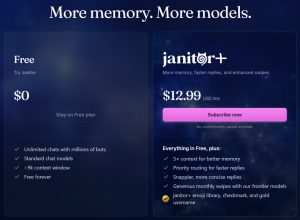
- Subscription Plans: Offer tiered plans such as Free, Standard, and Pro, with premium benefits including higher message limits, faster response speeds, priority AI processing, advanced LLM access, and exclusive features.
- Freemium Model: Allow users to explore the platform for free while limiting daily messages, premium characters, memory depth, or advanced capabilities. A balanced free tier encourages upgrades without diminishing the user experience.
- AI Credits: Introduce a credit-based system for resource-intensive features such as AI image generation, voice conversations, extended context windows, or premium AI models. Credits provide flexible pricing alongside recurring subscriptions.
- Premium Characters: Monetize exclusive AI characters by placing them behind a paywall or premium subscription tier. This creates additional revenue while rewarding high-quality character development.
- In-App Purchases: Generate additional revenue through cosmetic upgrades, chat themes, avatar customization, exclusive story packs, profile enhancements, and one-time feature unlocks without disrupting the core user experience.
- AI Image Generation: Offer AI image generation through subscriptions or credits. Monetize character portraits, avatars, and artwork with premium styles, higher resolutions, and faster generation.
- Strategic Partnerships and Affiliate Revenue: Partner with AI providers, creator tools, and complementary platforms to earn affiliate commissions, sponsorships, or referral revenue while expanding your ecosystem and boosting profitability.
Step 8: Launch, Scale, and Maintain Your Platform
Launching your app is only the beginning. Publish your application on the Apple App Store and Google Play, while ensuring it complies with each platform’s review guidelines, age verification requirements, and content policies.
Once live, continuously monitor API performance, server health, error rates, database performance, and AI inference costs using observability tools to identify issues before they impact users.
Collect feedback directly within the app through conversation ratings, character reviews, and community channels to understand user expectations and prioritize improvements. Maintain a public product roadmap and release regular feature updates to keep users engaged and demonstrate continuous progress.
As your platform grows, invest in a scalable backend by implementing auto-scaling, database replication, optimized caching, and efficient vector database indexing.
Combining performance monitoring, user-driven improvements, and a scalable backend ensures your AI chatbot platform remains reliable, responsive, and ready to support long-term growth.
How Much Does It Cost to Build an App Like Janitor AI?
The cost to create an app like Janitor AI depends on several factors, including feature complexity, AI model selection, UI/UX design, third-party integrations, and the size of your development team.
Below is a general estimate for custom AI character chatbot app development.
| Build Tier | Scope | Estimated Scope |
| MVP (core chat & basic character creation) | 2-3 months | $35,000 – $60,000 |
| Full-featured platform | 4-6 months | $80,000 – $150,000 |
| Production-grade platform | 6-10 months | $150,000 – $300,000+ |
Ongoing operating costs like LLM API fees, cloud compute, monitoring, and a small engineering team for continuous improvement typically run $400 – $6,000 per month at early-stage traffic levels, scaling with usage.
Why Choose xPertz.io for AI Character Chatbot App Development?
Building a Janitor AI clone is not a commodity task. The technical decisions made in the first six months like model selection, memory design, content control systems, monetization hooks shape what the product can become and how expensive it is to scale. Getting those decisions wrong does not just cost money; it costs time you cannot recover in a market that moves this fast.
At xPertz.io, we specialize in AI-powered product development for founders who are serious about shipping competitive, technically sound platforms. From LLM integration, vector memory to real-time streaming and compliance for character-based AI applications, our team develops tailored solutions based on your niche, business goals, and target audience.
Whether you’re creating a full-featured Janitor AI clone, a niche AI companion app, or a white-label solution, we can help turn your idea into a production-ready product. Get in touch with us to discuss your project.
Conclusion
Building an app like Janitor AI is about creating an engaging AI product, not simply integrating a language model. Long-term success depends on choosing the right niche, delivering immersive conversations, implementing scalable backend, and developing a sustainable monetization strategy from the outset. Whether you’re targeting entertainment, education, customer support, or AI companionship, careful planning is essential. Working with experienced AI development companies like xPertz can significantly reduce development complexity, shorten time-to-market, and help you launch a reliable, future-ready platform that scales with user demand.
FAQs About Janitor AI Clone Development
1. Can I build a Janitor AI clone for a specific niche?
Yes, Many successful AI chatbot businesses focus on niche markets such as gaming, education, customer support, mental wellness, AI companions, or creator platforms, offering more targeted experiences.
2. What are the biggest mistakes to avoid when building a Janitor AI clone?
Common mistakes include choosing the wrong AI model, ignoring scalability, poor memory implementation, weak moderation, limited monetization, and launching without validating product-market fit.
3. How many AI characters can my platform support?
There’s no fixed limit. The number depends on your server capacity, database design, and cloud resources. With proper optimization, your platform can support thousands or even millions of AI characters.
